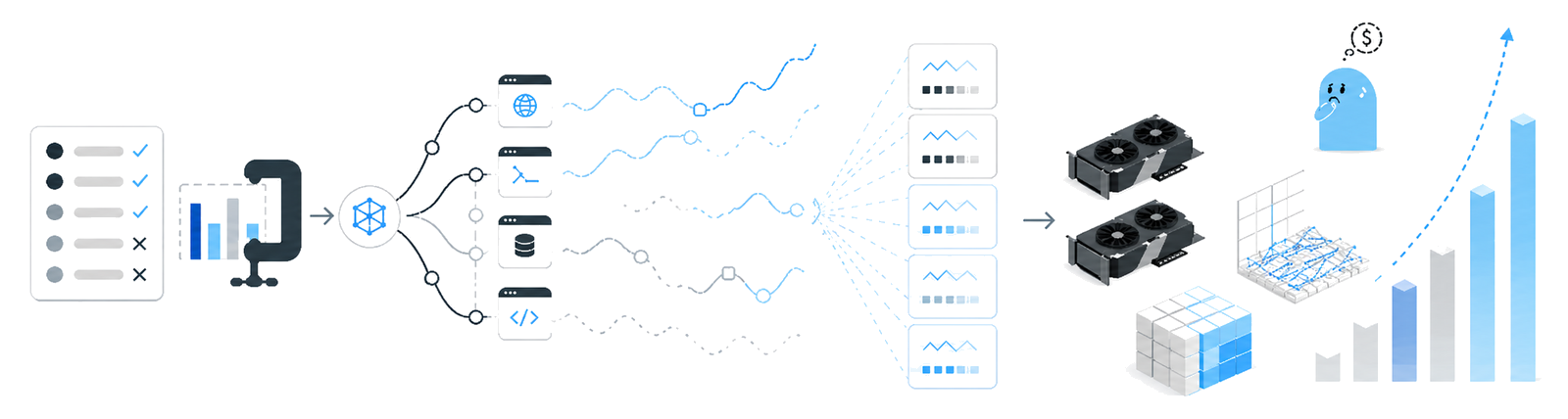
AI Evaluations Emerge as the New Compute Bottleneck in Model Development According to Hugging Face
A recent report from the Hugging Face Blog identifies a significant shift in the artificial intelligence development lifecycle, noting that AI evaluations (evals) are becoming the new compute bottleneck. As the industry continues to scale model complexity, the computational resources required to test, validate, and benchmark these systems are now rivaling the resources traditionally reserved for model training. This transition highlights a critical evolution in AI infrastructure needs, where the bottleneck is moving from the creation of models to the rigorous assessment of their performance and safety. The findings suggest that the AI industry must now address the efficiency of evaluation frameworks to maintain the current pace of innovation and deployment.
Key Takeaways
- New Resource Constraint: Hugging Face identifies AI evaluations as a primary compute bottleneck, shifting the focus from training-only constraints.
- Infrastructure Shift: The computational cost of validating and benchmarking models is becoming a significant hurdle in the development pipeline.
- Industry Implications: This bottleneck necessitates a reevaluation of how compute resources are allocated across the AI lifecycle.
In-Depth Analysis
The Transition from Training to Evaluation Bottlenecks
According to the Hugging Face Blog, the landscape of AI development is experiencing a fundamental shift in where computational resources are most constrained. Historically, the primary 'bottleneck' in AI has been the training phase, where massive GPU clusters are required to process vast datasets. However, the report titled "AI evals are becoming the new compute bottleneck" indicates that the evaluation phase—the process of testing models against benchmarks and safety protocols—is now consuming a disproportionate amount of compute.
This shift suggests that as models become more sophisticated, the complexity of verifying their outputs grows exponentially. Evaluation is no longer a simple post-training step but a resource-intensive operation that can slow down the entire development cycle if not properly managed.
The Impact of Scaling on Validation Resources
The emergence of evaluations as a bottleneck is a direct consequence of the industry's drive toward larger and more capable models. When models are scaled, the benchmarks used to assess them must also become more comprehensive, often requiring multiple passes and complex inference tasks to ensure accuracy and safety. The Hugging Face report highlights that this phase is now a critical point of friction, implying that the time and hardware required to 'grade' an AI model are becoming as significant as the resources required to 'teach' it.
Industry Impact
The identification of AI evaluations as a compute bottleneck has profound implications for the AI industry. First, it signals a need for more efficient evaluation methodologies and automated benchmarking tools that can reduce the computational overhead. Second, it may lead to a shift in hardware demand, where inference-optimized chips become just as vital for the development phase as training-optimized chips. Finally, for AI startups and researchers, this bottleneck represents a new cost factor that must be accounted for in project timelines and budgets, potentially favoring organizations with the most efficient validation pipelines.
Frequently Asked Questions
Question: What does it mean for AI evaluations to be a 'compute bottleneck'?
It means that the computational power and time required to test and validate AI models have become a primary limiting factor in how quickly new models can be developed and released, similar to how GPU availability limited training in the past.
Question: Why is this shift happening now?
As models grow in size and complexity, the benchmarks and tests required to ensure they are performing correctly and safely also require more computational power, eventually reaching a point where they strain available resources.
Question: Who reported this trend?
The trend was reported by the Hugging Face Blog, a leading platform and community for AI and machine learning development.