Reviving Abandoned Personal Projects with AI Coding Assistance: A Case Study on Claude Code
This article explores the practical application of AI coding tools, specifically Claude Code with Opus 4.6, in resurrecting long-dormant personal software projects. The author draws a parallel between unfinished code and 'Tsundoku'—the Japanese concept of unread book piles—suggesting that these stalled ventures are ideal testing grounds for AI assistance. The case study focuses on a middleware shim designed to connect YouTube Music with the OpenSubsonic API, utilizing tools like ytmusicapi and yt-dlp. While the initial proof of concept was simple, the project stalled due to the complexity of API conformance and shifting interests. By leveraging promotional credits, the author tested the AI's ability to implement a clear specification from scratch, highlighting how AI can bridge the gap between a conceptual prototype and a finished, conformant product.
Key Takeaways
- Ideal Testing Grounds: Unfinished personal projects are excellent candidates for testing AI coding tools because they often lack the pressure of professional deadlines and might otherwise remain incomplete.
- Technical Implementation: The project involved creating a shim between YouTube Music and the OpenSubsonic API, using
ytmusicapifor metadata andyt-dlpfor streaming. - AI Utility in Specifications: AI tools like Claude Code are particularly effective when there is a clear, existing specification (such as the OpenSubsonic API contract) to implement.
- Overcoming the 'Long Tail': While basic functionality is often easy to code manually, AI helps manage the tedious 'long tail' of implementing numerous conformant endpoints.
In-Depth Analysis
The 'Tsundoku' of Software Development
Many developers suffer from a backlog of unfinished personal projects, a phenomenon the author compares to the Japanese term Tsundoku. These projects often start with a burst of inspiration but are abandoned when life becomes busy or when the novelty wears off in favor of 'new shiny projects.' Because these projects are already at a standstill, they represent a low-risk environment for experimenting with AI coding assistants. If the AI fails, no progress is lost; if it succeeds, a dead project is brought back to life.
Case Study: The YouTube Music to OpenSubsonic Shim
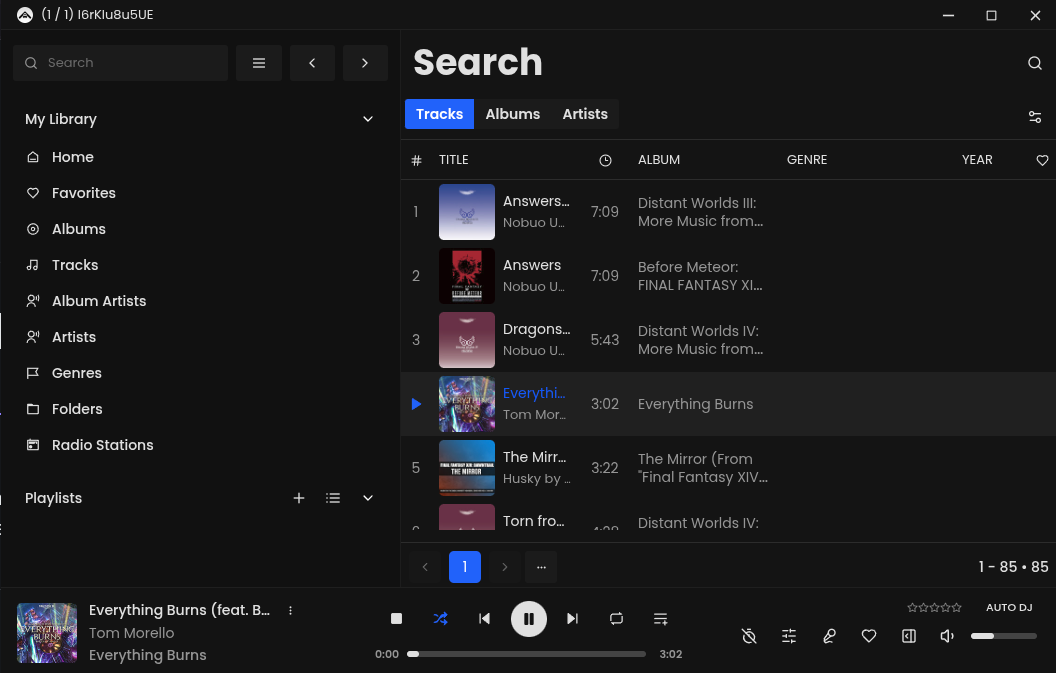
The specific project revived in this analysis was a middleware shim. The goal was to make YouTube Music conform to the OpenSubsonic API, a contract that decouples music streaming clients from servers. This would allow the author to use preferred clients like Navidrome, Feishin, or Symfonium with YouTube Music content. The technical stack relied on ytmusicapi for metadata lookups and yt-dlp for the actual music streaming. While the author had previously built a manual proof of concept, the project stalled during the implementation of the extensive list of endpoints required for full API conformance.
Testing Claude Code with Opus 4.6
Using a $50 credit, the author tested Claude Code (utilizing the Opus 4.6 model) to rewrite the project from scratch. The author noted that having a prior manual implementation allowed for specific constraints to be set for the AI. The experiment highlighted that AI is particularly adept at handling projects where the logic isn't necessarily novel but requires adhering to a strict, well-defined specification. This allows the developer to bypass the repetitive work of endpoint implementation that often leads to project abandonment.
Industry Impact
The use of AI coding assistants to finish 'abandoned' code signifies a shift in developer productivity. By lowering the barrier to completing the 'boring' parts of software development—such as API conformance and boilerplate implementation—AI tools may increase the overall output of the open-source and hobbyist communities. However, the author also hints at the evolving nature of these tools, noting that opinions on specific models like Claude Code can shift as the technology and its performance change over time.
Frequently Asked Questions
Question: Why are unfinished projects good for testing AI?
Unfinished projects are ideal because they have no stakes; they were unlikely to be completed otherwise. They provide a real-world codebase to test how well an AI can follow a specification or complete a 'long tail' of tasks that a human developer found too tedious to finish.
Question: What tools were used in the YouTube Music shim project?
The project utilized ytmusicapi for retrieving metadata and yt-dlp for programmatically streaming music, all while aiming to conform to the OpenSubsonic API contract.
Question: How does the author view the role of AI in coding?
The author suggests that AI is highly effective for implementing clear specifications and specs that are not necessarily novel, helping to bridge the gap between a proof of concept and a fully functional, conformant application.