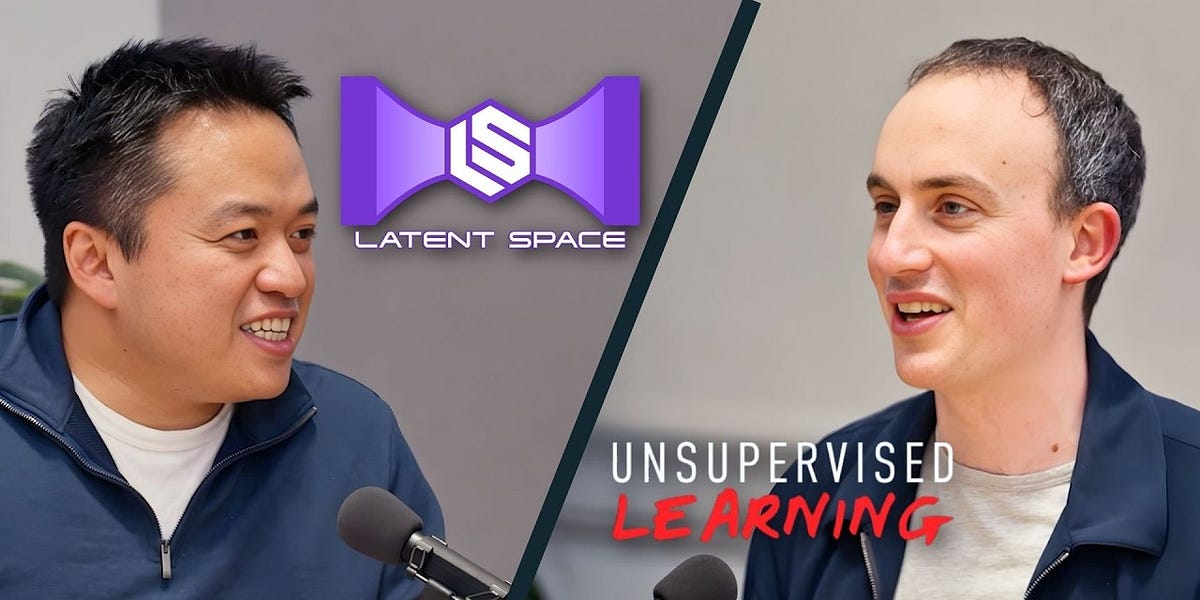
AIE Europe Debrief and Agent Labs Thesis: Exploring Unsupervised Learning and Latent Space Crossover in 2026
This report provides a concise debrief of the AIE Europe event and introduces the Agent Labs thesis, focusing on the intersection of unsupervised learning and latent space developments as of early 2026. The content captures a specific moment in the AI industry timeline, having been recorded following the AIE Europe conference but notably prior to the major acquisition deal between Cursor and xAI. As a specialized crossover episode from Latent Space, it examines the evolving landscape of autonomous agents and the technical frameworks supporting them. The discussion serves as a historical and technical marker for the state of unsupervised learning research and its practical applications within the burgeoning agent ecosystem before significant market shifts occurred.
Key Takeaways
- Event Debrief: Insights gathered from the AIE Europe conference regarding the state of AI in 2026.
- Agent Labs Thesis: A focused look at the theoretical and practical frameworks for autonomous agents.
- Technical Intersection: Exploration of the crossover between unsupervised learning methodologies and latent space applications.
- Chronological Context: The analysis is situated after AIE Europe but before the landmark Cursor-xAI deal.
In-Depth Analysis
The AIE Europe Perspective
The post-event debrief from AIE Europe highlights the primary themes dominating the European AI landscape in 2026. The discussions center on how the industry is moving beyond supervised models toward more autonomous systems. This transition is characterized by a shift in how data is processed and how models are trained to understand complex environments without constant human intervention.
Agent Labs and Unsupervised Learning
The Agent Labs thesis presents a specialized view on the future of AI agents. By focusing on the crossover between unsupervised learning and latent space, the thesis suggests that the next generation of agents will rely on more sophisticated internal representations. This approach aims to enhance the ability of agents to navigate and operate within high-dimensional data spaces, providing a foundation for more robust and independent AI behavior.
Industry Impact
Shaping the Agent Ecosystem
The integration of unsupervised learning within latent space frameworks represents a significant shift for developers and researchers. This crossover is expected to influence how agents are built, moving away from rigid programming toward systems that can learn and adapt through latent representations. Such developments are critical for the scalability of AI solutions across various sectors.
Market Timing and Strategic Shifts
The timing of this debrief is particularly noteworthy. By capturing the industry sentiment just before the Cursor-xAI deal, it provides a baseline for understanding the strategic motivations that drive large-scale acquisitions in the AI space. It highlights the value placed on agent-centric technologies and the underlying research that makes them viable.
Frequently Asked Questions
Question: What is the primary focus of the Agent Labs thesis?
The thesis focuses on the crossover between unsupervised learning and latent space, specifically looking at how these technical areas facilitate the development of advanced AI agents.
Question: When was this debrief recorded in relation to major industry events?
This debrief was recorded after the AIE Europe conference but before the announcement of the deal between Cursor and xAI in 2026.