
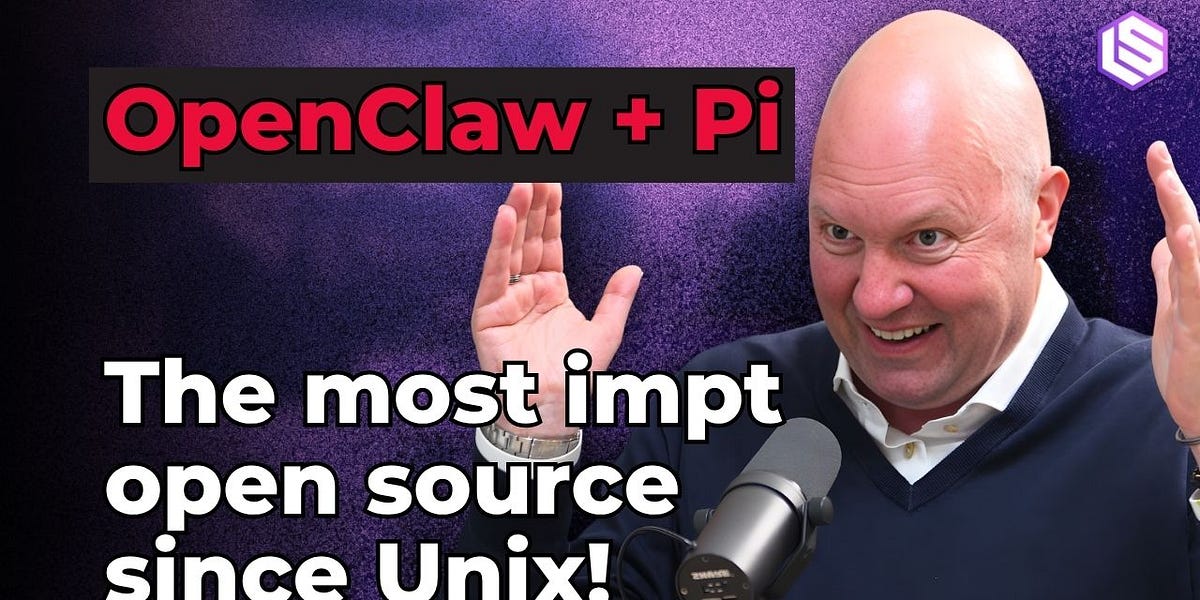
Marc Andreessen Discusses the Death of the Browser, Pi + OpenClaw, and AI Evolution
In a recent discussion with Latent Space, legendary technologist Marc Andreessen provides a deep dive into the shifting landscape of the internet and artificial intelligence. The conversation explores the provocative concept of the 'Death of the Browser' and the emergence of new frameworks like Pi and OpenClaw. Andreessen reflects on the current technological era, arguing why the present shift in AI development is fundamentally different from previous cycles. As a pioneer of the modern web, his insights offer a unique perspective on how foundational software interfaces are evolving in the age of intelligent agents and open-source ecosystems.
Key Takeaways
- Marc Andreessen explores the potential decline of the traditional web browser as the primary interface for internet interaction.
- Analysis of the integration and impact of Pi and OpenClaw within the current tech stack.
- A detailed examination of why the current AI revolution represents a unique departure from historical tech cycles.
- Insights into the evolving relationship between users, software agents, and open-source development.
In-Depth Analysis
The Death of the Browser and the Rise of New Interfaces
Marc Andreessen, a foundational figure in the creation of the web browser, reflects on the potential end of the browser's dominance. The discussion suggests that as AI agents and more direct forms of computation emerge, the traditional window-based navigation of the internet may be reaching its limit. This shift implies a move toward more integrated, invisible interfaces where the 'browser' as we know it is replaced by more specialized or autonomous systems.
Pi, OpenClaw, and the New Tech Stack
The conversation highlights the roles of Pi and OpenClaw in the modern development environment. These tools represent a shift toward more open and collaborative frameworks that allow for greater flexibility in how AI is deployed and managed. By examining these specific technologies, Andreessen points toward a future where the infrastructure of the internet is increasingly defined by open-source accessibility and high-performance integration.
Why This Time Is Different
Addressing the skepticism often found in tech cycles, Andreessen explains the specific factors that distinguish the current AI boom from previous waves of innovation. He posits that the fundamental capabilities of today's models, combined with the speed of adoption and the depth of integration into existing workflows, create a trajectory that is not merely a repeat of past trends but a structural transformation of the industry.
Industry Impact
The insights shared by Andreessen have significant implications for the AI and software industries. If the browser is indeed 'dying,' companies must pivot toward agent-centric architectures. Furthermore, the emphasis on OpenClaw suggests a growing reliance on open-source standards to drive the next generation of software. This transition marks a move away from centralized platforms toward a more fragmented yet intelligent ecosystem where the user experience is mediated by AI rather than manual navigation.
Frequently Asked Questions
Question: What does Marc Andreessen mean by 'The Death of the Browser'?
It refers to the transition away from traditional web browsers as the primary gateway to the internet, suggesting that AI agents and new software frameworks will provide more direct ways to interact with data and services.
Question: Why is the current AI cycle considered different from previous ones?
According to the discussion, the current era is defined by unique technological breakthroughs and a level of utility that surpasses previous hype cycles, leading to a more permanent shift in how technology is built and consumed.
Question: What are Pi and OpenClaw in this context?
These are specific technologies or frameworks discussed as part of the new wave of tools enabling the next generation of AI-driven applications and open-source development.


