
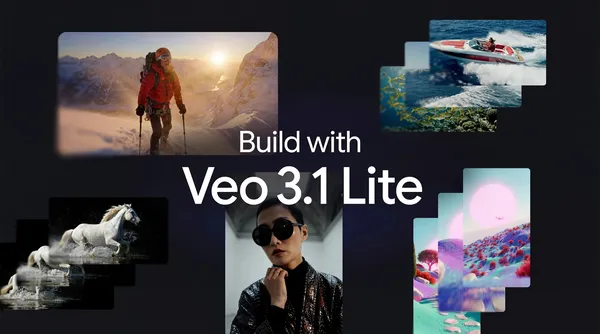
Google Launches Veo 3.1 Lite: A Cost-Effective Video Generation Model for Developers and Enterprises
Google has officially announced the release of Veo 3.1 Lite, positioned as its most cost-effective video generation model to date. Designed to provide high-quality video synthesis at a lower price point, the model is now accessible to developers and businesses. Currently, Veo 3.1 Lite is available in a paid preview format through the Gemini API, allowing for seamless integration into various applications. Additionally, Google has made the model available for testing within Google AI Studio, providing a sandbox environment for users to explore its capabilities. This launch marks a significant step in making advanced AI-driven video creation more accessible and scalable for the developer community.
Key Takeaways
- Cost-Efficiency: Veo 3.1 Lite is introduced as Google's most economical model for video generation.
- API Integration: The model is now accessible via the Gemini API for paid preview users.
- Developer Access: Testing is currently available through Google AI Studio for immediate experimentation.
- Strategic Positioning: This release focuses on balancing performance with cost-effectiveness for broader adoption.
In-Depth Analysis
Accessibility and Integration via Gemini API
Google's rollout of Veo 3.1 Lite emphasizes accessibility for developers looking to integrate video generation into their workflows. By making the model available through the Gemini API in a paid preview, Google is providing a structured pathway for enterprises to build and scale video-based solutions. This integration suggests a focus on reliability and developer-friendly infrastructure, allowing for programmatic access to video synthesis tools that were previously more resource-intensive.
Testing and Development in Google AI Studio
In addition to the API availability, the inclusion of Veo 3.1 Lite in Google AI Studio serves as a critical entry point for rapid prototyping. Google AI Studio allows developers to test the model's capabilities in a controlled environment before committing to full-scale deployment. This dual-track availability—API for production and AI Studio for testing—indicates Google's strategy to capture both the experimental and professional segments of the AI development market.
Industry Impact
The introduction of Veo 3.1 Lite represents a shift in the AI video generation landscape toward economic sustainability. By prioritizing a "Lite" version that is cost-effective, Google is addressing one of the primary barriers to entry for AI video: high computational and financial costs. This move is likely to increase competition among major AI providers to offer more affordable, scalable video models, potentially leading to a surge in AI-generated content across social media, marketing, and software applications. It signals that the industry is moving from the "innovation at any cost" phase to a more mature phase focused on efficiency and commercial viability.
Frequently Asked Questions
Question: How can I access the Veo 3.1 Lite model?
Veo 3.1 Lite is currently available through the Gemini API for those in the paid preview program, and it can also be accessed for testing purposes within Google AI Studio.
Question: What makes Veo 3.1 Lite different from other models?
According to Google, Veo 3.1 Lite is specifically designed to be their most cost-effective video generation model, aiming to provide a balance between performance and affordability for developers.
