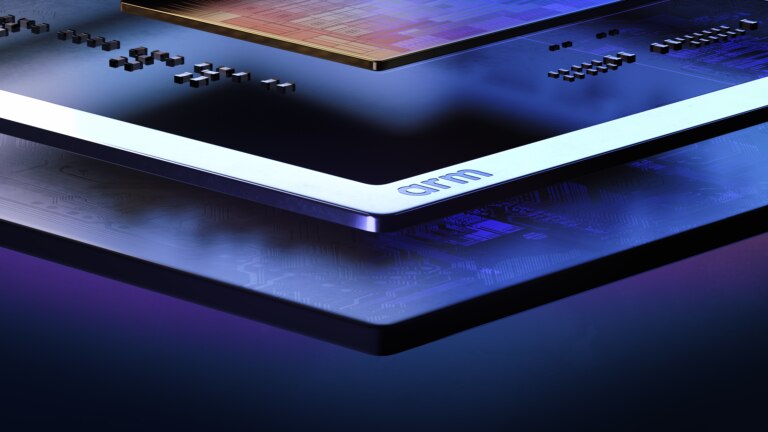
Arm Unveils AGI CPU: A New Silicon Foundation Designed for the Agentic AI Cloud Era
Arm has announced the Arm AGI CPU, a groundbreaking production-ready silicon product built on the Arm Neoverse platform. Marking a significant shift in the company's 35-year history, Arm is now delivering its own silicon products to provide customers with more flexibility in deploying AI infrastructure. The Arm AGI CPU is specifically designed to address the demands of agentic AI, where software agents operate continuously and autonomously at a global scale. By extending beyond IP and Compute Subsystems (CSS), Arm aims to offer breakthrough rack-level performance and efficiency. This new class of CPU serves as the pacing element for modern data centers, orchestrating accelerators, managing complex memory tasks, and coordinating the massive fan-out required for large-scale AI agent coordination.
Key Takeaways
- First-Ever Arm Silicon: For the first time in over 35 years, Arm is moving beyond IP licensing to deliver its own production-ready silicon products.
- Agentic AI Focus: The Arm AGI CPU is specifically engineered for the "agentic AI cloud era," where software agents operate without human bottlenecks.
- Neoverse Platform Evolution: Built on the Arm Neoverse platform, this CPU extends the ecosystem from IP and Compute Subsystems (CSS) to full platform-level solutions.
- Infrastructure Orchestration: The CPU acts as the central coordinator for modern AI data centers, managing accelerators, memory, storage, and real-time decision-making.
In-Depth Analysis
A Strategic Shift in Arm's Business Model
The announcement of the Arm AGI CPU represents a historic pivot for Arm. For more than three and a half decades, the company has been known primarily as a provider of semiconductor IP. By introducing its own production-ready silicon, Arm is providing a new level of choice for its customers. Organizations can now choose between building custom silicon using Arm IP, integrating Arm Compute Subsystems (CSS), or deploying these new Arm-designed processors directly. This move is a direct response to the rapid evolution of AI infrastructure and a growing market demand for platforms that can be deployed at significant pace and scale.
Powering the Agentic AI Infrastructure
Arm identifies a fundamental shift in computing: the transition from human-centric interaction to agentic AI. In previous eras, human interaction was the primary bottleneck for system speed. However, agentic AI involves software agents that coordinate tasks and interact with multiple models autonomously. Because these systems run continuously and handle increasingly complex workloads, the CPU has become the "pacing element" of the data center. The Arm AGI CPU is designed to handle this role, managing the orchestration of thousands of distributed tasks, including the scheduling of workloads and the movement of data across global systems.
Rack-Level Performance and Efficiency
Built on the Neoverse platform, the Arm AGI CPU is designed to deliver breakthrough performance at the rack level. In the modern AI data center, the CPU's responsibilities have expanded to include the management of accelerators and the coordination of fan-out across vast numbers of agents. By focusing on efficiency and scale, Arm aims to provide the silicon foundation necessary for the next generation of AI infrastructure, ensuring that distributed AI systems can operate effectively as they scale to meet global demands.
Industry Impact
The introduction of the Arm AGI CPU signals a major change in the competitive landscape of AI hardware. By offering its own silicon, Arm is positioning itself to compete more directly in the high-performance computing and cloud AI markets. This move addresses the critical need for specialized hardware that can keep up with the continuous, autonomous nature of agentic AI. As AI systems move away from human-defined constraints, the industry's reliance on high-efficiency, high-orchestration CPUs like the Arm AGI CPU is expected to grow, potentially setting a new standard for how AI data centers are designed and deployed.
Frequently Asked Questions
Question: How does the Arm AGI CPU differ from previous Arm offerings?
Historically, Arm provided IP and Compute Subsystems (CSS) for others to build upon. The Arm AGI CPU is Arm's first production-ready silicon product in its 35-year history, allowing customers to deploy Arm-designed processors directly.
Question: What is "Agentic AI" in the context of this announcement?
Agentic AI refers to software agents that coordinate tasks, interact with multiple models, and make decisions in real time without being limited by the pace of human interaction. These systems operate continuously at a global scale.
Question: What role does the CPU play in an AI data center according to Arm?
The CPU serves as the pacing element and orchestrator. It is responsible for managing accelerators, handling memory and storage, scheduling workloads, and coordinating the communication between large numbers of AI agents.