
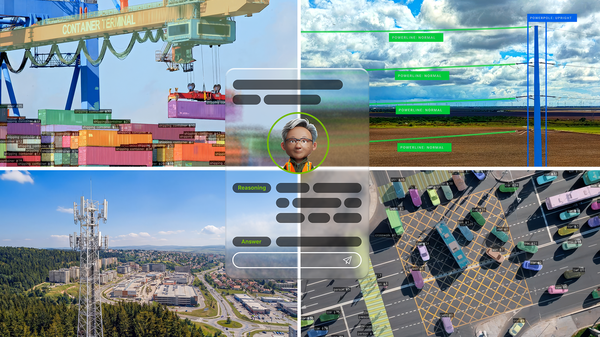
NVIDIA and T-Mobile Partner on Edge AI-RAN Infrastructure
NVIDIA and T-Mobile have announced a strategic collaboration with Nokia and a growing ecosystem of developers. The partnership focuses on integrating physical AI applications across distributed edge AI networks, utilizing advanced AI-RAN-ready infrastructure to bring artificial intelligence closer to the edge.
Key Takeaways
- Strategic Partnership: NVIDIA and T-Mobile are collaborating on a new technological infrastructure initiative.
- Key Collaborators: The project explicitly includes telecommunications provider Nokia alongside an expanding ecosystem of developers.
- Core Technology: The primary focus of the integration is the deployment of physical AI applications.
- Network Infrastructure: The deployment utilizes distributed edge AI networks built upon AI-RAN-ready infrastructure.
In-Depth Analysis
The Collaborative Ecosystem
The recent announcement highlights a strategic alignment between major technology and telecommunications entities. NVIDIA and T-Mobile are at the forefront of this initiative, explicitly stating their collaboration with Nokia. This represents a significant convergence of AI hardware/software expertise with telecommunications network management. Furthermore, the inclusion of a "growing ecosystem of developers" indicates that this is not a closed, proprietary partnership, but rather an expanding network intended to foster broader development and application creation. By combining the resources of these organizations, the initiative establishes a foundational ecosystem for future AI network deployments.
Physical AI and Edge Networks
The core objective of this integration is the deployment of "physical AI applications." While the specific applications and end-user use cases are not detailed in the initial announcement, the focus on physical AI represents a targeted approach to artificial intelligence that operates within or interacts with physical environments. The integration of these applications signifies a push to move AI capabilities away from strictly centralized data centers and into "distributed edge AI networks." This distributed approach is designed to bring the computational power and AI processing closer to where the physical applications actually reside.
AI-RAN-Ready Infrastructure
To support these physical AI applications, the partnership is leveraging "AI-RAN-ready infrastructure." AI-RAN (Artificial Intelligence Radio Access Network) represents the underlying technological framework enabling this shift. By utilizing distributed edge AI networks on this specific infrastructure, the collaboration aims to process and deliver AI capabilities effectively across modern telecommunications networks, ensuring that the infrastructure is prepared for the demands of next-generation physical AI.
Industry Impact
The integration of physical AI applications on AI-RAN-ready infrastructure by NVIDIA, T-Mobile, and Nokia marks a notable development in the intersection of telecommunications and artificial intelligence. This initiative signals an industry movement toward distributed edge AI networks, highlighting the growing importance of developer ecosystems in building out these capabilities. By preparing the infrastructure for AI-RAN, these companies are laying the groundwork for how physical AI will be deployed and managed over distributed networks in the future.
Frequently Asked Questions
Question: Who are the primary companies involved in this announcement?
Answer: NVIDIA and T-Mobile are leading the initiative, working in direct collaboration with Nokia and a growing ecosystem of developers.
Question: What type of applications are being integrated into the network?
Answer: The partnership is specifically focused on integrating physical AI applications.
Question: What infrastructure is supporting this integration?
Answer: The integration is being built on distributed edge AI networks and utilizes AI-RAN-ready infrastructure.


