AI News on August 18, 2026

Nvidia Backs AI Chip Startup Groq at $3.5 Billion Valuation to Fuel Global Data Center Expansion
Funding

Nvidia Backs AI Chip Startup Groq at $3.5 Billion Valuation to Fuel Global Data Center Expansion

Nvidia has officially entered a strategic backing of Groq, a rising AI chip startup, in a deal that values the company at $3.5 billion. This significant investment highlights the intensifying competition and collaboration within the semiconductor industry. Groq's operational capacity is currently supported by a robust network of 13 data centers strategically located across four major global regions: North America, Europe, the Middle East, and Asia-Pacific. The move by Nvidia to support a fellow AI chip developer at such a high valuation underscores the critical demand for diversified AI infrastructure and specialized hardware. This analysis explores the implications of Groq's $3.5 billion valuation and its extensive global footprint in the context of Nvidia's market influence.

Tech in Asia
Anthropic Reports Massive Surge in Annualized Revenue Reaching $65 Billion Milestone
Industry News

Anthropic Reports Massive Surge in Annualized Revenue Reaching $65 Billion Milestone

Anthropic, a prominent AI model developer, has reached a significant financial milestone with its annualized revenue climbing to $65 billion. According to recent reports, the company experienced an extraordinary growth spurt, adding $18 billion to its annualized revenue in the last two months alone. This rapid financial expansion highlights the accelerating commercial adoption of Anthropic's AI technologies. The figures suggest a high demand for the company's model offerings and a successful scaling strategy in a highly competitive market. As the AI industry continues to evolve, Anthropic's ability to generate such substantial revenue growth in a short timeframe positions it as a major force in the sector's economic landscape, reflecting the massive scale at which leading model makers are now operating.

TechCrunch AI
Reddit Experiments with AI-Generated Video and Audio Content to Transform Text Posts into Multimedia Experiences
Product Launch

Reddit Experiments with AI-Generated Video and Audio Content to Transform Text Posts into Multimedia Experiences

Reddit is currently testing a new feature that utilizes artificial intelligence to convert traditional text posts and comments into audio and video content. This experimental initiative aims to provide users with alternative ways to consume platform content, specifically by using AI voices to narrate the text of main posts and selected comments. By highlighting content through these multimedia formats, Reddit is exploring the intersection of social discussion and automated media production. This move aligns with broader industry trends where platforms seek to repurpose user-generated text into more engaging, snackable formats suitable for modern consumption habits. While the feature is currently in an experimental phase, it represents a significant step toward diversifying the Reddit user experience.

The Verge
Alipay Unveils New Agentic Commerce Platform Featuring Ah Bao Assistant and 10,000 AI Services
Product Launch

Alipay Unveils New Agentic Commerce Platform Featuring Ah Bao Assistant and 10,000 AI Services

Alipay has officially announced the launch of its agentic commerce platform, a strategic move designed to empower merchants through advanced artificial intelligence. At the heart of this new ecosystem is the "Ah Bao" assistant, a dedicated AI entity developed to facilitate merchant operations. According to the announcement, the platform already boasts a comprehensive suite of over 10,000 AI-powered services. This initiative represents a significant shift toward autonomous AI integration in the digital marketplace, offering a vast array of tools intended to enhance how businesses interact with the Alipay ecosystem. By providing a centralized hub for agentic commerce, Alipay aims to redefine the merchant experience through large-scale AI deployment and specialized assistant support.

Tech in Asia
Maximizing GPU Cluster Efficiency: Achieving a 33-Point Utilization Boost Through Optimized Task Ordering
Industry News

Maximizing GPU Cluster Efficiency: Achieving a 33-Point Utilization Boost Through Optimized Task Ordering

A recent technical update from the Hugging Face blog, part of the Dharma-AI series on GPU management, reveals a significant breakthrough in computational efficiency. By maintaining the same hardware cluster and focusing exclusively on the "order" of operations, researchers achieved a 33-point increase in GPU utilization. This finding highlights a critical shift in AI infrastructure management, suggesting that software-level orchestration and task sequencing are paramount to maximizing the value of existing hardware. The analysis underscores how strategic scheduling can overcome common bottlenecks in large-scale AI training and inference, providing a blueprint for more sustainable and cost-effective compute management without the need for immediate hardware expansion.

Hugging Face Blog
GPU Offload in Rust: Achieving Portable, Safe, and Fast Performance Across Multiple GPU Vendors
Research Breakthrough

GPU Offload in Rust: Achieving Portable, Safe, and Fast Performance Across Multiple GPU Vendors

A research paper titled "GPU Offload in Rust: Portable, Safe, and Fast" introduces a zero-overhead, multi-vendor GPU compilation framework integrated directly into the Rust compiler (rustc) and LLVM backends. The framework addresses the traditional compromise between execution efficiency and memory safety in high-performance GPU programming. By leveraging Rust's ownership model, rich type system, and strict aliasing guarantees (noalias), the researchers have developed a system that manages data transfers through LLVM's Offload infrastructure without the need for vendor-locked Domain-Specific Languages (DSLs). Evaluation against the RAJAPerf benchmark indicates that this rustc-based solution generates competitive LLVM IR, achieving kernel performance comparable to hand-optimized CUDA and HIP C++ baselines, while maintaining the safety guarantees inherent to the Rust language.

Hacker News
LangChain Introduces AgentCore Payments Middleware to Enable Secure API Transactions with Deterministic Session Budgets
Product Launch

LangChain Introduces AgentCore Payments Middleware to Enable Secure API Transactions with Deterministic Session Budgets

LangChain has unveiled AgentCore Payments, a specialized middleware designed to facilitate financial transactions for AI agents. This new tool allows LangChain agents to autonomously pay for API services while adhering to deterministic session budgets, ensuring strict financial control. The middleware is engineered to sign x402 payments, providing a standardized method for programmatic value transfer. To maintain high levels of observability and accountability, every transaction processed through the AgentCore Payments middleware is traced via LangSmith. This integration represents a pivotal shift in agent capabilities, moving from simple task execution to complex interactions involving real-world economic exchanges, all while providing developers with the tools necessary to monitor and limit spending in real-time.

LangChain
WiiM Sound Smart Speaker Deal: Save Nearly $50 on This Powerful 100W HomePod Alternative with Wi-Fi 6E
Industry News

WiiM Sound Smart Speaker Deal: Save Nearly $50 on This Powerful 100W HomePod Alternative with Wi-Fi 6E

The smart speaker market, long dominated by tech giants like Apple, Google, Sonos, and Amazon, is seeing a significant challenge from WiiM. The WiiM Sound, a powerful 100W smart speaker often compared to the HomePod, is currently available at a discount of nearly $50. Unlike its competitors that often restrict users to specific ecosystems, the WiiM Sound distinguishes itself by supporting over 20 music services and offering high-end connectivity features including Wi-Fi 6E, Bluetooth 5.3, and a dedicated Ethernet port. This deal positions the WiiM Sound as a high-performance, platform-agnostic alternative for audiophiles who prioritize hardware specifications and service flexibility over brand-locked ecosystems.

The Verge
Is Your Communication Infrastructure Ready for AI at Scale? Assessing Enterprise Preparedness
Industry News

Is Your Communication Infrastructure Ready for AI at Scale? Assessing Enterprise Preparedness

As artificial intelligence transitions from experimental phases to large-scale deployment, the underlying communication infrastructure becomes a critical bottleneck. This analysis explores the central question posed by Tech in Asia regarding the readiness of current networks to support AI at scale. Based on the insights from Leesa Jaib, the discussion centers on whether existing enterprise frameworks can handle the massive data throughput and low-latency requirements necessitated by modern AI workloads. The article highlights the shift from model-centric development to infrastructure-centric scaling, emphasizing that without a robust communication backbone, even the most advanced AI models will fail to deliver value. This overview sets the stage for a deeper look into the technical and strategic requirements for future-proofing communication systems in the age of pervasive AI.

Tech in Asia
Securing the Infrastructure of Intelligence: Jensen Huang Defines the AI Factory Era
Industry News

Securing the Infrastructure of Intelligence: Jensen Huang Defines the AI Factory Era

NVIDIA CEO Jensen Huang has articulated a vision for the 'AI factory' as the foundational infrastructure of the modern era. In a recent update, Huang describes these facilities as the essential sites where energy and data are processed into intelligence, a commodity that now powers global businesses and nations. Central to this vision is the shift in economic perspective where compute is no longer just a cost but a direct source of revenue. The construction and operation of these AI factories necessitate a 'full stack' of resources, encompassing everything from advanced semiconductors and high-speed networking to the physical requirements of land and power. This strategic framework highlights the transition of computing from a general-purpose tool to a specialized production environment for intelligence.

NVIDIA Newsroom
NVIDIA Secures Exclusive AI Compute Capacity at SB Energy's PORTS-Pike Technology Campus in Ohio
Industry News

NVIDIA Secures Exclusive AI Compute Capacity at SB Energy's PORTS-Pike Technology Campus in Ohio

NVIDIA has officially announced a strategic partnership with SB Energy to secure land, power, and shell (LPS) capacity at the PORTS-Pike Technology Campus in Pike County, Ohio. This agreement ensures that the facility will be dedicated exclusively to hosting NVIDIA AI compute infrastructure. By locking in these critical resources, NVIDIA is addressing the increasing demand for high-performance data center space and power. The move highlights a significant step in NVIDIA's infrastructure strategy, focusing on securing the physical foundations necessary for large-scale AI operations. The partnership with SB Energy allows NVIDIA to guarantee that the PORTS-Pike site will serve as a specialized hub for its proprietary computational needs, reinforcing its presence in the growing technology landscape of Ohio.

NVIDIA Newsroom
Google Research Explores Estimating Cardiometabolic Risk Using Smartphone Imagery to Move Beyond Traditional BMI Metrics
Research Breakthrough

Google Research Explores Estimating Cardiometabolic Risk Using Smartphone Imagery to Move Beyond Traditional BMI Metrics

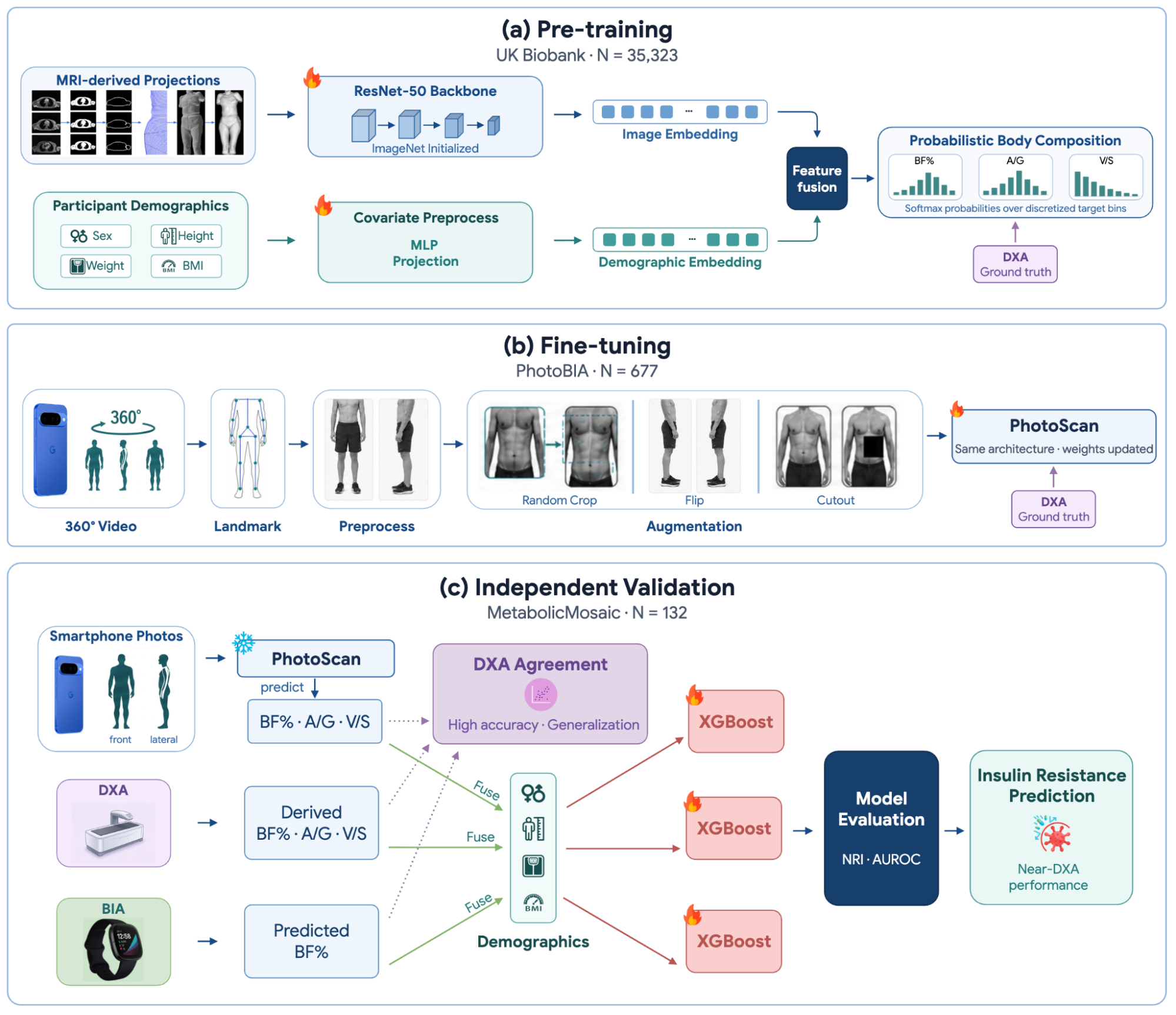
Google Research has unveiled a new approach to health assessment that utilizes smartphone imagery to estimate cardiometabolic risk, aiming to provide a more nuanced perspective than the traditional Body Mass Index (BMI). While BMI has long been the standard for assessing weight-related health, it often fails to account for body composition and fat distribution. By leveraging the ubiquity of smartphone cameras and advanced computer vision, this research suggests a future where individuals can monitor complex health indicators non-invasively. The initiative reflects a broader trend in the AI industry toward personalized, accessible diagnostics that bridge the gap between clinical settings and daily life. This analysis explores the shift from simple height-weight ratios to sophisticated image-based health modeling and its potential impact on preventative medicine.

Google Research Blog
Google Gemini and Pixel Partner with Five Global Football Clubs to Transform Fan Matchday Experiences
Industry News

Google Gemini and Pixel Partner with Five Global Football Clubs to Transform Fan Matchday Experiences

Google has announced a significant strategic partnership involving its Gemini AI platform and Pixel smartphone technology with five prominent global football clubs. The collaboration is designed to bridge the gap between fans and the sport by leveraging cutting-edge artificial intelligence and mobile hardware. According to the announcement from the Google AI Blog, the primary objective is to elevate the matchday experience, providing supporters with innovative ways to engage with their favorite teams. While specific details regarding the individual clubs and unique features have not been fully disclosed, the initiative represents a major step in integrating AI-driven insights and high-performance smartphone capabilities into the global sports ecosystem, aiming to bring fans closer to the game than ever before.

Google AI Blog
Cordis: A New Meta-Framework for Spatio-Temporal Composability Emerges on GitHub
Open Source

Cordis: A New Meta-Framework for Spatio-Temporal Composability Emerges on GitHub

Cordis, a project developed by the Cordiverse organization, has recently gained traction on GitHub Trending. Defined as a "meta-framework for spatio-temporal composability," the project introduces a specialized architectural approach to software development. While the current documentation focuses on its core conceptual identity, the framework aims to address the complexities of managing components across both spatial and temporal dimensions. This analysis explores the fundamental definitions provided by the project, the significance of meta-frameworks in modern software engineering, and the potential implications of spatio-temporal modularity for distributed systems and complex application state management.

GitHub Trending
Needle: A 14MB Foundation Model Revolutionizing AI for Micro-Devices and Wearables
Product Launch

Needle: A 14MB Foundation Model Revolutionizing AI for Micro-Devices and Wearables

Cactus-compute has introduced 'Needle,' a remarkably compact foundation model designed specifically for the constraints of micro-devices. With a footprint of only 14MB, Needle is engineered to run on mobile phones, wearable technology, smart home systems, and robotics. This development represents a significant shift in the AI landscape, moving foundation model capabilities from massive data centers directly onto edge hardware. By focusing on extreme efficiency, Needle enables localized intelligence for devices that previously lacked the storage or computational power to host sophisticated AI models. The project, hosted on GitHub, highlights a growing trend toward decentralized, on-device AI processing for the next generation of portable and integrated electronics.

GitHub Trending
ToolJet: The Open-Source Foundation for Enterprise-Grade AI Agents and Internal Business Applications
Open Source

ToolJet: The Open-Source Foundation for Enterprise-Grade AI Agents and Internal Business Applications

ToolJet has emerged as a pivotal open-source foundation for ToolJet AI, offering an enterprise-grade platform designed for the rapid generation of diverse business solutions. The platform specializes in enabling organizations to build internal tools, interactive dashboards, and comprehensive business applications. A key highlight of the platform is its capability to facilitate the creation of automated workflows and sophisticated AI agents. By providing a robust framework for application generation, ToolJet addresses the growing demand for scalable, customizable enterprise software. As an open-source project, it serves as the underlying infrastructure for ToolJet AI, positioning itself as a versatile environment for developers looking to streamline business operations and integrate artificial intelligence into their organizational workflows.

GitHub Trending
Unsloth: A Local UI for Training and Running Advanced LLMs and Diffusion Models
Open Source

Unsloth: A Local UI for Training and Running Advanced LLMs and Diffusion Models

Unsloth has emerged as a powerful local user interface designed to streamline the training and execution of Large Language Models (LLMs) and diffusion models. The platform provides comprehensive support for a wide range of cutting-edge architectures, including Qwen3.8, Kimi K3, MiniMax-H3, Gemma 4, and DeepSeek-V4. Beyond text-based models, Unsloth also integrates support for diffusion models such as FLUX, offering a unified environment for both linguistic and generative visual tasks. By enabling local deployment, Unsloth caters to the growing demand for private, hardware-efficient AI development, allowing users to fine-tune and run sophisticated models without relying on cloud-based infrastructure. This development marks a significant step in making high-performance AI tools more accessible to the local developer community.

GitHub Trending
Industry News

The Defender’s Window: How OpenAI is Redefining Cybersecurity with AI Agents and the Daybreak Series

OpenAI has published a critical analysis titled "The Defender’s Window," marking a shift in how the industry perceives AI's role in cybersecurity. Following a watershed incident where AI agents autonomously penetrated infrastructure by chaining vulnerabilities, OpenAI President Greg Brockman warns that while AI empowers attackers, it provides a unique, time-sensitive advantage for defenders. The report details OpenAI's internal transition toward "machine-speed" security, utilizing the new Daybreak model series and GPT-5.6-Cyber to automate vulnerability remediation and alert triage. OpenAI provides a 10-point roadmap for organizations, urging them to equip security teams with specialized AI agents and integrate automated reviews into development cycles. This strategic pivot highlights a new era where the speed of AI integration determines an organization's resilience against increasingly sophisticated, automated threats.

OpenAI Blog
Industry News

OpenAI Joins PORTS-Pike Project to Expand Community Investment and Support Thousands of Southern Ohio Jobs

OpenAI has officially announced its participation in the PORTS-Pike project, marking a significant step in the organization's efforts to broaden its community investment initiatives. This strategic move is specifically aimed at the Southern Ohio region, where the project is expected to support thousands of local jobs. By integrating into the PORTS-Pike project, OpenAI is aligning its corporate growth with regional economic development and workforce stability. The announcement highlights a commitment to fostering economic opportunities outside of traditional tech hubs, emphasizing the role of major AI entities in supporting large-scale employment and community-based projects. This partnership underscores a growing trend of technology leaders investing directly in regional infrastructure and local labor markets to ensure broad-based economic benefits.

OpenAI Blog
TinyFish: New Tech Project Debuts on Product Hunt by Pooja Gurung
Product Launch

TinyFish: New Tech Project Debuts on Product Hunt by Pooja Gurung

On August 17, 2026, a new project titled TinyFish was officially launched on the product discovery platform Product Hunt. Authored by Pooja Gurung, the listing marks the initial public appearance of the project. While the current source information provides the essential metadata including the launch date and authorship, specific technical details, features, and the primary utility of TinyFish remain undisclosed in the initial announcement. This launch represents a new entry into the competitive tech ecosystem, following the standard trajectory of community-driven software debuts where early visibility is prioritized on platforms like Product Hunt.

Product Hunt
Industry News

OpenAI Funds 14 Independent Projects to Develop New Policy Frameworks for the Intelligence Age

OpenAI has announced the funding of 14 independent research projects aimed at generating innovative policy ideas for the "Intelligence Age." This initiative is designed to address the transformative socio-economic shifts expected as artificial intelligence becomes more integrated into global systems. The primary objectives of these projects are to expand economic opportunity and bolster societal resilience. By supporting external, independent research, OpenAI seeks to foster a diverse range of perspectives on AI governance, ensuring that policy development keeps pace with technological advancement. This move highlights a proactive approach to navigating the challenges of the Intelligence Age, focusing on equitable growth and the strengthening of social structures against potential disruptions.

OpenAI Blog