Google Research Explores Estimating Cardiometabolic Risk Using Smartphone Imagery to Move Beyond Traditional BMI Metrics
Google Research has unveiled a new approach to health assessment that utilizes smartphone imagery to estimate cardiometabolic risk, aiming to provide a more nuanced perspective than the traditional Body Mass Index (BMI). While BMI has long been the standard for assessing weight-related health, it often fails to account for body composition and fat distribution. By leveraging the ubiquity of smartphone cameras and advanced computer vision, this research suggests a future where individuals can monitor complex health indicators non-invasively. The initiative reflects a broader trend in the AI industry toward personalized, accessible diagnostics that bridge the gap between clinical settings and daily life. This analysis explores the shift from simple height-weight ratios to sophisticated image-based health modeling and its potential impact on preventative medicine.
Key Takeaways
- Beyond BMI: The research emphasizes the need to move past Body Mass Index (BMI) as a sole indicator of health, focusing instead on more comprehensive cardiometabolic risk factors.
- Smartphone Integration: Utilizing smartphone imagery allows for a non-invasive and highly accessible method of gathering health data without specialized clinical equipment.
- Cardiometabolic Focus: The approach specifically targets cardiometabolic risk, which encompasses a range of conditions including cardiovascular disease and metabolic disorders.
- AI-Driven Diagnostics: The use of computer vision technology highlights the growing role of artificial intelligence in interpreting physical characteristics for medical insights.
In-Depth Analysis
The Limitations of BMI in Modern Diagnostics
For decades, the Body Mass Index (BMI) has served as the primary tool for categorizing individuals based on their weight and height. However, as highlighted by the title of the Google Research initiative, there is a growing consensus in the scientific community that we must see "beyond BMI." The fundamental flaw of BMI lies in its simplicity; it does not distinguish between muscle mass and fat mass, nor does it account for the distribution of fat within the body.
Cardiometabolic risk is often more closely tied to visceral fat—the fat stored around internal organs—than to total body weight. By focusing on imagery rather than just numerical weight, researchers aim to capture visual cues that are more indicative of an individual's actual metabolic state. This shift represents a transition from a one-dimensional metric to a multi-dimensional understanding of human physiology, where the physical form provides a richer dataset for risk estimation.
Leveraging Smartphone Imagery for Health Insights
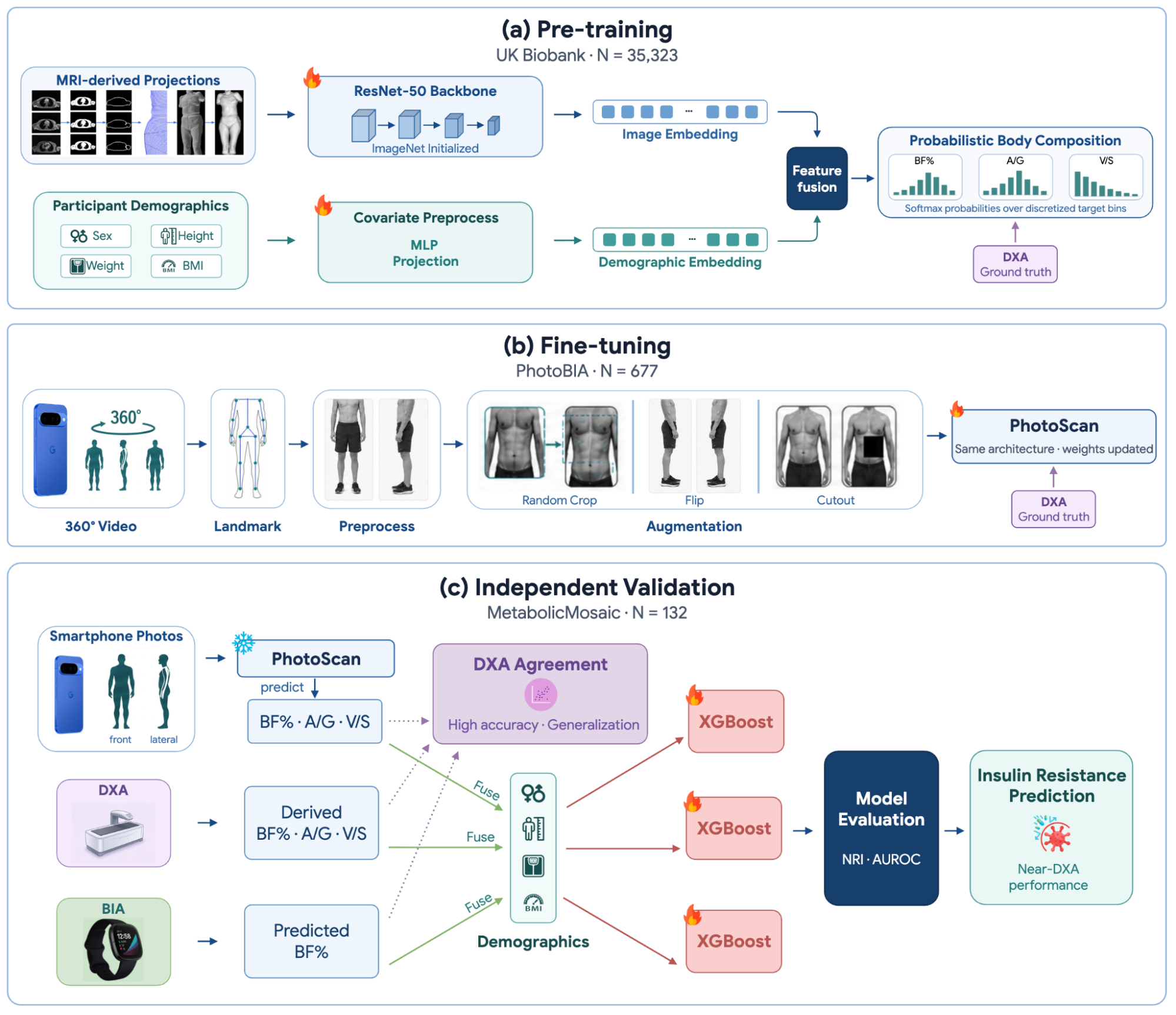
The core innovation discussed by Google Research involves the use of smartphone imagery as a diagnostic interface. In the current healthcare landscape, assessing cardiometabolic risk typically requires blood tests, physical examinations, and sometimes expensive imaging like DXA scans. The prospect of using a standard smartphone camera to estimate these risks democratizes access to health information.
Computer vision models can be trained to identify subtle physical markers that correlate with health risks. While the specific technical architecture of the models is part of the broader research context, the application is clear: transforming a consumer device into a health monitoring tool. This approach leverages the high resolution and ubiquity of modern mobile sensors to collect data that was previously only available in a clinical environment. By analyzing body shape, proportions, and other visual indicators, the technology seeks to provide a proxy for internal health markers that BMI simply cannot detect.
Bridging the Gap Between Clinical Data and Consumer Technology
The integration of health estimation into smartphones represents a significant step in the consumerization of healthcare. By providing a method to estimate cardiometabolic risk through imagery, Google Research is addressing the barrier of accessibility. Many individuals at risk for metabolic syndrome may not have regular access to comprehensive medical screenings. A smartphone-based tool provides a low-friction entry point for health awareness.
Furthermore, this research points toward a future of continuous monitoring rather than episodic clinical visits. If risk can be estimated through imagery, individuals can track changes over time, potentially identifying health trends before they manifest as chronic conditions. This proactive approach is essential for managing cardiometabolic health, where early intervention can significantly alter long-term outcomes.
Industry Impact
The move toward image-based health assessment has profound implications for the AI and healthcare industries. First, it validates the role of computer vision as a primary diagnostic tool, moving it from specialized medical imaging (like X-rays and MRIs) into the hands of the general public. This could lead to a surge in "self-care" AI applications that provide preliminary screenings for various conditions.
Second, for the insurance and wellness industries, more accurate risk assessment tools beyond BMI could lead to more personalized health plans and incentives. If technology can accurately predict cardiometabolic risk, it allows for a more targeted allocation of healthcare resources. Finally, this research sets a precedent for how big tech companies can utilize their expertise in AI and hardware to address global health challenges, potentially shifting the focus of digital health from simple activity tracking to complex physiological analysis.
Frequently Asked Questions
Question: Why is it important to look beyond BMI for health assessments?
BMI is a limited metric because it only considers height and weight. It cannot distinguish between muscle and fat, nor can it identify where fat is stored. Since visceral fat is a major driver of cardiometabolic risk, looking beyond BMI allows for a more accurate assessment of an individual's actual health status and risk for diseases like diabetes or heart disease.
Question: How can a smartphone camera estimate cardiometabolic risk?
Smartphone imagery can be analyzed using computer vision and AI to identify physical markers and body compositions that correlate with health risks. By processing visual data that reflects body shape and fat distribution, the technology can estimate risks that are typically measured through more invasive or expensive clinical procedures.
Question: Is this technology intended to replace doctors?
No, the research suggests that smartphone imagery is a tool for estimation and screening. It is intended to provide more accessible health insights and encourage individuals to seek professional medical advice when risks are identified. It serves as a bridge to clinical care rather than a replacement for professional diagnosis.