AI News on May 21, 2026

Mastering Academic Research with Claude Code: A Comprehensive Workflow from Research to Final Publication
Technical Tutorial

Mastering Academic Research with Claude Code: A Comprehensive Workflow from Research to Final Publication

The GitHub repository 'academic-research-skills,' developed by user Imbad0202, has emerged as a significant resource for researchers looking to integrate AI into their scholarly workflows. The project outlines a structured five-stage process for academic work using Claude Code: Research, Writing, Review, Revision, and Finalization. This methodology provides a clear roadmap for navigating the complexities of academic production, from the initial data gathering phase to the final polishing of a manuscript. With the release of version 3.9.4.1, the repository highlights the growing trend of utilizing specialized AI tools to enhance productivity and maintain rigor in academic environments. By following this systematic approach, users can leverage Claude Code to streamline the transition between different phases of the research lifecycle, ensuring a cohesive and well-reviewed final output.

GitHub Trending
RTK: The Rust-Based CLI Agent Slashing LLM Token Consumption by Up to 90 Percent
Industry News

RTK: The Rust-Based CLI Agent Slashing LLM Token Consumption by Up to 90 Percent

RTK (Rust Token Killer) is a newly released CLI agent designed to optimize Large Language Model (LLM) interactions by significantly reducing token usage. Developed by rtk-ai and hosted on GitHub, this tool claims to cut token consumption by 60% to 90% during common development commands. Built as a single Rust binary with zero external dependencies, RTK offers a lightweight and efficient solution for developers looking to minimize costs and latency associated with LLM-powered workflows. Its focus on efficiency and ease of deployment positions it as a notable utility in the growing ecosystem of AI-driven development tools, addressing the critical industry challenge of high operational costs in AI integration.

GitHub Trending
AgentMemory Claims Top Spot as Leading Persistent Memory Solution for AI Coding Agents in Real-World Benchmarks
Open Source

AgentMemory Claims Top Spot as Leading Persistent Memory Solution for AI Coding Agents in Real-World Benchmarks

AgentMemory, a new project developed by rohitg00, has officially been ranked as the number one persistent memory solution for AI coding agents. This ranking is based on rigorous real-world benchmarks, distinguishing it from theoretical or synthetic performance tests. As AI agents increasingly take on complex, multi-step software development tasks, the ability to maintain state and context through persistent memory has become a critical bottleneck. AgentMemory addresses this by providing a high-performance persistence layer that allows agents to retain information across sessions. Its rise to the top of the benchmarks and its recent appearance on GitHub Trending highlight its growing importance in the ecosystem of autonomous coding tools, offering a validated solution for developers seeking to enhance the reliability and long-term memory of their AI-driven agents.

GitHub Trending
Anthropic Launches Official Claude Code Plugin Directory to Enhance AI-Driven Development Ecosystem
Product Launch

Anthropic Launches Official Claude Code Plugin Directory to Enhance AI-Driven Development Ecosystem

Anthropic has officially introduced the Claude Code Plugin Directory, a curated repository of high-quality plugins designed specifically for the Claude Code environment. Hosted on GitHub under the Anthropic organization, this initiative provides a centralized and officially managed source for extensions that expand the capabilities of Anthropic's AI coding tools. By maintaining this directory, Anthropic ensures a standard of quality and reliability for the developer community, allowing for more specialized and efficient AI-assisted programming workflows. The move marks a significant step in building a robust, extensible ecosystem around Claude, positioning it as a versatile platform for modern software development.

GitHub Trending
CLI-Anything: HKUDS Project Aims to Provide Native AI Agent Support for All Software
Industry News

CLI-Anything: HKUDS Project Aims to Provide Native AI Agent Support for All Software

CLI-Anything, a new initiative developed by the HKUDS (University of Hong Kong Data Science Lab), has emerged as a significant project on GitHub Trending. The project's core mission is to enable all software to natively support intelligent agents through a Command Line Interface (CLI) framework. By introducing the CLI-Hub platform, the developers aim to bridge the gap between traditional software applications and modern AI agent capabilities. This development represents a strategic shift toward universal AI integration, focusing on the CLI as a foundational layer for agentic interaction. As an open-source project, CLI-Anything seeks to standardize how software interacts with AI, potentially transforming the landscape of software automation and the broader AI ecosystem by making agent support a native feature across diverse platforms.

GitHub Trending
OpenHuman: A New Open-Source Private AI Superintelligence Project Emerges on GitHub by TinyHumansAI
Open Source

OpenHuman: A New Open-Source Private AI Superintelligence Project Emerges on GitHub by TinyHumansAI

OpenHuman, a new project developed by tinyhumansai, has recently gained attention on GitHub as a private AI superintelligence solution. The project is built on three core principles: privacy, simplicity, and high-performance power. By positioning itself as a "private superintelligence," OpenHuman aims to provide users with a robust AI experience that remains entirely under their control. While the initial documentation is concise, the project's focus on making powerful AI accessible and secure reflects a growing demand for decentralized and user-centric artificial intelligence tools. This analysis explores the foundational claims of the OpenHuman project and its potential impact on the open-source AI community, emphasizing the shift toward private, localized superintelligence models that do not compromise on ease of use.

GitHub Trending
Superpowers: A Comprehensive Software Development Methodology for Building Advanced Coding Agents
Open Source

Superpowers: A Comprehensive Software Development Methodology for Building Advanced Coding Agents

Superpowers, a new project by developer 'obra' featured on GitHub Trending, introduces a robust software development methodology and framework specifically designed for coding agents. The framework is built upon a foundation of composable skills and initial instructions, providing a structured approach to agentic software engineering. By offering a proven methodology, Superpowers aims to streamline how developers create and manage intelligent agents capable of performing complex coding tasks. The project emphasizes modularity and clear instructional sets, allowing for the assembly of sophisticated agent behaviors from discrete, reusable components. This development marks a significant step toward standardizing the creation of autonomous AI agents within the software development lifecycle.

GitHub Trending
CloakBrowser: The Stealth Chromium Fork Achieving 100% Success in Bot Detection Tests
Open Source

CloakBrowser: The Stealth Chromium Fork Achieving 100% Success in Bot Detection Tests

CloakBrowser, a new stealth-focused Chromium fork developed by CloakHQ, has surfaced as a powerful tool for developers and automation experts. Designed as a direct, drop-in replacement for Playwright, CloakBrowser distinguishes itself through source-level fingerprint patches that allow it to bypass modern bot detection mechanisms. According to the project's latest documentation, it has successfully passed 30 out of 30 industry-standard bot detection tests, marking a perfect success rate. By modifying the browser at the source code level rather than relying on high-level JavaScript injections, CloakBrowser provides a more robust and undetectable environment for web automation, scraping, and testing, effectively addressing the growing challenges of anti-bot technologies.

GitHub Trending
Clouted Secures $7 Million Seed Funding to Eliminate Uncertainty in Viral Short-Form Video Creation
Funding

Clouted Secures $7 Million Seed Funding to Eliminate Uncertainty in Viral Short-Form Video Creation

Clouted, an emerging startup specializing in video clipping, has successfully raised $7 million in a seed funding round led by Slow Ventures. The company's primary mission is to "take the guesswork out" of the viral video creation process, providing a more systematic and data-informed approach to short-form content. This capital injection underscores the venture capital community's growing interest in the intersection of AI-driven video tools and the creator economy. As short-form platforms continue to dominate digital attention, Clouted's focus on predictable virality positions it as a significant contributor to the evolving media landscape, offering solutions that help creators and brands maximize their reach with greater consistency.

TechCrunch AI
Elon Musk’s xAI Reports $6.4 Billion Loss in 2025 as SpaceX IPO Filing Reveals Massive Grok Expansion Plans
Industry News

Elon Musk’s xAI Reports $6.4 Billion Loss in 2025 as SpaceX IPO Filing Reveals Massive Grok Expansion Plans

A recent IPO filing from SpaceX has provided the first public glimpse into the financial status of Elon Musk’s AI company, xAI. The documents reveal that xAI incurred a significant net loss of $6.4 billion during the 2025 fiscal year. This substantial expenditure is primarily attributed to the company’s ambitious roadmap for a massive expansion of Grok, its flagship artificial intelligence model. The filing underscores that this high level of spending is far from over, as xAI continues to scale its operations and infrastructure. This disclosure marks a pivotal moment for financial transparency regarding Musk’s AI ambitions, highlighting the immense capital requirements necessary to compete at the forefront of the generative AI industry.

TechCrunch AI
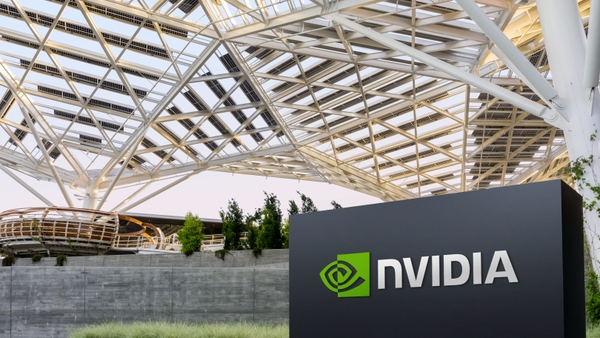
Nvidia Reports Record Quarterly Revenue and Discloses $43 Billion Investment Portfolio in Startups
Industry News

Nvidia Reports Record Quarterly Revenue and Discloses $43 Billion Investment Portfolio in Startups

Nvidia has announced another milestone in its financial history, posting record-breaking revenue figures for the most recent quarter. This achievement underscores the company's dominant position in the technology sector and its ability to maintain high-level financial performance. In addition to the revenue records, Nvidia revealed a massive $43 billion in holdings across various startups, highlighting its role as a major financial force in the entrepreneurial ecosystem. However, the report also included a cautious forecast, with the company predicting that revenue growth will begin to slow in the upcoming quarter. This combination of current financial strength and a more tempered outlook for the future provides a comprehensive view of Nvidia's market trajectory and its significant influence on the broader industry through its extensive investment portfolio.

TechCrunch AI
Elon Musk’s xAI to Invest $2.8 Billion in Natural Gas Turbines Amid Legal Challenges Over Data Center Power
Industry News

Elon Musk’s xAI to Invest $2.8 Billion in Natural Gas Turbines Amid Legal Challenges Over Data Center Power

Elon Musk's AI venture, xAI, is set to significantly expand its energy infrastructure with a planned $2.8 billion purchase of natural gas turbines over the next three years. This major financial commitment was disclosed in a recent IPO filing from SpaceX, highlighting the deep financial and operational ties between Musk’s various enterprises. The move comes at a critical juncture for xAI, as the company is currently facing legal action regarding the generators used at its data center facilities. The investment underscores the massive power requirements of modern AI development and the company's strategy to secure independent energy sources despite ongoing litigation and environmental scrutiny surrounding its current power generation methods.

TechCrunch AI
Industry News

Google Declaring War on the Web: An Analysis of Economic Systems and Social Reconstruction

This in-depth analysis explores the implications of Google's perceived 'war on the web' as framed through the lens of historical imperialism and economic theory. Based on the provided news content, the article examines the parallels between modern digital shifts and historical events such as the 1953 coups in Iran and Chile. It delves into the 'System of Economic Issues' and the role of the proletariat in resisting centralized control. The discussion highlights the 'principle of social reconstruction' as a fundamental fact for the working class, emphasizing the need for self-reliance, self-discipline, and self-respect in the face of capitalist forms of social mobility and imperialist structures. The analysis concludes by evaluating the significance of these economic and social frameworks for the future of the AI and tech industries.

Hacker News
Anthropic to Pay Elon Musk’s xAI $1.25 Billion Monthly for AI Compute Resources
Industry News

Anthropic to Pay Elon Musk’s xAI $1.25 Billion Monthly for AI Compute Resources

In a significant development for the artificial intelligence sector, Anthropic has entered into a massive agreement to purchase compute resources from Elon Musk’s xAI. The deal, which has surprised industry observers, is valued at $1.25 billion per month. This arrangement highlights the immense capital requirements and infrastructure needs of leading AI firms. By securing this deal, Anthropic gains access to critical compute power provided by xAI, a move that establishes a unique relationship between two prominent competitors in the field. The scale of the monthly payment underscores the high stakes and the accelerating financial commitments defining the current AI landscape.

TechCrunch AI
Google I/O 2026: Analyzing Gemini for Science, AlphaFold, and AlphaGenome in the Quest to Solve Diseases
Industry News

Google I/O 2026: Analyzing Gemini for Science, AlphaFold, and AlphaGenome in the Quest to Solve Diseases

In a special early edition of The Verge's 'Optimizer' newsletter, senior reviewer Victoria Song explores the ambitious health-related announcements from Google I/O 2026. The coverage focuses on Google's bold claim of using artificial intelligence to 'solve all diseases' through the deployment of Gemini for Science, AlphaFold, and AlphaGenome. As a newsletter dedicated to dissecting the latest technological 'gizmos and potions,' this issue evaluates whether these AI advancements can truly deliver on their life-changing promises. The analysis centers on the intersection of advanced AI models and biological research, providing a critical look at how Google intends to leverage its scientific AI ecosystem to transform global health outcomes and the future of medical science.

The Verge
OpenAI Reasoning Model Disproves 80-Year-Old Geometry Conjecture with Support from Leading Mathematical Experts
Industry News

OpenAI Reasoning Model Disproves 80-Year-Old Geometry Conjecture with Support from Leading Mathematical Experts

OpenAI has announced a major breakthrough in mathematical reasoning, claiming its latest model has successfully disproved a geometry conjecture that has remained unsolved since 1946. This development is particularly significant because the claim is being validated by the same mathematicians who previously exposed flaws in OpenAI's past mathematical assertions. The verification by these former critics marks a turning point for the company, moving from previous "embarrassing" claims to a verified solution of a long-standing theoretical problem. This achievement highlights the advancing capabilities of AI reasoning models in tackling complex, formal logic tasks that have challenged human experts for eight decades. The endorsement from the mathematical community suggests a new level of reliability and accuracy in AI-driven scientific discovery.

TechCrunch AI
NVIDIA Reports Record $81.6 Billion Revenue for Q1 Fiscal 2027 with 85% Annual Growth
Industry News

NVIDIA Reports Record $81.6 Billion Revenue for Q1 Fiscal 2027 with 85% Annual Growth

NVIDIA has officially announced its financial results for the first quarter of fiscal 2027, ending April 26, 2026. The company achieved a landmark revenue of $81.6 billion, setting a new record for the organization. This performance represents a robust 20% increase from the previous quarter and a staggering 85% growth compared to the same period in the previous year. These figures highlight NVIDIA's significant financial momentum and its ability to scale revenue rapidly within a single fiscal year. The report underscores a period of intense growth, as the company continues to expand its financial footprint across the global market, maintaining a sharp upward trajectory in both sequential and year-over-year metrics.

NVIDIA Newsroom
Google I/O 2026: Gemini Omni, Google Antigravity, and Universal Cart Lead 100 Major Announcements
Industry News

Google I/O 2026: Gemini Omni, Google Antigravity, and Universal Cart Lead 100 Major Announcements

Google has officially kicked off its I/O 2026 developer conference, unveiling a staggering list of 100 new announcements that span the breadth of its technological ecosystem. The event, highlighted by the Google AI Blog, marks a significant milestone in the company's innovation roadmap. Primary among the disclosures are the introductions of Gemini Omni, a new evolution in their AI model lineup, alongside the intriguing Google Antigravity and the utility-focused Universal Cart. These announcements represent the core pillars of Google's strategy for the coming year, focusing on multi-modal AI capabilities, experimental technology frontiers, and integrated consumer tools. This analysis explores the scale of the I/O 2026 event and the strategic importance of the key products highlighted in the initial wave of news.

Google AI Blog
OpenAI Reasoning Model Disproves Longstanding Erdős Conjecture in Discrete Geometry
Research Breakthrough

OpenAI Reasoning Model Disproves Longstanding Erdős Conjecture in Discrete Geometry

On May 20, 2026, OpenAI announced a major research milestone: an internal general-purpose reasoning model has disproved a central conjecture in discrete geometry. The breakthrough concerns the planar unit distance problem, a question first posed by Paul Erdős in 1946 regarding the maximum number of unit-distance pairs among n points in a plane. For nearly 80 years, mathematicians believed that square grid constructions were optimal for this problem. However, the OpenAI model identified an infinite family of examples providing a polynomial improvement over previous theories. Verified by external mathematicians, this result is particularly significant because it was achieved by a general-purpose model rather than a system specifically trained for mathematics, signaling a new era for AI in frontier scientific research.

Hacker News
Google I/O 2026: Vibe Coding and Android AI Studio Move Beyond the Traditional App Store Model
Industry News

Google I/O 2026: Vibe Coding and Android AI Studio Move Beyond the Traditional App Store Model

At Google I/O 2026, a significant shift in mobile computing was unveiled with the introduction of 'vibe coding' for smartphones. This new paradigm, supported by the Android AI Studio, marks a departure from the long-standing 'There's an app for that' philosophy. For years, users have relied on the App Store to provide pre-built solutions for every need, yet many specific requirements—such as the 'perfect grocery list app'—remain unfulfilled. By leveraging AI-driven widgets and shortcuts, Google is empowering users to move beyond searching for apps to creating personalized functional experiences. This transition suggests a future where the phone's interface is shaped by user intent rather than static third-party applications, fundamentally changing how we interact with mobile technology.

The Verge
Google Beam Introduces Experimental Features to Enhance Hybrid Group Meetings with True-to-Life Presence
Industry News

Google Beam Introduces Experimental Features to Enhance Hybrid Group Meetings with True-to-Life Presence

Google has unveiled a new experiment for Google Beam, specifically designed to improve the dynamics of group meetings in hybrid environments. The initiative focuses on delivering true-to-life size and sound to remote participants, aiming to bridge the physical gap between in-office and remote employees. By prioritizing realistic visual and auditory representation, Google seeks to make hybrid interactions feel more inclusive and connected. This research-driven update addresses the common challenges of digital communication, such as the lack of spatial awareness and the feeling of detachment during virtual sessions. The experiment represents a significant step in Google's ongoing efforts to refine how teams collaborate across different locations, ensuring that every participant, regardless of their physical setting, experiences a sense of genuine presence and engagement.

Google AI Blog
Google Unveils Gemini Omni-Powered 'Reimagine' Feature for AI YouTube Shorts Remixing
Product Launch

Google Unveils Gemini Omni-Powered 'Reimagine' Feature for AI YouTube Shorts Remixing

Google has announced a transformative update to YouTube Shorts, introducing an AI-driven remixing feature powered by the Gemini Omni model. This new capability allows users to "reimagine" existing content by clicking a dedicated remix icon at the bottom of a Short. Through this interface, creators can provide prompts to the AI to restyle video clips or virtually insert themselves into other people's videos. By integrating advanced generative AI directly into the Shorts ecosystem, Google aims to simplify complex video editing and enable a new level of creative interaction. The feature represents a significant step in making high-end video manipulation tools accessible to the general public through simple text-based prompts.

The Verge
Samsung Reaches Tentative Deal with Union to Avert Massive 18-Day Memory Chip Strike
Industry News

Samsung Reaches Tentative Deal with Union to Avert Massive 18-Day Memory Chip Strike

Samsung Electronics has successfully reached a tentative agreement with its labor union, narrowly avoiding a planned 18-day strike that was set to involve over 47,000 workers. The industrial action was scheduled to begin at the company's domestic chipmaking facilities following a breakdown in negotiations regarding bonus payments. Had the strike proceeded, it would have significantly impacted the production of memory chips, which are currently facing supply constraints. The resolution, reached late Wednesday, provides a temporary reprieve for the global semiconductor supply chain, ensuring that production at Samsung's critical manufacturing sites remains uninterrupted for the time being. This deal marks a pivotal moment in the company's labor relations amidst a high-stakes environment for the global electronics market.

The Verge