Swarms, Flocks, Gangs: How to Build, Train, and Evaluate Multi-Agent Systems Explained
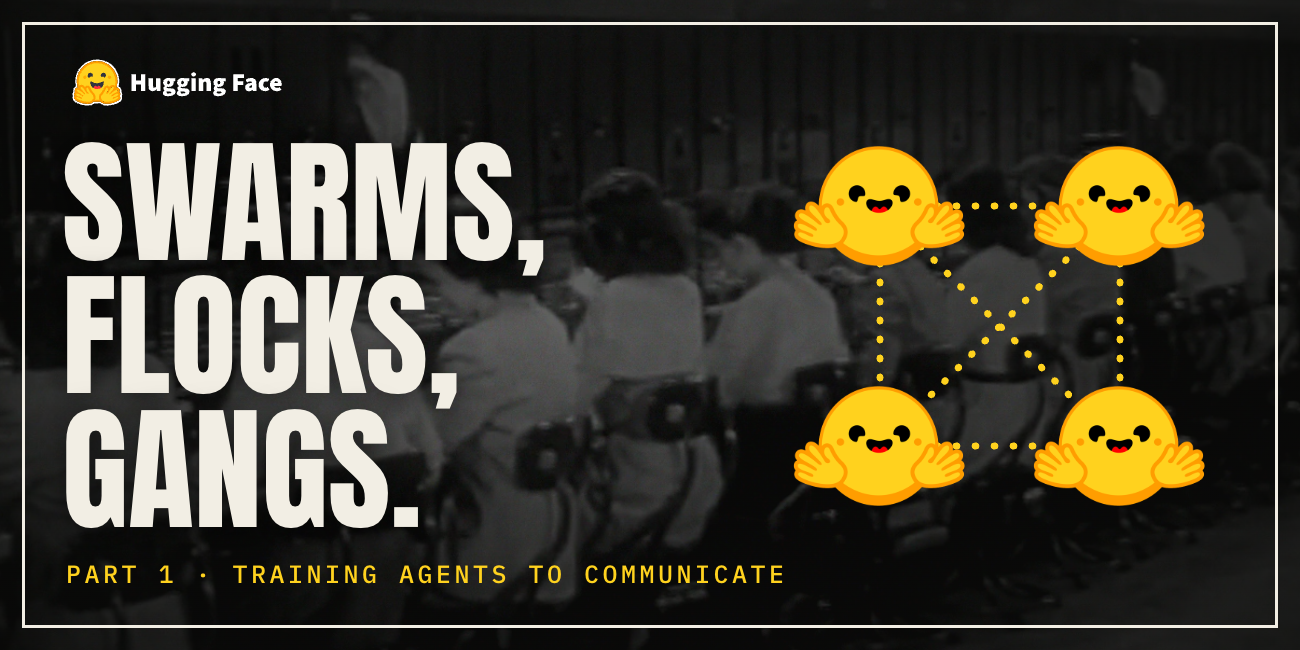
Explore the comprehensive guide on building, training, and evaluating multi-agent systems, published by the Hugging Face Blog. This article delves into the concepts of swarms, flocks, and gangs of agents, offering insights into how these collaborative frameworks are constructed, optimized, and assessed in modern artificial intelligence workflows.
Key Takeaways
- Focuses on the concepts of swarms, flocks, and gangs in the context of multi-agent systems.
- Explores methods and frameworks for building, training, and evaluating multi-agent architectures.
- Published officially on the Hugging Face Blog.
In-Depth Analysis
Understanding Multi-Agent Architectures
Multi-agent systems represent a shift from single monolithic models to collaborative networks where multiple AI agents interact, coordinate, and share tasks. Concepts like swarms, flocks, and gangs describe different organizational structures, communication topologies, and behavioral patterns within these systems. Building such frameworks requires precise definition of agent roles, interaction protocols, and shared environments.
Training and Evaluation Strategies
Training and evaluating multi-agent systems present unique challenges compared to standard machine learning pipelines. It involves assessing both individual agent performance and collective outcomes. Optimization must account for agent cooperation, conflict resolution, and emergent behaviors that arise when multiple models operate simultaneously within a unified ecosystem.
Industry Impact
The exploration of multi-agent systems highlights the growing importance of collaborative AI architectures in solving complex, multi-faceted problems. As frameworks for building and training agent swarms mature, developers and researchers gain better tools to deploy scalable, robust, and cooperative artificial intelligence applications.
Frequently Asked Questions
What are multi-agent systems according to the Hugging Face Blog?
Multi-agent systems involve collaborative networks of AI agents—referred to in terms like swarms, flocks, and gangs—that work together to perform complex tasks.
What key aspects of multi-agent systems are covered?
The guide covers how to build, train, and evaluate these collaborative architectures effectively.