
The Agent Lake: How LangSmith Finds High-Signal Traces for Fixes and Fine-Tuning
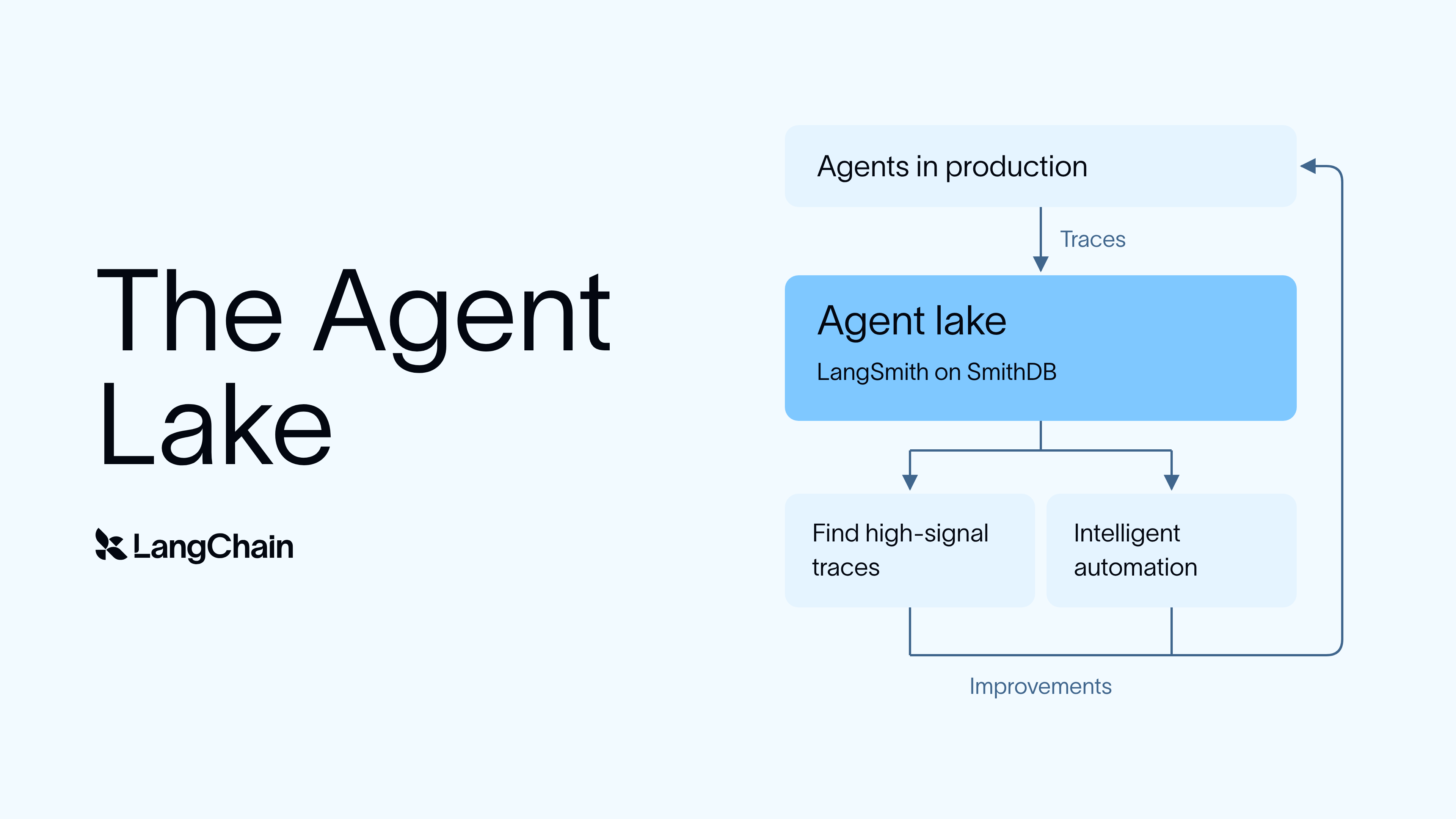
LangChain describes an agent lake as a collection of every trace your agents produce. LangSmith finds high-signal traces at scale and uses them to inform fixes and produce fine-tuned models.
Key Takeaways
- An agent lake holds every trace your agents produce.
- LangSmith finds high-signal traces at scale.
- Those traces are used to make fixes and fine-tune models.
In-Depth Analysis
Keeping Every Trace and Finding the High-Signal Ones
LangChain distinguishes between what the agent lake holds and what LangSmith selects. The lake holds every trace, while LangSmith identifies high-signal traces within that collection. The source does not specify what makes a trace high-signal.
Turning Selected Traces Into Fixes and Fine-Tuned Models
LangChain describes two outcomes for the selected traces: fixes and fine-tuned models. The source does not detail how LangSmith turns traces into either outcome.
Industry Impact
For AI teams, the approach links agent trace collection to two kinds of improvement work: making fixes and fine-tuning models. The source describes that link but does not quantify the results.
Frequently Asked Questions
What is an agent lake?
An agent lake holds every trace your agents produce.
What does LangSmith do with agent traces?
LangSmith finds high-signal traces at scale and uses them to make fixes and fine-tune models.