
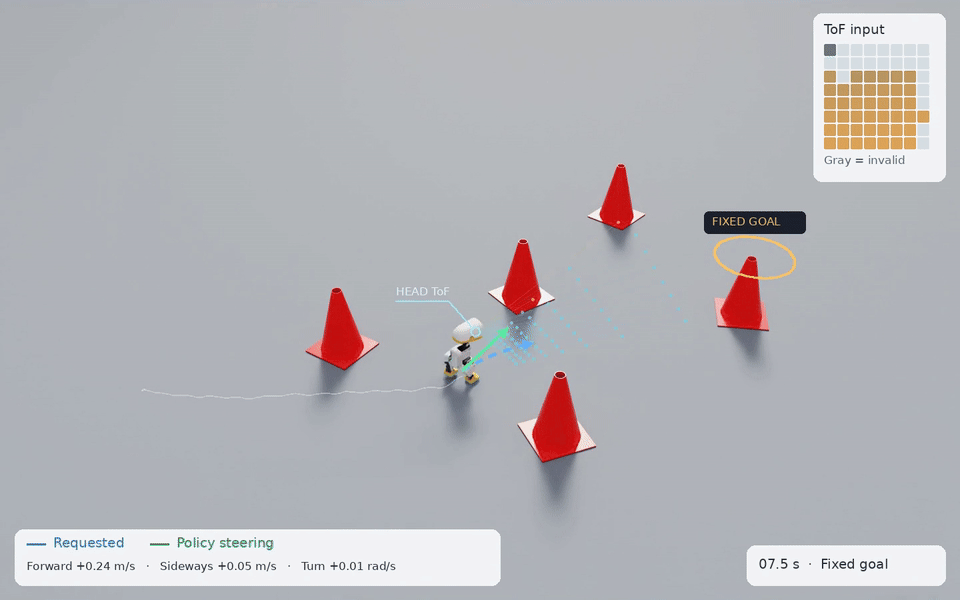
Microduck Obstacle Avoidance: A Sim2Real Workflow with Isaac Lab and Newton
Discover the Microduck Obstacle Avoidance project, featuring a comprehensive Sim2Real workflow powered by Isaac Lab and Newton. Published on the Hugging Face Blog on November 24, 2026, this article explores advanced simulation-to-reality techniques for robotics and autonomous navigation.
Key Takeaways
- Explores the Microduck Obstacle Avoidance project focusing on a Sim2Real workflow.
- Utilizes Isaac Lab and Newton for advanced robotic simulation and deployment.
- Published on the Hugging Face Blog by the community authors.
In-Depth Analysis
Sim2Real Workflow for Obstacle Avoidance
The Microduck Obstacle Avoidance project demonstrates a robust pipeline for bridging the gap between simulation and real-world deployment. By leveraging modern simulation tools, developers can train and test robotic behaviors safely in virtual environments before deploying them to physical hardware.
Leveraging Isaac Lab and Newton
At the core of this workflow are Isaac Lab and Newton, which provide the computational and physical modeling foundation needed for complex obstacle avoidance tasks. These tools enable high-fidelity simulation, allowing agents to learn adaptive navigation strategies efficiently.
Industry Impact
Workflows integrating simulation frameworks like Isaac Lab and Newton are crucial for advancing autonomous systems. They reduce the time, cost, and risk associated with hardware-in-the-loop testing, paving the way for safer and more reliable robotic applications across various industries.
Frequently Asked Questions
What is the primary focus of the Microduck Obstacle Avoidance project?
The project focuses on implementing a Sim2Real workflow for robotic obstacle avoidance using Isaac Lab and Newton.
Where was this workflow published?
It was published on the Hugging Face Blog on November 24, 2026.

