
Using Wearables to Enable Cardiovascular-Kidney-Metabolic Risk Profiling for Personalized Coaching
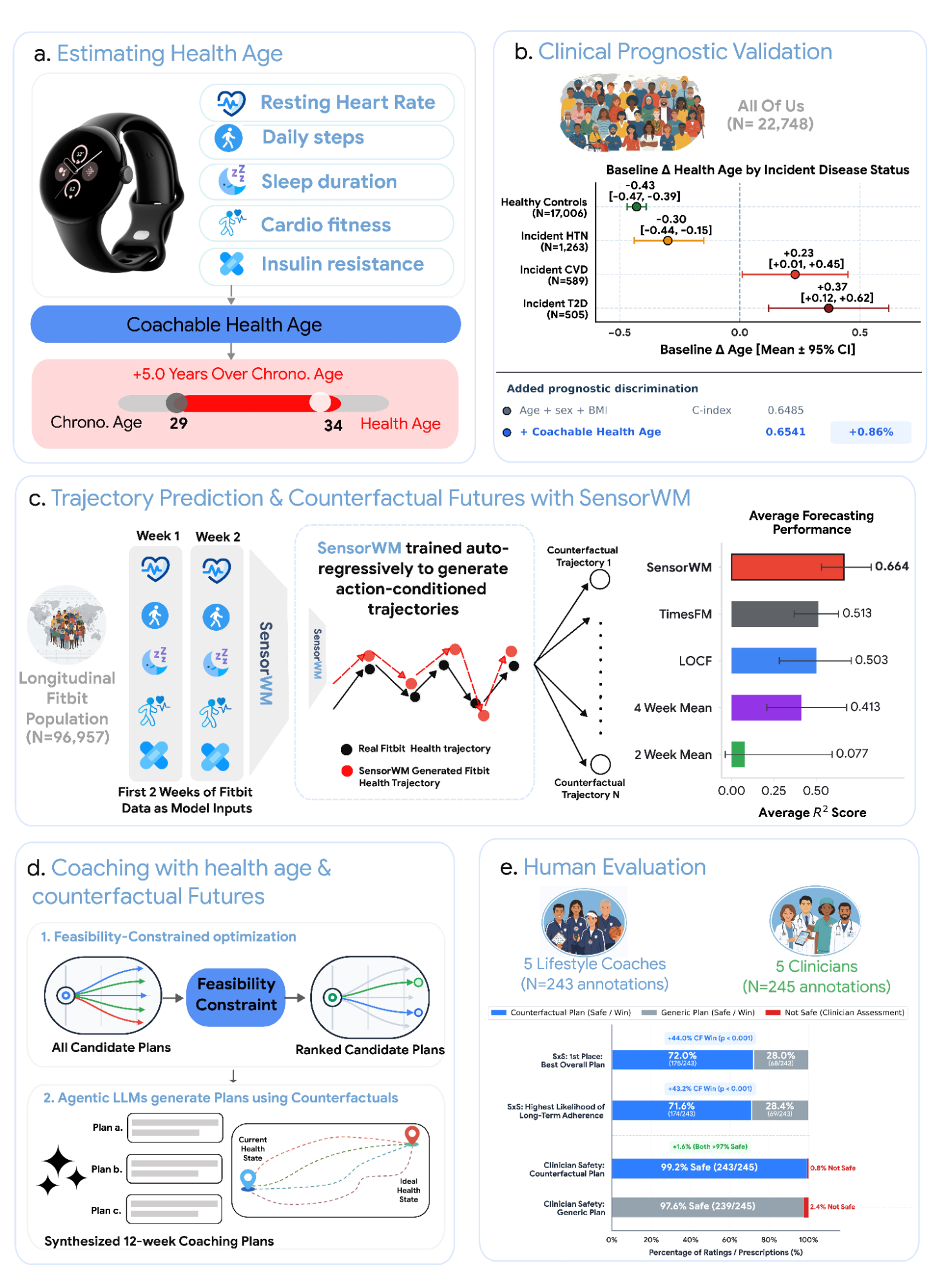
Google Research introduces an investigational machine learning framework designed to translate passive wearable signals into a modifiable coachable health age. The system uses an action-conditioned world model to simulate personalized 12-week "what-if" habit trajectories, while also expanding to routine blood biomarkers to track early cardiovascular-kidney-metabolic (CKM) health. Addressing the interconnected web of heart disease, kidney conditions, and metabolic disorders like type 2 diabetes, this approach moves beyond simple chronological age and passive tracking to provide actionable insights into how everyday lifestyle habits impact long-term CKM health.
Key Takeaways
- Google Research introduces an investigational machine learning framework translating passive wearable signals into a modifiable coachable health age.
- The framework incorporates an action-conditioned world model to simulate personalized 12-week "what-if" habit trajectories.
- It expands to routine blood biomarkers to track early cardiovascular-kidney-metabolic (CKM) health.
- The initiative aims to bridge the gap between passive health tracking and meaningful, actionable everyday guidance for interconnected health risks.
In-Depth Analysis
Moving Beyond Passive Tracking to Actionable Insights
Heart disease, kidney conditions, and metabolic disorders such as type 2 diabetes form an interconnected web known as cardiovascular-kidney-metabolic (CKM) syndrome. CKM progression frequently begins silently years before any apparent symptoms emerge, influenced heavily by everyday habits like movement, sleep, and cardiovascular activity. Catching these shifts early provides the best opportunity to alter the trajectory. However, while smartwatches excel at tracking past behavior, transitioning from passive data collection to meaningful action remains challenging for users trying to understand how daily habits affect their immediate CKM status or how specific adjustments—such as sleeping slightly longer or adding a brisk walk—will improve their health over a three-month period.
Redefining Physiological Age and Habit Trajectories
Chronological age alone fails to capture an individual's true physiological health, as two people born in the same year can experience vastly different bodily conditions. Although researchers have previously developed biological clocks from blood tests or wearable sensors, most existing clocks are built primarily to estimate birth year rather than serve as tools for everyday coaching. To address this, the investigational framework from Google Research translates passive wearable data into a modifiable coachable health age and uses an action-conditioned world model to simulate personalized 12-week habit trajectories, combining wearable signals with routine blood biomarkers.
Industry Impact
The integration of continuous wearable metrics with routine blood biomarkers via machine learning frameworks represents a significant step forward in digital health and preventive medicine. By providing users with simulated "what-if" habit trajectories and a coachable health age, this approach addresses the subclinical complexities of CKM syndrome. It shifts consumer and clinical paradigms from reactive treatment to proactive, personalized lifestyle coaching based on multi-system subtyping and physiological monitoring.
Frequently Asked Questions
Question: What is cardiovascular-kidney-metabolic (CKM) syndrome?
Answer: CKM syndrome is an interconnected web of health conditions involving heart disease, kidney conditions, and metabolic disorders like type 2 diabetes. Progression often begins silently years before symptoms appear, driven by daily habits such as movement, sleep, and cardiovascular activity.
Question: How does the Google Research framework utilize wearable data?
Answer: The investigational machine learning framework translates passive wearable signals into a modifiable coachable health age, utilizes an action-conditioned world model to simulate personalized 12-week "what-if" habit trajectories, and integrates routine blood biomarkers to track early CKM health.

