
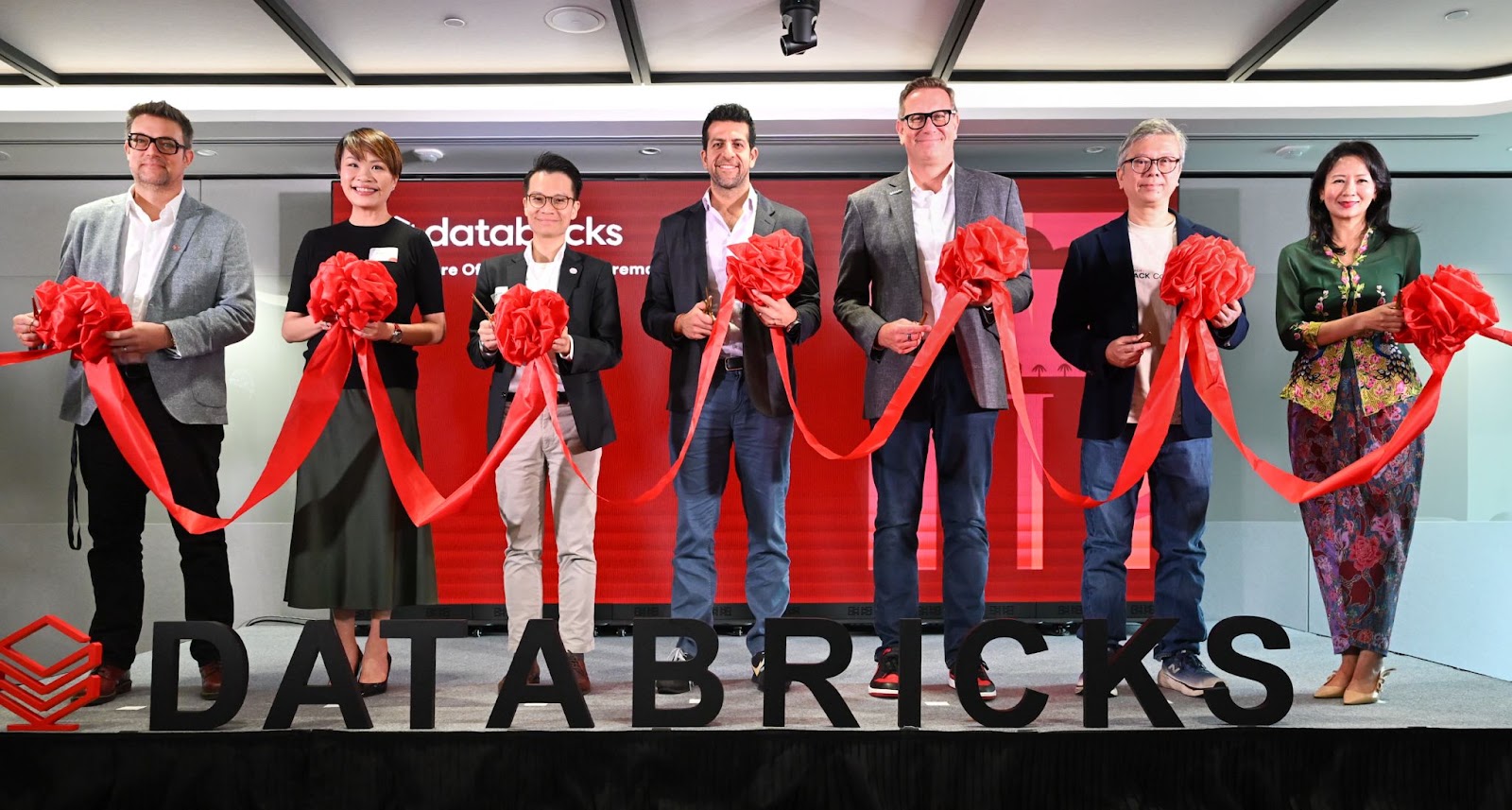
Databricks Expands Presence in Singapore With New Office, $350 Million Investment, and Startup AI Accelerator Program
Enterprise data and artificial intelligence firm Databricks has announced a major strategic expansion in Singapore, marked by the opening of a new office and a planned $350 million investment. In conjunction with this substantial capital allocation and physical footprint growth, the company has officially launched a dedicated AI accelerator tailored for emerging enterprises. The newly introduced accelerator aims to support more than 100 early-stage companies over a three-year span. By establishing a bolstered operational presence and channeling targeted resources into early-stage startup enablement, Databricks reinforces its long-term operational commitment to Singapore. This dual-pronged initiative combines direct infrastructure capital with strategic ecosystem nurturing, creating a comprehensive framework designed to advance regional data and artificial intelligence innovation through extensive founder support and sustained multi-year engagement.
Key Takeaways
- Substantial Capital Allocation: Databricks has unveiled plans for a $350 million investment directed into Singapore, underscoring the market's strategic importance.
- Physical Infrastructure Expansion: The company has opened a new office in Singapore, expanding its physical footprint to support broader operational activities.
- Ecosystem Acceleration: Alongside its infrastructure commitment, Databricks has launched a specialized AI accelerator tailored for early-stage companies.
- Multi-Year Support Target: The accelerator initiative has set a clear operational target to assist more than 100 early-stage startups across a three-year horizon.
In-Depth Analysis
Strategic Expansion: The $350 Million Commitment and New Office
The decision by Databricks to open a new office and plan a $350 million investment in Singapore reflects a major escalation in regional resource deployment. Establishing a modern, expanded office environment allows the organization to anchor its presence within an internationally recognized technology and financial center. By committing hundreds of millions of dollars to this market, Databricks is positioning its organizational and technological infrastructure to sustain long-term engagement.
Capital investments of this scale generally encompass operational scaling, technical resources, customer support mechanisms, and localized facilities. For an enterprise specializing in unified data architectures and artificial intelligence systems, establishing a dedicated physical presence provides the foundational groundwork required to manage complex technical partnerships. The opening of the office acts as a tangible hub, facilitating direct collaboration while providing the physical capacity needed to execute high-value strategic objectives over the coming years.
The AI Accelerator: Direct Nurturing for Early-Stage Startups
A pivotal component of Databricks' operational strategy is the introduction of an AI accelerator program created specifically for early-stage startups. Startups working within the artificial intelligence domain routinely encounter significant structural hurdles, including access to scalable computing architecture, data engineering expertise, and specialized mentorship. By inaugurating an accelerator, Databricks addresses these friction points at the ground level.
The initiative is designed to provide targeted assistance to emerging businesses as they develop, test, and deploy artificial intelligence capabilities. Rather than limiting its investment to direct corporate operations, Databricks is deploying resources to actively cultivate an external network of technology builders. By engaging directly with startups during their foundational stages, the program provides young companies with structured avenues to refine their technical workflows, leverage modern data capabilities, and optimize their developmental trajectories.
Execution and Scale: A Three-Year Roadmap for 100+ Companies
The scope of the accelerator is defined by measurable, time-bound milestones, specifically seeking to support more than 100 early-stage companies across a three-year duration. Managing an accelerator cohort of this magnitude requires robust program design, ongoing technical administration, and dependable infrastructure support.
Distributing this mandate across three years provides a sustainable framework for phased cohort development. It allows the program to accommodate various development cycles, ranging from initial prototyping to broader proof-of-concept stages. Over the three-year window, assisting upwards of 100 companies creates a continuous pipeline of innovation, allowing Databricks to systematically engage with diverse artificial intelligence use cases while generating lasting ecosystem value in the region.
Industry Impact
The combined announcement of a $350 million investment, a new physical facility, and a 100-company accelerator carries substantial implications for the broader artificial intelligence industry:
- Strengthening Regional Innovation Centers: Large-scale investments reinforce Singapore's position as a focal point for global technology leaders and high-growth AI development.
- Lowering Barriers for AI Founders: Early-stage artificial intelligence ventures require specialized tools and guidance; structured corporate accelerators bridge crucial resource gaps for early cohorts.
- Long-Term Enterprise Ecosystem Integration: By pairing infrastructure expansion with startup incubation, platform providers build deeper ties with the next generation of data-driven enterprises, shaping how future solutions are built and scaled.
Frequently Asked Questions
What are the main components of Databricks' announcement in Singapore?
Databricks has opened a new office in Singapore, announced plans for a $350 million investment in the country, and launched an AI accelerator designed to support startups.
How many startups does the Databricks AI accelerator aim to support?
The AI accelerator program is set to support more than 100 early-stage companies over a period of three years.
What is the overall timeline associated with this initiative?
The startup accelerator program is scheduled to run across a three-year timeframe, aligning with the company's broader multi-million-dollar operational roadmap in Singapore.

