
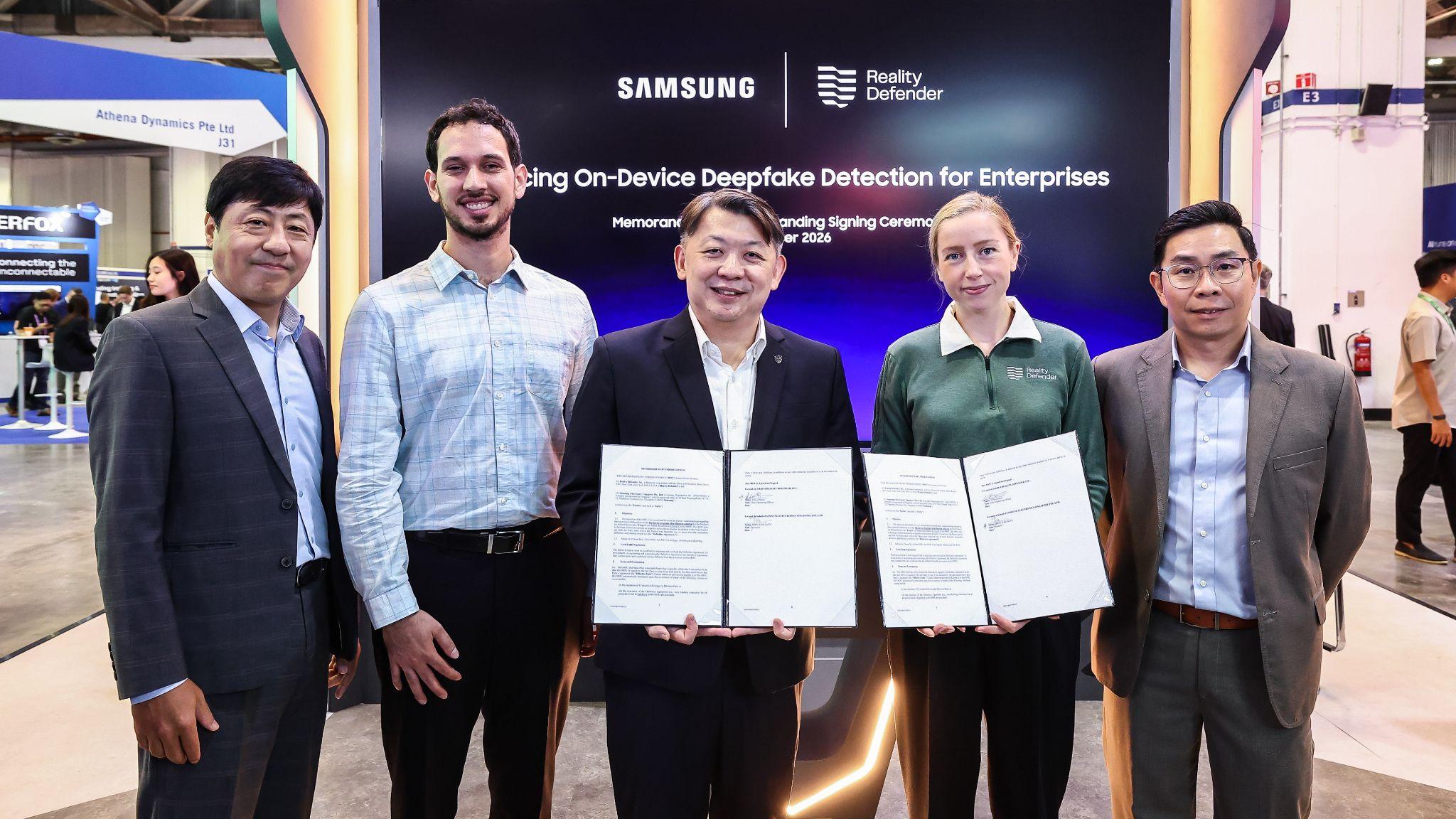
Samsung Partners with US Startup to Deploy On-Device AI System for Combating Deepfakes
Samsung has entered into an agreement with a US-based startup to counter the growing threat of deepfakes through a proposed on-device detection framework. According to disclosures from the announcement, the system is designed to perform content analysis directly on user devices rather than transmitting sensitive multimedia materials to external cloud servers. By emphasizing local hardware processing, the initiative aims to address critical user privacy concerns while maintaining rigorous inspection standards for synthetic media. While specific financial terms, launch timelines, and the startup's identity remain undisclosed, the collaboration reflects Samsung's strategic commitment to hardware-level artificial intelligence safety. This initiative highlights an evolving industry priority toward privacy-preserving edge architectures that combat generative misinformation without compromising confidential consumer data or relying on continuous cloud data pipelines.
Key Takeaways
- Strategic Partnership: Samsung has officially entered into an agreement with an emerging US-based startup specifically aimed at countering the proliferation of deepfakes and manipulated synthetic media.
- On-Device Architecture: According to Samsung, the proposed detection framework is designed to inspect and analyze digital content directly on the user's device rather than depending on remote cloud computing resources.
- Enhanced Data Privacy: By executing detection algorithms locally at the hardware level, the system significantly curtails the requirement to transmit private, sensitive consumer data over external networks to third-party cloud servers.
- Privacy-First AI Defense: The initiative underscores a growing structural pivot in the consumer technology sector toward localized artificial intelligence models engineered to protect user confidentiality while verifying media integrity.
- Undisclosed Operational Details: While the primary strategic focus and architectural model have been revealed, specific commercial terms, product rollout schedules, and the partner startup's identity were not detailed in the initial announcement.
In-Depth Analysis
On-Device Processing as a Frontline Deepfake Defense
The agreement between Samsung and a US startup signals a deliberate technical shift in how major consumer electronics manufacturers intend to address synthetic media. As artificial intelligence tools have made the generation of deceptive visual and audio content increasingly sophisticated, the challenge of detecting manipulated media has grown concurrently urgent. Historically, deepfake verification platforms have predominantly relied upon massive centralized cloud computing clusters, requiring incoming media files to be uploaded across networks for computational evaluation.
Under the framework announced by Samsung, the collaborative system departs from this centralized paradigm by performing content analysis directly on-device. Deploying AI detection algorithms on endpoint hardware addresses several persistent operational hurdles associated with media forensics. Analyzing multimedia files locally allows verification routines to run without introducing network latency or requiring persistent internet connectivity. This creates an immediate protective barrier on user hardware, positioning device-native intelligence as the primary filter against digital deception.
Mitigating Cloud Data Privacy Risks and Bandwidth Dependencies
The core technical rationale highlighted by Samsung for local processing centers on data protection. Samsung specifically noted that its proposed system will analyze content on-device, thereby reducing the necessity of routing sensitive user information through external cloud environments. In contemporary digital ecosystems, transmitting personal media—such as personal family photographs, private voice memos, or confidential video recordings—to external cloud platforms creates substantial exposure risks and heightened data privacy apprehensions.
By confining the computational analysis of potentially sensitive files to the device itself, the proposed framework limits exposure to potential data intercepts, cloud storage breaches, or unauthorized third-party processing. Consumers frequently hesitate to utilize cloud-dependent verification tools precisely because uploading personal content entails relinquishing direct custody over private materials. Samsung’s emphasis on local inference resolves this fundamental tension between media integrity verification and personal privacy preservation, establishing an architecture where data inspection does not come at the expense of data exposure.
Current Disclosures and Transparent Information Boundaries
A notable aspect of the initial disclosure from Tech in Asia is its measured scope. The announcement confirms the existence of the agreement between Samsung and the US startup, the principal objective of combating deepfakes, and the architectural commitment to on-device processing. However, Samsung has not publicly disclosed the formal identity of the US-based startup partner, the valuation or commercial parameters of the partnership, or a concrete product integration roadmap.
Maintaining transparency regarding these informational boundaries is essential for contextualizing the announcement. Observers and consumers are not yet informed whether this on-device capability will be integrated across Samsung’s flagship consumer devices, distributed as standalone software modules, or embedded into system-level firmware. Furthermore, technical parameters regarding specific detection modalities—such as whether the software inspects spatial pixel artifacts, biological signals, or acoustic anomalies—remain unstated. Acknowledging these undisclosed elements reflects the early-stage nature of the partnership and establishes clear boundaries between confirmed corporate plans and future technical disclosures.
Industry Impact
The strategic alignment between a hardware manufacturing giant like Samsung and a specialized US artificial intelligence startup holds meaningful implications for the broader technology and cybersecurity sectors:
- Acceleration of Edge AI Verification: The partnership affirms that on-device artificial intelligence has matured beyond basic camera enhancements and text completion to encompass sophisticated security applications. Proving that computationally intensive deepfake detection can be performed within local hardware constraints serves as an important proof of concept for the wider consumer electronics industry.
- Elevation of Privacy-Centric Security Standards: By prioritizing local content evaluation to prevent sensitive data transfers, Samsung sets a competitive benchmark for device security. Competing device manufacturers and operating system developers will likely face increased pressure to implement localized verification frameworks rather than relying exclusively on centralized server analysis.
- Validation of Startup Innovation Pipelines: The collaboration demonstrates that established global technology leaders continue to rely on agile, specialized startups to address rapidly developing AI threats. Partnering with a dedicated startup allows major original equipment manufacturers to integrate cutting-edge synthetic media countermeasures quickly without developing every algorithmic component internally.
- Reshaping Consumer Trust in Digital Media: As manipulated media proliferates across communication channels, consumer confidence in digital content continues to erode. Embedding native, on-device verification systems directly into consumer hardware can provide users with accessible tools to evaluate media authenticity safely, rebuilding confidence in digital communications without demanding privacy trade-offs.
Frequently Asked Questions
What deal did Samsung sign regarding deepfake technology?
Samsung signed an agreement with an emerging US-based startup dedicated to combating deepfakes. Under this partnership, the entities plan to develop and implement a proposed system designed to detect and counter synthetic and manipulated media.
How does Samsung plan to analyze content to identify deepfakes?
According to Samsung, the proposed detection system will conduct content analysis directly on-device. Rather than requiring users to transmit files across the internet to centralized data centers, the system evaluates multimedia locally on the physical hardware.
Why is on-device analysis critical for deepfake detection?
On-device analysis significantly minimizes the need to send private, sensitive consumer data to external cloud servers. This approach mitigates data security and privacy risks associated with remote transmissions while enabling faster, localized verification of digital content.


