Granite Asia and Google Form Strategic Partnership to Invest Up to $2 Million in Artificial Intelligence Startups
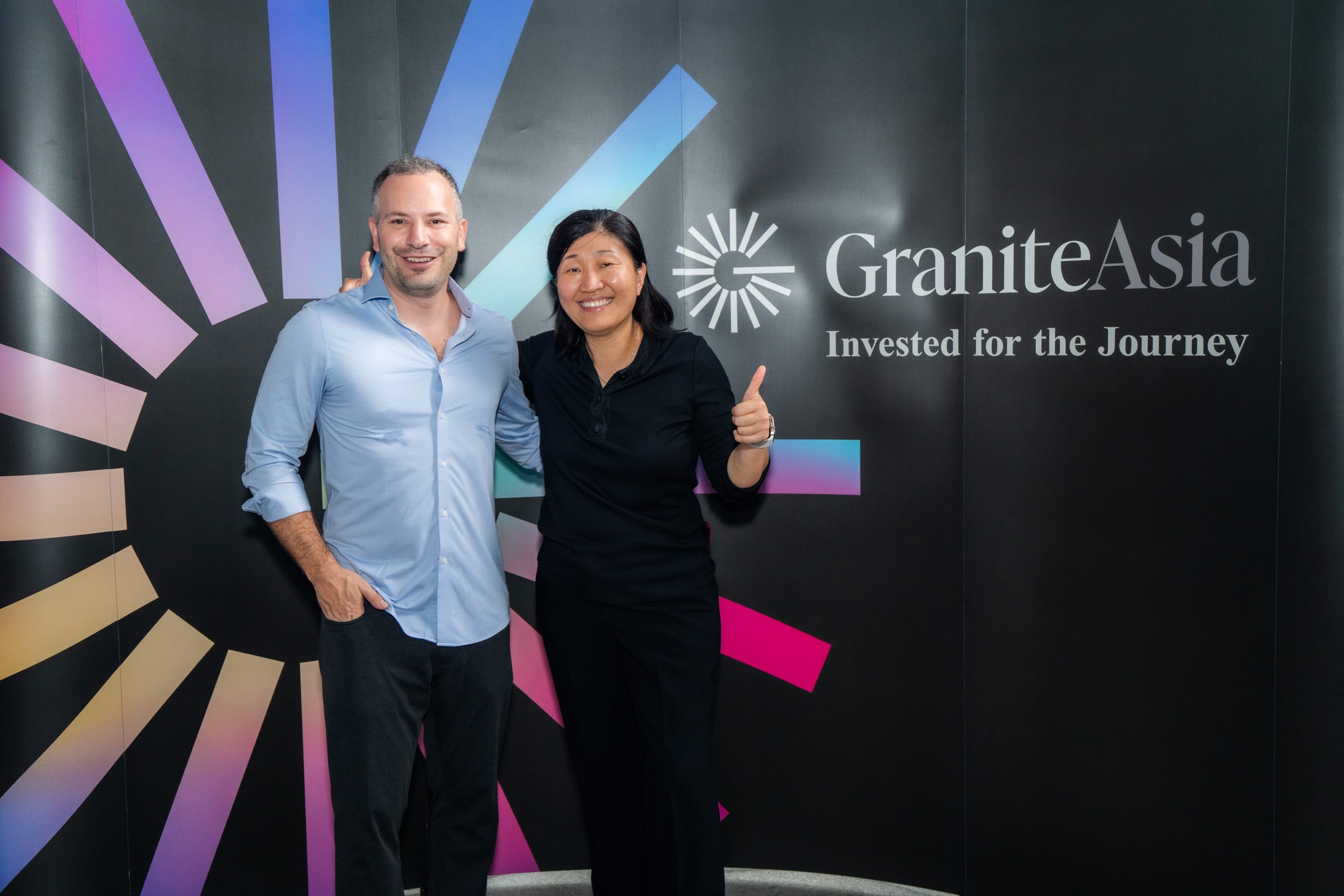
Investment firm Granite Asia has entered into a strategic collaboration with technology giant Google to invest up to $2 million in promising artificial intelligence startups. In addition to the direct capital backing, selected startups taking part in the initiative will be granted access to up to US$350,000 in Google Cloud and Gemini credits. This initiative combines venture funding with critical computational resources, tackling the high operational and infrastructure costs commonly faced by emerging artificial intelligence ventures. By coupling institutional balance-sheet capital with dedicated cloud credits and foundation model access, the partnership is designed to empower qualifying startup teams, extend their operational runway, and accelerate the development and deployment of commercial AI applications.
Key Takeaways
- Targeted Capital Deployment: Granite Asia and Google have partnered to invest up to $2 million into artificial intelligence startups.
- Substantial Compute Support: Selected startups participating in the initiative will also receive up to US$350,000 in Google Cloud and Gemini credits.
- Dual-Resource Strategy: The alliance provides a hybrid support structure that combines direct financial backing with scalable cloud infrastructure and advanced model capabilities.
- Focus on Early-Stage AI Enablement: The program addresses critical cost bottlenecks for emerging companies, specifically the heavy compute expenditures associated with AI development.
In-Depth Analysis
Strategic Financial Backing for Emerging AI Ventures
The announcement that Granite Asia and Google are partnering to deploy up to $2 million into artificial intelligence startups represents an intentional alignment between an established investment firm and a global technology leader. For early-stage companies building in the artificial intelligence sector, securing institutional capital is essential for assembling specialized engineering teams, acquiring proprietary data assets, and conducting iterative product experiments. By committing up to $2 million in funding, the partnership provides early-stage founders with the financial liquidity needed to move from exploratory research to validated product architecture.
Direct capital investment remains a primary determinant of startup resilience. In high-growth sectors such as machine learning and generative software, founding teams routinely face intense competition and compressed development cycles. The monetary injection delivered through this collaboration offers selected startups a financial cushion, allowing leadership to focus on long-term technological differentiation and business strategy rather than immediate liquidity pressures.
Alleviating Infrastructure Costs with Cloud and Gemini Credits
Beyond direct financial investment, the partnership introduces an essential resource layer by providing selected startups with up to US$350,000 in Google Cloud and Gemini credits. Compute capacity represents one of the single most demanding ongoing expenses for modern artificial intelligence companies. Model training, continuous fine-tuning, complex vector indexing, and large-scale inference workloads can rapidly deplete an early-stage company's cash reserves if paid entirely out of pocket.
By packaging up to US$350,000 in Google Cloud credits alongside direct access to Gemini credits, the initiative addresses this exact operational hurdle. Google Cloud provides enterprise-grade infrastructure, distributed machine learning pipelines, and managed database solutions necessary for software scaling. Concurrently, Gemini credits grant participating engineering teams access to Google's cutting-edge foundational model ecosystem. This enables developers to integrate multimodal capabilities, automate agentic tasks, and build intelligent features directly on top of pre-trained models without diverting their initial cash investment into cloud compute overhead.
The Mechanics of Bundled Venture and Compute Assistance
The integration of direct capital and platform credits forms a comprehensive dual-track acceleration model for participating startups. Traditional venture capital typically leaves portfolio companies to negotiate infrastructure arrangements independently, frequently resulting in a significant portion of raised capital flowing straight back into server hosting and API usage fees. In contrast, pairing an investment of up to $2 million with US$350,000 in specialized platform credits ensures that liquid cash can be allocated toward organizational growth, regulatory compliance, and market acquisition, while technical compute requirements are covered by dedicated credits.
This complementary structure optimizes the operational efficiency of each dollar invested. Startups accepted into the framework gain both the financial backing necessary to sustain day-to-day operations and the computational horsepower required to deploy demanding AI applications. This dual-track approach lowers technical friction and allows developers to experiment rapidly across the Google Cloud and Gemini platforms.
Industry Impact
The collaboration between Granite Asia and Google reflects a growing paradigm within the broader technology and venture investment ecosystem: the strategic convergence between venture investors and cloud hyperscalers. As foundation models grow more complex and computational demands increase, the cost structure of software development has fundamentally shifted. Compute is no longer a peripheral utility; it is a core raw material of artificial intelligence products.
By incorporating up to US$350,000 in Google Cloud and Gemini credits into an investment arrangement of up to $2 million, Google and Granite Asia demonstrate how platform ecosystems are embedding themselves into early startup pipelines. For hyperscalers like Google, providing substantial credit allocations allows emerging developers to establish their foundational software architectures on Google Cloud and Gemini from day one. For investors like Granite Asia, coupling checks with cloud capacity mitigates portfolio risk by directly subsidizing the largest operational cost center that AI companies confront.
Across the wider artificial intelligence sector, this joint effort highlights an intensifying race to attract promising developers into top-tier cloud ecosystems. As venture firms and technology providers continue to formalize co-investment and co-enablement programs, early-stage AI founders are increasingly evaluating partners not merely by the amount of cash they can write, but by the strategic infrastructure, models, and computational leverage they bring to the table.
Frequently Asked Questions
What are the main terms of the partnership between Granite Asia and Google?
Under the partnership, Granite Asia and Google are teaming up to invest up to $2 million in artificial intelligence startups. In addition to the direct investment, selected portfolio companies will receive up to US$350,000 in Google Cloud and Gemini credits.
What do the Google Cloud and Gemini credits provide to selected startups?
The credits provide selected startups with up to US$350,000 to cover compute workloads, managed database hosting, and infrastructure on Google Cloud, as well as direct usage and API integration of Google's Gemini models for building advanced AI capabilities.
Why is compute credit support critical for early-stage AI companies?
Artificial intelligence software development requires extensive computational power for training runs, fine-tuning, and user inference requests. Supplying compute credits significantly reduces infrastructure burn rates, allowing founders to preserve their balance-sheet cash for hiring, research, and general operational growth.