
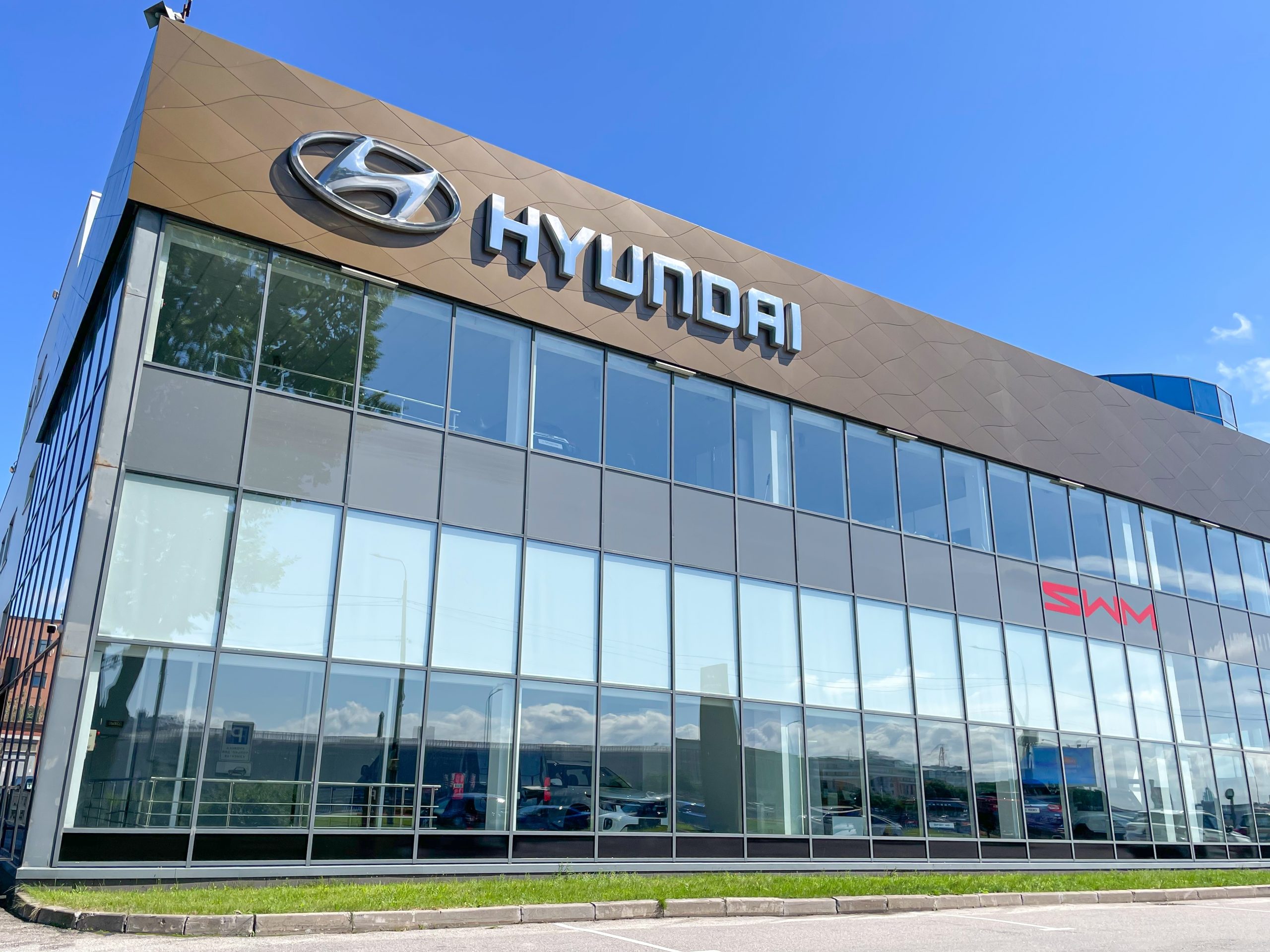
Hyundai Postpones In-House AI Driver-Assist System Launch to 2029 While Partnering with Nvidia
Hyundai Motor Group has delayed the debut of its proprietary artificial intelligence driver-assistance software to late 2029, pushing back its original schedule by roughly two years. To maintain commercial competitiveness in the interim, the South Korean automaker is deepening its technical collaboration with Nvidia to roll out advanced Level 2+ and Level 2++ driver-assistance platforms starting in 2028. Hyundai's initial lineup of Nvidia-based vehicles will bypass expensive lidar sensors, relying instead on an integrated suite of optical cameras, radar units, and ultrasonic sensors. While lidar remains under active consideration for higher-tier Level 3 automated driving systems, Hyundai aims to utilize real-world driving data collected from its 2028 commercial fleet to train, validate, and mature its proprietary in-house autonomous software platform ahead of its rescheduled 2029 release.
Key Takeaways
- Timeline Postponement: Hyundai Motor Group has officially pushed back the commercial rollout of its proprietary artificial intelligence driver-assist system to late 2029, representing a two-year delay from its initial timetable.
- Interim Nvidia Partnership: The automaker is bridging the technological and market gap by deploying Nvidia-based Level 2+ and Level 2++ advanced driver-assistance systems beginning in 2028.
- Sensor Architecture Strategy: The initial wave of Nvidia-powered Hyundai vehicles will intentionally exclude lidar, relying on a unified sensor suite consisting of cameras, radar, and ultrasonic sensors.
- Future Lidar Evaluation: Lidar technology is being evaluated exclusively for subsequent Level 3 automated systems, where hands-off autonomous driving under defined conditions requires rigorous sensor redundancy.
- Data Flywheel Pipeline: Operational telemetry and driving data captured by the 2028 Nvidia-equipped vehicle fleet will serve as training inputs to iterate and mature Hyundai's in-house software platform.
In-Depth Analysis
Strategic Realignment and the Extended Nvidia Bridge
The decision by South Korea's Hyundai Motor Group to delay the deployment of its proprietary driver-assist platform to late 2029 underscores the mounting technical and validation hurdles inherent in building safety-critical autonomous driving software in-house. While initial roadmaps targeted a commercial debut around late 2027, the complexity of developing end-to-end artificial intelligence models that can reliably navigate diverse, unstructured driving environments has forced a pragmatic recalibration.
Rather than ceding market momentum in an increasingly aggressive automotive landscape, Hyundai has opted for a dual-track strategy. By collaborating with Nvidia to co-design and launch Level 2+ and Level 2++ driver-assistance platforms starting in 2028, the company secures immediate access to production-ready compute and software infrastructure. Executive leadership has emphasized that this collaboration does not imply outsourcing the automaker's technological destiny to third-party suppliers. Instead, the interim architecture serves as an operational bridge, enabling Hyundai to maintain a competitive presence in modern vehicle autonomy while buying critical engineering bandwidth to incubate its proprietary software stack.
Sensor Economics: Bypassing Lidar for High-Volume ADAS
A critical facet of Hyundai's updated roadmap lies in its deliberate hardware and sensor allocation. The automaker confirmed that its first production vehicles equipped with Nvidia-based compute architectures will not include lidar sensors. Instead, the perception stack will rely entirely on a multimodal fusion of high-resolution cameras, radar, and ultrasonic sensors.
This decision highlights the economic and technical trade-offs currently defining mass-market advanced driver-assistance systems (ADAS):
- Cost Efficiency and Scalability: Solid-state and mechanical lidar sensors continue to impose substantial bill-of-materials premiums, complicating their integration into high-volume consumer vehicle lines. By maximizing the capability of optical cameras, radar, and ultrasonics, Hyundai can aggressively deploy advanced driving features across broad vehicle segments without pricing out entry- and mid-tier buyers.
- Appropriate Allocation for Level 2+ and Level 2++: Because Level 2+ (highway hands-free with driver monitoring) and Level 2++ (urban navigation assistance) still legally mandate continuous driver supervision, the system design allows for a balanced sensor suite. The combined capabilities of optical sensors and radar offer sufficient situational awareness for assisted navigation while keeping hardware complexity manageable.
- Selective Redundancy for Level 3: Hyundai has not dismissed lidar entirely. The technology remains under active technical consideration for future Level 3 systems, where vehicle control transitions from assisted driving to conditional automated driving. In those scenarios, true hardware redundancy becomes an imperative safety requirement, ensuring safe fallbacks if an optical camera or radar sensor faces operational degradation.
Data Flywheel: Accelerating Proprietary AI Maturation
The two-year interim period between the 2028 Nvidia deployment and the late 2029 proprietary launch is engineered around data collection and model refinement. Developing production-grade perception and planning software requires vast quantities of real-world edge cases, geographic diversity, and long-tail behavioral data.
By releasing Nvidia-powered vehicles in 2028, Hyundai establishes an active global sensor network. Telemetry and perception inputs collected from daily operations will be fed into the automaker's training pipelines, directly accelerating the evolution of its proprietary software. Rather than relying solely on closed-track testing or limited development mules, Hyundai will leverage commercial fleet scale to validate corner cases, train deep learning foundation models, and ensure that when its proprietary software debuts in 2029, it meets strict automotive safety standards.
Industry Impact
Pragmatism Over Hype in Automotive AI Timelines
Hyundai's scheduling shift illustrates a broader industry reckoning: full software self-reliance in automated driving is significantly harder and more capital-intensive than early projections suggested. Global original equipment manufacturers (OEMs) are navigating a delicate balance between proprietary intellectual property and practical speed-to-market. By acknowledging the need for additional development time, Hyundai prioritizes verification and safety over artificial release deadlines.
The Ascendance of Centralized Automotive Compute Platforms
The expanded role of Nvidia within Hyundai's production pipeline reflects the growing dominance of standardized high-performance compute silicon in modern software-defined vehicles. As neural network models replace traditional heuristic rule-based autonomous driving algorithms, traditional automotive microcontrollers are no longer sufficient. Specialized chipmakers with robust hardware-software co-design ecosystems are capturing a critical tier of the automotive value chain, acting as foundational enablers even for legacy manufacturers seeking eventual software autonomy.
Frequently Asked Questions
Why did Hyundai delay the release of its in-house driver-assistance system to late 2029?
Hyundai pushed back the launch from its original late-2027 timeline by approximately two years to grant internal engineering teams sufficient time to develop, test, and refine its proprietary autonomous driving software stack. The delay allows the company to partner with Nvidia in the interim to introduce commercial Level 2+ and Level 2++ systems in 2028 while collecting real-world driving data to train its proprietary platform.
What sensors will be included on Hyundai's first Nvidia-powered vehicles?
The initial batch of Nvidia-based vehicles will integrate optical cameras, radar, and ultrasonic sensors, explicitly omitting lidar. Hyundai plans to reserve the potential use of lidar for future Level 3 automated driving platforms, where higher levels of safety redundancy are required for conditional eyes-off-the-road driving.
What is the difference between Level 2+, Level 2++, and Level 3 systems in Hyundai's roadmap?
Level 2+ and Level 2++ are industry terms for enhanced Level 2 driver-assist systems that handle highway and urban driving maneuvers but still require constant human supervision and driver responsibility. In contrast, Level 3 systems allow the vehicle to assume full operational control under specific environmental conditions without requiring continuous driver oversight, though the driver must be prepared to intervene when requested.


