Google Research Achieves Connectomics Milestone by Mapping the Complete Male Fruit Fly Brain
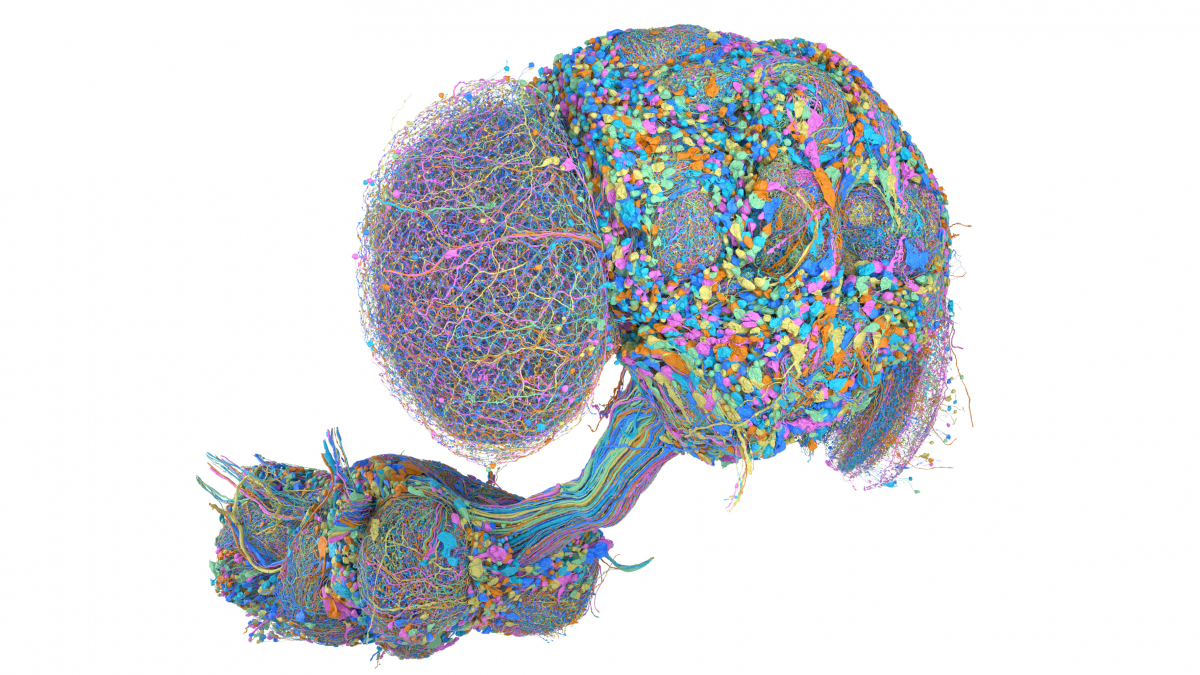
Google Research has reached a significant milestone in the field of connectomics with the successful mapping of the complete male fruit fly brain. This achievement represents a major leap forward in biological science, providing a comprehensive map of the neural connections within a complex organism. By detailing the intricate wiring of the male fruit fly, the project offers a foundational resource for understanding how neural architecture translates into behavior and sensory processing. As a milestone in connectomics, this work highlights the growing synergy between advanced computational techniques and biological research, setting a new standard for the scale and detail of brain mapping. The completion of this map is expected to catalyze further discoveries in neuroscience and the development of more sophisticated neural network models.
Key Takeaways
- Complete Neural Mapping: Google Research has successfully mapped the entire brain of a male fruit fly, marking a definitive achievement in connectomics.
- Scientific Milestone: This project is recognized as a major milestone, pushing the boundaries of what is possible in high-resolution biological imaging and data reconstruction.
- Foundational Resource: The complete map serves as a critical reference for future studies into neural connectivity and biological behavior.
- Computational Integration: The achievement underscores the essential role of advanced computing and AI in processing vast amounts of biological data to reconstruct neural pathways.
In-Depth Analysis
A New Era in Connectomics
The announcement from Google Research regarding the complete mapping of the male fruit fly brain signals a transformative moment for the field of connectomics. Connectomics, the study of the comprehensive map of connections within an organism's nervous system, has long sought to provide a full "wiring diagram" of the brain. By achieving this in the male fruit fly, researchers have moved beyond partial maps to a holistic view of the neural architecture. This milestone is not merely a technical success but a conceptual shift, demonstrating that the full complexity of a multi-cellular brain can be captured and analyzed at the level of individual synapses and neurons.
The process of mapping a complete brain involves the integration of high-resolution electron microscopy with sophisticated machine learning algorithms. In this instance, the focus on the male fruit fly provides a specific biological context, allowing for the exploration of neural circuits that may be unique to the sex or common across the species. The completion of this map suggests that the tools developed by Google Research are now capable of handling the immense scale required for whole-brain analysis, paving the way for similar efforts in even more complex organisms.
Mapping the Architecture of the Male Fruit Fly
The male fruit fly (Drosophila melanogaster) has long been a staple of genetic and biological research due to its relatively compact yet highly functional nervous system. By mapping the complete brain of a male specimen, Google Research has provided a detailed blueprint of the biological hardware that governs everything from basic motor functions to complex social behaviors. This specific focus allows for a granular look at how different regions of the brain communicate, providing insights into the hierarchical and parallel processing that occurs within the insect's mind.
This mapping milestone is significant because it provides a complete dataset, eliminating the gaps that previously hindered a full understanding of long-range neural projections. In the past, researchers often had to piece together information from disparate studies or partial brain sections. With a complete male fruit fly brain map, the scientific community now has a unified reference. This allows for a more accurate modeling of neural circuits, as every connection can be traced from input to output within a single, cohesive framework. The implications for understanding the biological basis of behavior are profound, as researchers can now see the full circuit involved in specific actions or sensory responses.
Industry Impact
The completion of the male fruit fly brain map by Google Research has far-reaching implications for both the scientific community and the technology industry. In the realm of neuroscience, this milestone provides a definitive dataset that will likely serve as the gold standard for connectomic research for years to come. It lowers the barrier for researchers to study complex neural interactions, as the primary data collection and reconstruction have already been achieved at a high level of fidelity.
For the AI and computing industry, this achievement is equally significant. The methods used to reconstruct the brain map—likely involving massive scale-out computing and advanced computer vision—demonstrate the practical application of AI in solving complex biological problems. Furthermore, a complete biological wiring diagram offers a source of inspiration for the development of new artificial neural network architectures. By studying how nature has optimized connectivity for efficiency and resilience in the fruit fly, engineers may find new ways to design more efficient AI systems. This project reinforces the role of major tech entities like Google as central players in biological discovery, bridging the gap between data science and life sciences.
Frequently Asked Questions
Question: What is the significance of mapping the "complete" brain rather than just parts of it?
Mapping the complete brain is crucial because it allows researchers to see the entire pathway of a signal, from sensory input to motor output. Partial maps often miss long-range connections that link different functional regions, which are essential for understanding complex behaviors and holistic brain function.
Question: Why was the male fruit fly chosen for this connectomics milestone?
The fruit fly is a premier model organism in biology with a nervous system that is complex enough to perform sophisticated tasks but small enough to be mapped at high resolution. Focusing on the male brain allows for the study of specific neural circuits related to male-specific behaviors and provides a comparative basis for future studies involving female specimens or other species.
Question: How does this research benefit the field of Artificial Intelligence?
Biological brains are the most efficient processing units known. By mapping the complete connectome of a fruit fly, AI researchers can gain insights into how biological neural networks are structured to handle real-time sensory processing and decision-making with minimal energy consumption, potentially leading to more efficient AI hardware and software designs.