AI-Driven Creativity: The Rise of Conversational Agents for Full Video Production
On August 18, 2026, Tech in Asia reported on a significant advancement in the creative technology sector: the emergence of conversational agents capable of managing full video production. This development marks a transition from traditional, manual video editing software toward intuitive, dialogue-based interfaces. By allowing users to direct the entire production lifecycle—from initial concept and scripting to final visual assembly—through natural language, these agents aim to democratize professional-grade video creation. This analysis explores the implications of such technology, focusing on how conversational AI can streamline complex creative workflows and the potential impact on the broader media industry. While specific technical specifications remain under wraps, the shift toward 'full production' capabilities suggests a major milestone in the evolution of generative AI and its application in professional content creation.
Key Takeaways
- Conversational Interface Shift: The industry is moving toward natural language as the primary interface for complex video production tasks.
- End-to-End Capability: The focus has shifted from generating isolated clips to managing 'full video production' workflows.
- Democratization of Media: Conversational agents lower the technical barriers to entry for high-quality video creation.
- Strategic Industry Milestone: Tech in Asia identifies this as a key development in the 2026 AI landscape, signaling a new era of human-AI collaborative creativity.
In-Depth Analysis
The Evolution of Conversational Interfaces in Creative Media
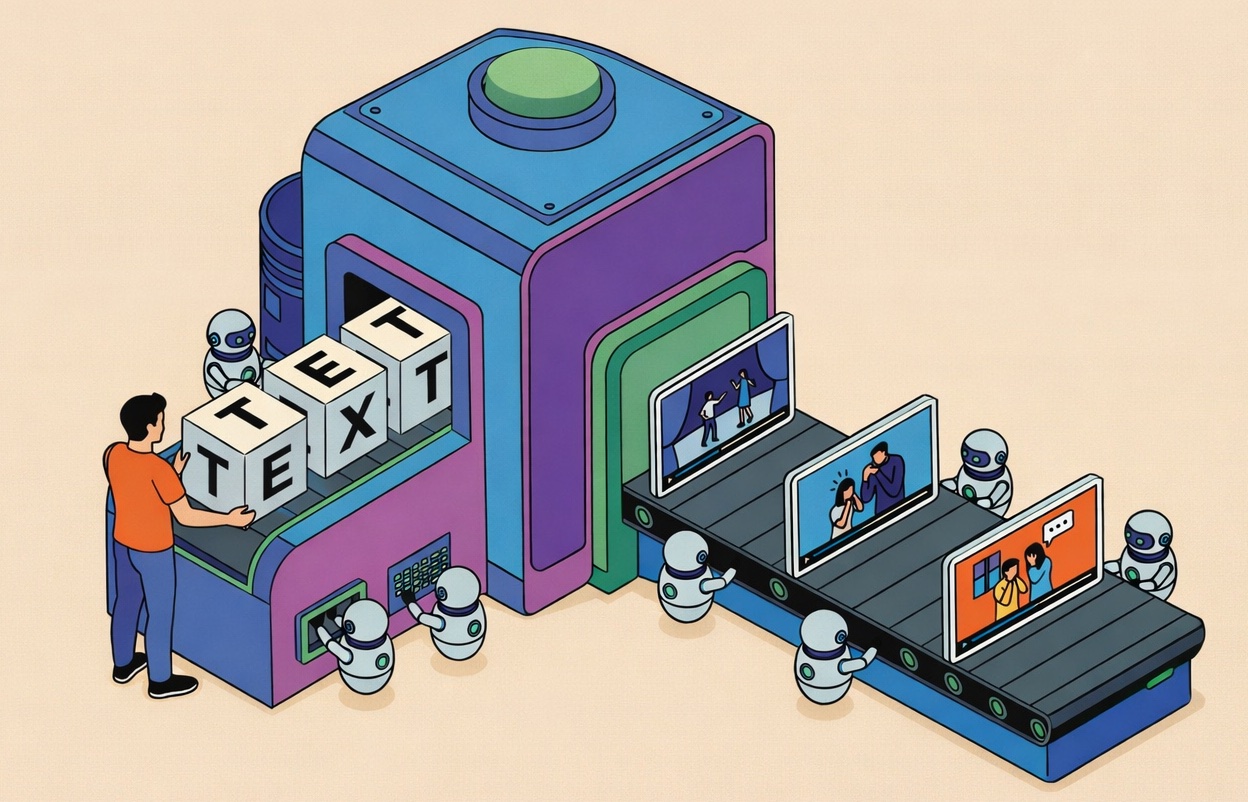
The report from Tech in Asia regarding a conversational agent for full video production highlights a pivotal shift in how digital content is conceptualized and executed. Traditionally, video production has been a fragmented and highly technical process, requiring mastery of various specialized tools for scripting, storyboarding, cinematography, and post-production. The introduction of a "conversational agent" suggests a unified interface where natural language serves as the primary driver for these complex tasks. By utilizing advanced Natural Language Processing (NLP), such an agent allows users to describe their vision, make adjustments, and direct the production process through dialogue rather than manual manipulation of timelines, layers, and keyframes.
This development reflects a broader trend in the AI industry where the barrier between human intent and digital execution is being minimized. In the context of video, the term "conversational" implies a bidirectional exchange. The agent does not merely execute one-off commands; it interprets context, offers creative suggestions, and manages the iterative nature of creative work. This represents a significant leap from earlier text-to-video models that were limited to producing short, often disconnected clips based on static prompts. A conversational approach allows for a more holistic and narrative-driven process, where the AI can maintain consistency across scenes and respond to nuanced feedback from the creator.
Defining the Scope of "Full Video Production"
The term "full video production" as highlighted in the report is particularly significant for the industry. It implies that the AI's capabilities extend far beyond simple visual generation to include the various stages of professional media creation. In a standard professional environment, full production encompasses pre-production (scripting and planning), production (filming or visual synthesis), and post-production (editing, color grading, sound design, and final assembly).
By automating this entire pipeline through a conversational interface, the technology addresses one of the most significant bottlenecks in the digital economy: the technical learning curve. Full video production usually requires years of expertise in complex software suites. A conversational agent democratizes this capability, allowing individuals with a story to tell—but without formal technical training—to produce high-quality video content. The focus on "full" production suggests that the output is intended to be a complete, ready-to-distribute product, which could fundamentally change the economics of content marketing, education, and entertainment. This move toward comprehensive automation suggests that the AI is now capable of handling the structural logic of video, such as pacing, narrative arc, and thematic consistency, which were previously the sole domain of human editors.
The Technological Convergence of 2026
As of August 2026, the convergence of generative video models and sophisticated dialogue systems has reached a point where the "agentic" qualities of AI are taking center stage. Unlike a simple tool, an agent acts with a degree of autonomy to achieve a goal—in this case, a finished video. This requires the AI to integrate multiple modalities: understanding text for scripts, generating high-fidelity visuals, and synchronizing audio and music. The report by Tech in Asia underscores that the industry is no longer just looking for better pixels, but for better workflows. The conversational agent acts as a bridge, translating high-level human creativity into the granular technical steps required for professional video output.
Industry Impact
Democratization and the Creator Economy
The emergence of conversational agents for end-to-end video production has profound implications for the global creator economy. By lowering the technical and financial barriers to entry, this technology enables a wider range of voices to produce professional-grade media. Small businesses, educators, and independent creators in the Asian market and beyond can now compete with larger entities that previously held an advantage due to their access to expensive production teams. This shift is likely to lead to an explosion of localized and niche content, as the cost of production drops significantly.
Transformation of Professional Workflows
For professional videographers and editors, these tools represent a transition from manual labor to creative direction. Instead of spending hours on routine tasks like cutting footage or basic color correction, professionals can act as "directors," guiding the AI agent to handle the heavy lifting. This allows for faster iteration and the ability to explore more creative directions in a shorter timeframe. However, it also necessitates a shift in the skill sets required for the industry, where the ability to effectively communicate with and direct AI agents becomes as important as traditional technical skills. Furthermore, established software providers will likely face pressure to integrate similar conversational capabilities into their existing suites to remain competitive in a landscape that increasingly favors intuitive, AI-driven UX.
Frequently Asked Questions
What is a conversational agent for full video production?
It is an AI-driven system that allows users to create, edit, and finalize complete videos using natural language dialogue. Instead of using traditional editing software with complex manual controls, the user interacts with the agent to direct the entire creative process from start to finish.
How does "full video production" differ from standard AI video generation?
Standard AI video generation typically focuses on creating short, individual clips from text prompts. In contrast, "full video production" implies a comprehensive system that manages the entire lifecycle of a video project, including narrative structure, scene consistency, audio integration, and final editing to produce a complete, cohesive story.
Why is the Tech in Asia report on this technology significant?
The report is significant because it highlights a shift toward "agentic" AI in the creative sector. It signals that AI is moving beyond being a simple generation tool to becoming a collaborative partner capable of handling complex, multi-stage professional workflows, which has major implications for the future of media and tech in the region.