
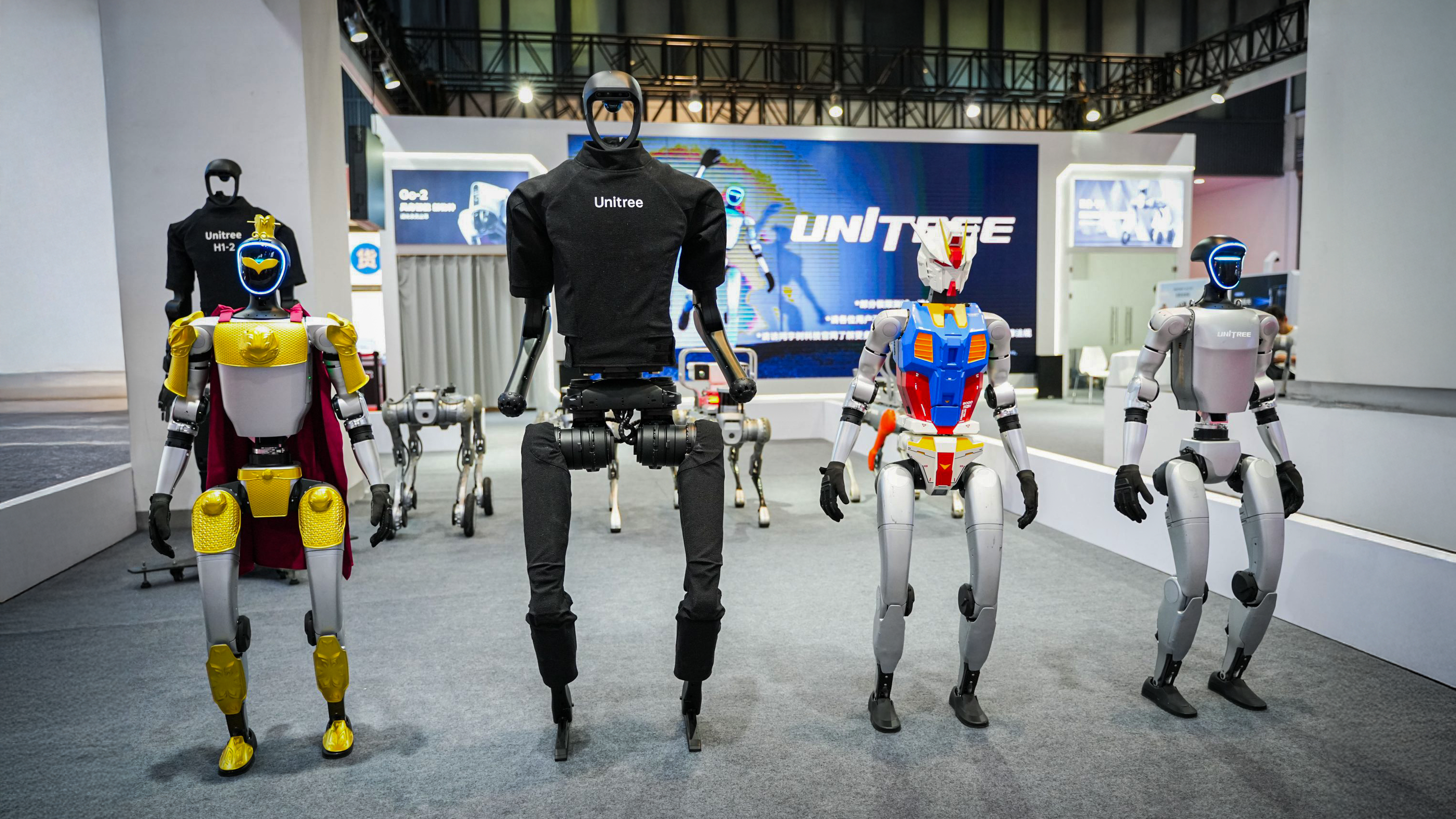
Unitree Robotics IPO Gains Significant Momentum as DeepSeek Joins as Strategic Investor
Unitree Robotics is seeing a surge in interest for its Initial Public Offering (IPO), characterized by exceptionally strong demand from retail investors. A key highlight of this financial milestone is the participation of DeepSeek as a strategic investor in the offering. The convergence of high retail enthusiasm and the backing of a prominent AI entity like DeepSeek underscores the market's positive outlook on the robotics sector. This strategic investment suggests a deepening relationship between artificial intelligence development and robotic hardware platforms. While specific financial terms remain focused on the strategic nature of the partnership, the IPO represents a major step for Unitree in the public markets, driven by both individual investor confidence and significant institutional support from the AI industry.
Key Takeaways
- High Retail Interest: The Unitree Robotics IPO has successfully captured the attention of the retail investment community, showing strong demand.
- Strategic AI Backing: DeepSeek has officially participated in the offering as a strategic investor, signaling a bridge between AI research and robotics.
- Market Confidence: The combination of retail demand and strategic institutional investment points to a robust market valuation for the robotics firm.
- Industry Synergy: The involvement of DeepSeek highlights the growing importance of strategic partnerships in the evolution of the robotics industry.
In-Depth Analysis
The Surge in Retail Investor Demand
The Initial Public Offering of Unitree Robotics has become a focal point for retail investors, marking a significant moment for the robotics industry in the public markets. The "strong demand" noted in the offering indicates that individual investors are increasingly looking toward the robotics sector as a high-growth area. This level of retail participation often reflects a broader public awareness and optimism regarding the practical applications and future scalability of robotic technologies. When retail demand is high, it typically suggests that the company has successfully communicated its value proposition to a non-institutional audience, potentially leading to higher liquidity and a more diverse shareholder base upon listing.
DeepSeek as a Strategic Catalyst
One of the most critical elements of the Unitree IPO is the inclusion of DeepSeek as a strategic investor. Unlike traditional financial investors who focus primarily on capital returns, strategic investors like DeepSeek often bring a layer of industry-specific synergy to the table. DeepSeek’s participation in the offering suggests a shared vision between the two entities, likely focusing on the integration of advanced artificial intelligence with physical robotic systems. This investment is a clear indicator that the future of robotics is being viewed through the lens of AI-driven capabilities. By securing a strategic stake, DeepSeek positions itself at the forefront of hardware implementation, while Unitree gains the backing of a major player in the AI space, which could be instrumental for future technological roadmaps.
The Mechanics of the Strategic Offering
The presence of DeepSeek among the strategic investors in the offering serves as a validation of Unitree's technological standing. In the context of an IPO, strategic investors are often selected based on their ability to add long-term value to the company. The fact that DeepSeek was included in this capacity indicates that Unitree is prioritizing partnerships that can enhance its core offerings. This move may also influence other institutional investors, as the involvement of a specialized AI entity provides a layer of technical due diligence that traditional venture capital might not offer. The synergy between a robotics manufacturer and an AI developer is a logical progression in an era where software intelligence is the primary differentiator for hardware performance.
Industry Impact
The Unitree IPO and the strategic involvement of DeepSeek have several implications for the broader AI and robotics landscape. First, it reinforces the trend of "AI-first" robotics, where the value of a hardware platform is increasingly tied to its compatibility with sophisticated AI models. Second, the strong retail demand suggests that the robotics sector is moving into a phase of mainstream investment, moving beyond the niche interest of specialized tech funds.
Furthermore, this partnership sets a precedent for how AI companies may seek to influence the hardware layer of the industry. By investing strategically in robotics firms, AI entities can ensure that their models have a viable and optimized physical medium for deployment. This could lead to a more integrated ecosystem where software and hardware are developed in tandem, potentially accelerating the deployment of autonomous systems across various sectors. The success of this IPO could also encourage other robotics startups to seek similar strategic alignments with AI firms before or during their public debuts.
Frequently Asked Questions
Question: Who is the notable strategic investor in the Unitree Robotics IPO?
DeepSeek was among the strategic investors in the Unitree Robotics offering, highlighting a significant partnership between the AI and robotics sectors.
Question: How has the retail market responded to the Unitree IPO?
The IPO has drawn strong demand from retail investors, indicating high public interest and confidence in the company's market entry.
Question: What does the participation of a strategic investor like DeepSeek imply?
The participation of a strategic investor implies a long-term interest that goes beyond financial returns, often suggesting future collaboration or technological integration between the AI capabilities of DeepSeek and the robotics hardware of Unitree.


