Meituan Open Sources Advanced AIGC Poster Generation System: A Technical Deep Dive into the Generation-Editing-Evaluation Framework
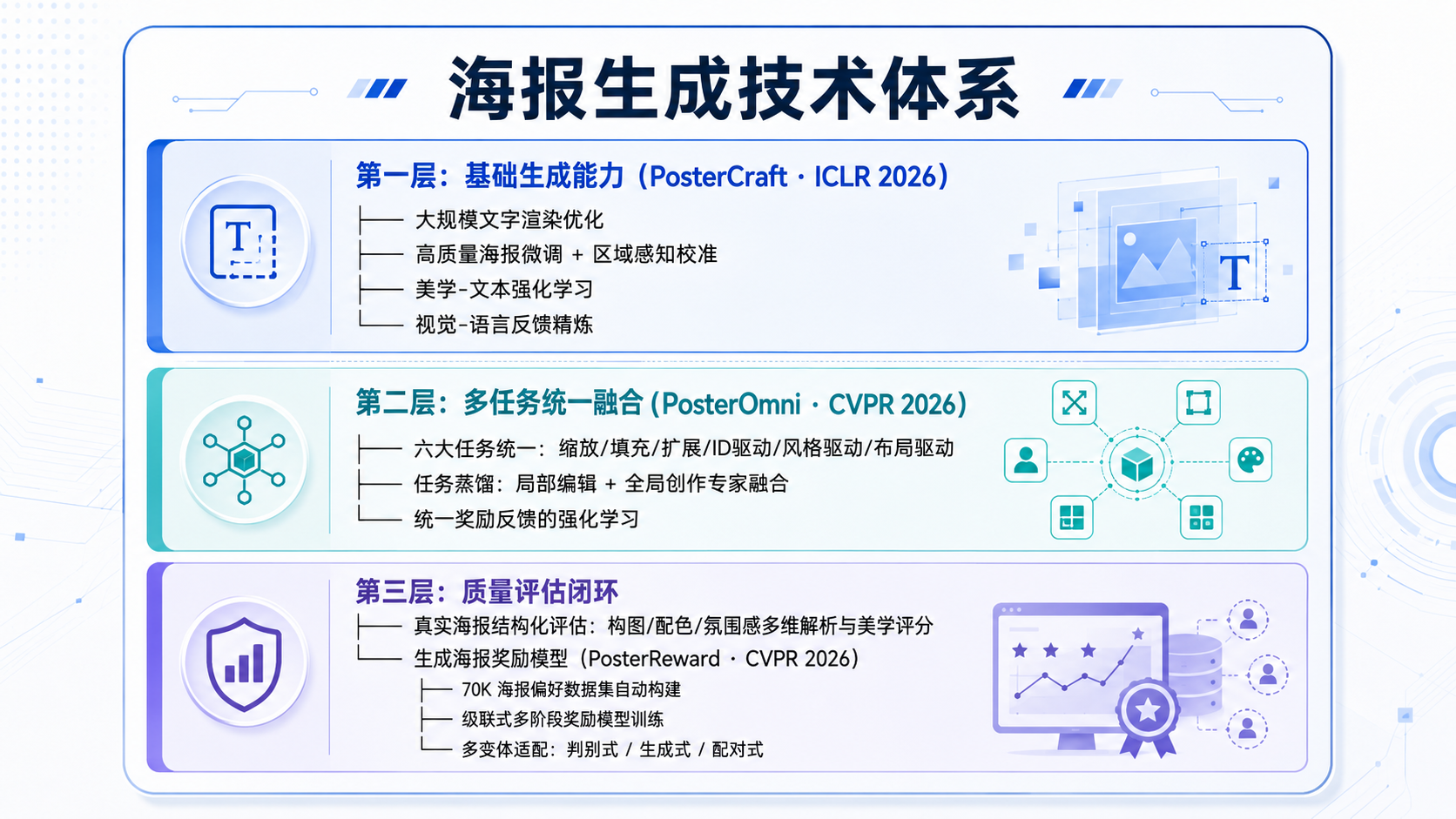
Meituan's Intelligent Creation Team has officially open-sourced its comprehensive AIGC technical system for poster generation. This system is built around a unique "Generation-Editing-Evaluation" technical closed loop, designed to handle the end-to-end process of visual content creation. Having already seen successful implementation in high-traffic scenarios like Meituan Waimai (food delivery) and various Brand IP projects, the framework represents a significant step forward in industrial AI applications. By making this technology open-source, Meituan provides the developer community with a proven architecture for scalable, high-quality image generation and automated quality control, addressing the practical challenges of deploying AIGC in complex commercial environments.
Key Takeaways
- Technical Closed Loop: Meituan has established a comprehensive "Generation-Editing-Evaluation" framework for AIGC poster creation.
- Open Source Commitment: The entire technical system has been made available to the open-source community, promoting collaborative development in AI design.
- Proven Industrial Application: The technology is already operational within Meituan Waimai and Brand IP scenarios, demonstrating its readiness for large-scale commercial use.
- End-to-End Workflow: The system covers the full lifecycle of a poster, from initial AI generation to precise editing and final quality assessment.
In-Depth Analysis
The "Generation-Editing-Evaluation" Technical Closed Loop
At the core of Meituan's innovation is the "Generation-Editing-Evaluation" technical closed loop. This architecture addresses one of the primary challenges in AIGC: the gap between raw AI output and professional-grade marketing materials.
In the Generation phase, the system utilizes advanced generative models to produce base visual concepts. However, because raw AI outputs often require fine-tuning to meet specific brand standards, the Editing component provides the necessary tools for human-in-the-loop or automated adjustments. This ensures that elements like text placement, logo integration, and color schemes remain consistent with corporate identity. Finally, the Evaluation phase acts as a quality gate, using automated metrics to judge the aesthetic and functional effectiveness of the generated posters before they are deployed. This closed loop ensures a high success rate and reduces the manual labor typically associated with creative design.
Real-World Implementation: Meituan Waimai and Brand IP
The practical value of this AIGC system is highlighted by its integration into Meituan Waimai and Brand IP scenarios. In the context of food delivery (Waimai), the demand for diverse, localized, and time-sensitive promotional materials is immense. Meituan's system allows for the rapid production of high-quality posters that can be tailored to different merchants and seasonal campaigns.
Furthermore, for Brand IP management, maintaining visual consistency is paramount. The system's ability to generate assets that adhere to specific IP guidelines while remaining creative allows Meituan to scale its branding efforts without a linear increase in design costs. The transition from internal tool to open-source project suggests that the system has reached a level of maturity and stability capable of handling high-concurrency, real-world business demands.
Industry Impact
Meituan's decision to open-source this AIGC poster generation system is a significant contribution to the industry. By sharing a framework that has been battle-tested in one of the world's largest local services platforms, Meituan is providing a blueprint for other companies to integrate AIGC into their marketing workflows.
This move lowers the barrier to entry for smaller enterprises and developers who wish to implement sophisticated AI design tools but lack the resources to build a "Generation-Editing-Evaluation" loop from scratch. Moreover, it encourages the standardization of AI-driven design processes, potentially leading to more robust and ethical AI tools that prioritize both creativity and brand safety. As AIGC continues to evolve, such open-source frameworks will be essential in moving the technology from experimental phases to reliable industrial standards.
Frequently Asked Questions
Question: What makes Meituan's AIGC system different from standard image generators?
Unlike simple text-to-image tools, Meituan's system incorporates a "Generation-Editing-Evaluation" closed loop. This means it doesn't just create an image; it provides the tools to edit that image for specific business needs and automatically evaluates its quality for commercial use.
Question: In which specific areas has Meituan deployed this technology?
According to the Meituan Technical Team, the system is currently utilized in Meituan Waimai (food delivery) marketing and for various Brand IP scenarios to ensure high-quality, consistent visual content.
Question: Is the Meituan poster generation technology available for public use?
Yes, the Meituan Intelligent Creation Team has fully open-sourced the technical system, allowing developers and organizations to access and build upon their framework.