Meituan Officially Open-Sources LongCat-2.0: A 1.6T Parameter Model for Agentic Coding with Domestic Hardware Support
Meituan's technical team has officially open-sourced LongCat-2.0, a large-scale model featuring 1.6 trillion total parameters and approximately 48 billion active parameters. Specifically engineered for Agentic Coding tasks, the model introduces architectural innovations such as LongCat sparse attention and N-gram Embedding. These features significantly enhance long-context efficiency and token-level representation. Furthermore, the release includes inference code compatibility for domestic hardware, aiming to bolster code understanding, generation, and execution through dynamic activation. By balancing massive scale with efficient active parameters, LongCat-2.0 represents a significant advancement in specialized AI for software development, providing the community with tools optimized for complex coding environments and localized hardware infrastructure.
Key Takeaways
- Massive Scale with Efficient Activation: LongCat-2.0 features 1.6 trillion total parameters, while maintaining an average of 48 billion active parameters to balance performance and computational efficiency.
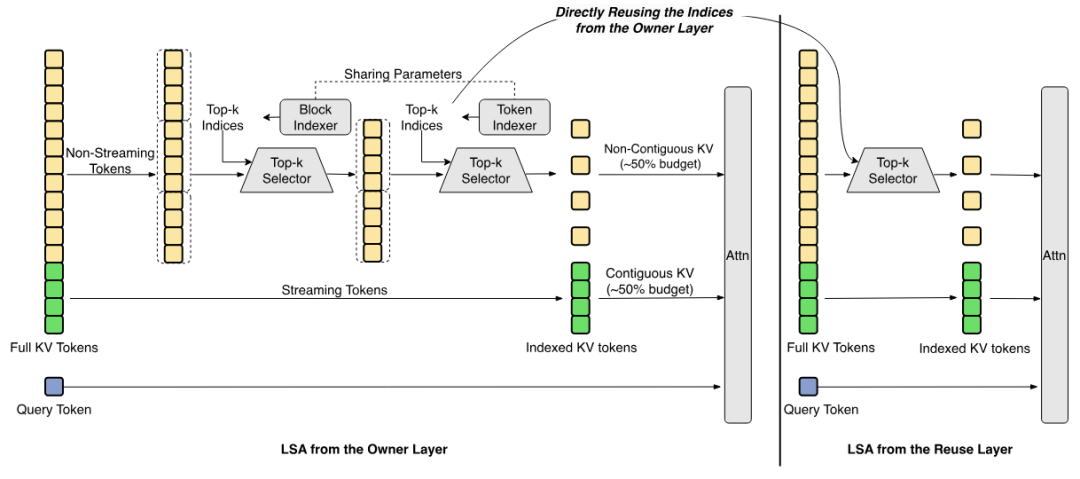
- Architectural Innovations: The model introduces LongCat sparse attention and N-gram Embedding to improve long-context processing and token-level representation.
- Designed for Agentic Coding: The architecture is specifically optimized for real-world Agentic Coding tasks, focusing on code understanding, generation, and execution.
- Domestic Hardware Compatibility: Meituan has open-sourced inference code specifically optimized for domestic (Chinese) hardware cards, lowering the barrier for local deployment.
In-Depth Analysis
The Scale and Efficiency of LongCat-2.0
Meituan's LongCat-2.0 marks a significant milestone in the development of large-scale models tailored for specialized tasks. With a total parameter count of 1.6 trillion, the model sits among the largest open-source offerings. However, the technical brilliance lies in its activation strategy. By utilizing an average of approximately 48 billion active parameters, LongCat-2.0 employs a sparse activation mechanism. This approach allows the model to possess the vast knowledge and reasoning capabilities associated with trillion-parameter models while keeping the actual computational cost during inference closer to that of much smaller models. This dynamic activation is not just a cost-saving measure; it is specifically tuned to reinforce the model's performance in code-centric tasks, ensuring that the most relevant "experts" within the model are engaged for specific coding challenges.
Architectural Innovations: Sparse Attention and N-gram Embedding
To address the unique challenges of software development—where context can span thousands of lines of code across multiple files—LongCat-2.0 introduces two critical architectural components: LongCat sparse attention and N-gram Embedding.
The LongCat sparse attention mechanism is designed to enhance the efficiency of long-context processing. In traditional transformers, the computational complexity of attention grows quadratically with the sequence length, making long-form code analysis difficult. By implementing a sparse attention strategy, LongCat-2.0 can maintain high performance and accuracy even when dealing with extensive codebases. Complementing this is the N-gram Embedding layer, which improves the model's token-level representation. In the context of programming languages, where specific sequences of characters (like syntax keywords or operators) carry heavy semantic weight, N-gram Embedding allows the model to capture more nuanced patterns at the token level, leading to superior code understanding and generation compared to standard embedding methods.
Optimized for Agentic Coding and Execution
Unlike general-purpose language models, LongCat-2.0 is described as being "born for real Agentic Coding tasks." This distinction is crucial. Agentic coding refers to a paradigm where the AI does not just suggest snippets of code but acts as an agent capable of understanding complex requirements, generating functional code, and even overseeing execution. The integration of dynamic activation within the LongCat-2.0 architecture is specifically designed to strengthen these three pillars: understanding, generation, and execution. By focusing on the execution aspect, Meituan ensures that the model's output is not just syntactically correct but logically sound and functional within a real-world development environment. This makes it a potent tool for developers looking to automate complex workflows and build more autonomous coding assistants.
Industry Impact
The open-sourcing of LongCat-2.0, particularly with the inclusion of inference code for domestic hardware, has profound implications for the AI and software development industries. First, it provides a high-performance alternative for organizations that require massive-scale models but are constrained by hardware availability or the need for localized infrastructure. By supporting domestic hardware cards, Meituan is actively contributing to the robustness of the local AI ecosystem, ensuring that cutting-edge coding models can be deployed efficiently on a variety of hardware platforms.
Furthermore, the focus on "Agentic Coding" signals a shift in the industry toward more specialized, task-oriented AI. As the demand for automated software engineering grows, models like LongCat-2.0 provide the necessary architectural foundation to handle the long-context and high-precision requirements of modern programming. The release encourages further innovation in sparse attention and dynamic activation, potentially setting a new standard for how large-scale models are designed for specific professional domains.
Frequently Asked Questions
Question: What are the primary technical innovations in LongCat-2.0?
LongCat-2.0 introduces two major architectural innovations: LongCat sparse attention and N-gram Embedding. Sparse attention allows for more efficient processing of long code contexts, while N-gram Embedding enhances the model's ability to represent code at the token level. Additionally, the model uses a dynamic activation strategy with 1.6T total parameters and 48B active parameters.
Question: What is "Agentic Coding" and how does LongCat-2.0 support it?
Agentic Coding refers to AI tasks where the model acts as an agent to understand, generate, and execute code within a development workflow. LongCat-2.0 is specifically optimized for these tasks through its architecture and dynamic activation, which are designed to improve the model's performance in understanding complex logic and ensuring code execution viability.
Question: Does LongCat-2.0 support domestic hardware for inference?
Yes, as part of the open-source release, Meituan has specifically provided inference code optimized for domestic hardware cards. This ensures that the model can be deployed and run efficiently on local hardware infrastructure, facilitating broader access and application within the domestic tech ecosystem.