Meituan LongCat Team Open-Sources WBench: The First Systematic Multi-Round Benchmark for Interactive Video World Models
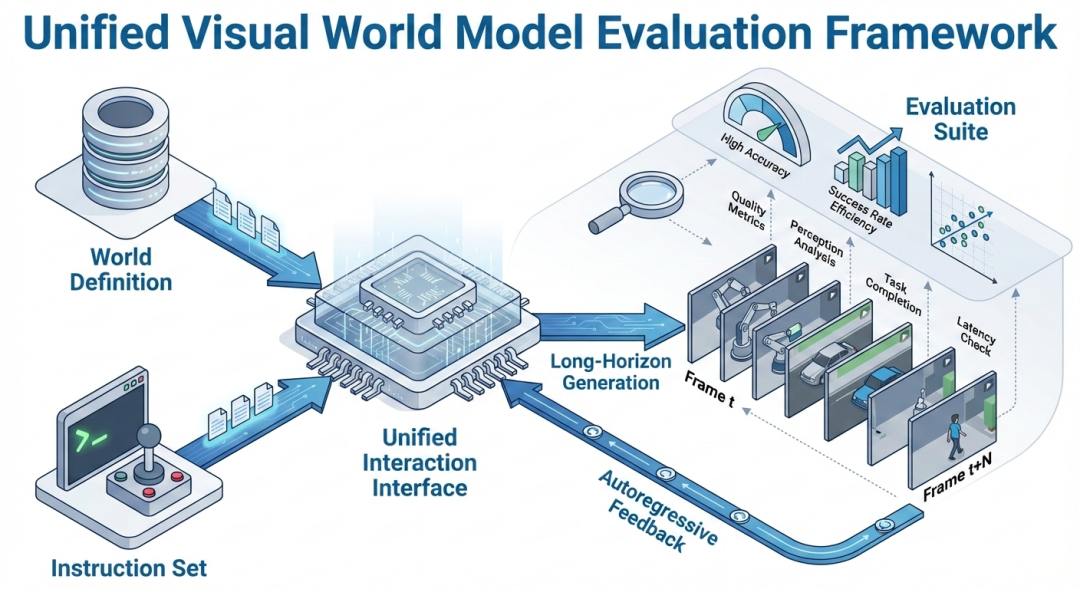
The Meituan LongCat team has announced the release of WBench, a groundbreaking open-source evaluation benchmark specifically designed for interactive video world models. As the first systematic multi-round assessment tool of its kind, WBench acts as a diagnostic "CT scanner" for artificial intelligence. It is engineered to precisely identify the technical limitations and bottlenecks that occur as world models evolve from "passive viewing"—simply observing or generating static video—to "active interaction," where the model must respond dynamically to user inputs. By providing a structured framework for multi-round evaluation, WBench offers researchers a clear map of where current world models fail in interactive scenarios, facilitating more targeted improvements in the field of AI-driven world simulation.
Key Takeaways
- Pioneering Benchmark: Meituan's LongCat team has developed and open-sourced WBench, the first systematic multi-round evaluation benchmark for interactive video world models.
- Diagnostic Precision: The tool is described as a "CT scanner" for AI, capable of pinpointing exactly where world models struggle during the transition to interactivity.
- Focus on Interaction: WBench specifically targets the gap between "passive viewing" and "active interaction," highlighting the challenges of dynamic response in AI environments.
- Open Source Contribution: By making WBench open-source, the LongCat team provides the broader AI community with a standardized method to measure and improve world model performance.
In-Depth Analysis
The Transition from Passive Viewing to Active Interaction
The development of world models has reached a critical juncture where the ability to generate high-quality video is no longer the sole metric of success. The Meituan LongCat team identifies a significant hurdle in the industry: the shift from "passive viewing" to "active interaction." In a passive context, a world model might generate a sequence of frames that look realistic but do not account for external influence. However, an interactive video world model must behave like a simulation, responding to user inputs or environmental changes in a consistent and logical manner. WBench is designed to evaluate this specific capability, uncovering the "boundaries" of what current models can achieve when they are required to do more than just observe.
WBench as a Diagnostic "CT Scanner"
One of the most compelling aspects of WBench is its metaphorical role as a "CT scanner." In medical terms, a CT scanner provides a detailed internal view to locate specific issues that are not visible from the outside. Similarly, WBench provides a systematic multi-round evaluation that goes beyond surface-level performance. By subjecting world models to multiple rounds of interaction, the benchmark can precisely locate where a model's internal logic or consistency breaks down. This diagnostic approach allows developers to see exactly "where the model is stuck," whether it is a failure in spatial consistency, temporal logic, or the inability to maintain a coherent world state over repeated interactions.
Systematic Multi-Round Evaluation Framework
Unlike traditional benchmarks that might rely on single-turn assessments, WBench emphasizes a "multi-round" systematic approach. This is crucial for interactive world models because interaction is rarely a one-off event; it is a continuous process. A model might succeed in the first round of interaction but lose coherence by the third or fourth. By implementing a multi-round structure, WBench ensures that the evaluation captures the long-term stability and interactive depth of the world model. This systematic methodology provides a more rigorous testing ground for models aiming to simulate complex environments, from lunar walks to cybernetic urban landscapes.
Industry Impact
The introduction of WBench marks a significant step forward for the AI industry, particularly for teams working on autonomous systems, gaming, and immersive simulations. By providing the first systematic benchmark for interactive video world models, Meituan is filling a critical gap in the evaluation ecosystem. Standardized testing allows for better comparison between different models and encourages a more scientific approach to overcoming the limitations of current AI. Furthermore, by open-sourcing the tool, the LongCat team is fostering a collaborative environment where the "boundaries" of world models can be pushed collectively, potentially accelerating the arrival of truly interactive and responsive AI-generated worlds.
Frequently Asked Questions
Question: What makes WBench different from existing AI benchmarks?
WBench is unique because it is the first systematic benchmark specifically designed for "interactive" video world models using a multi-round evaluation process. While other benchmarks might focus on image quality or single-frame accuracy, WBench evaluates how well a model handles continuous, active interaction over time.
Question: Why does the LongCat team refer to WBench as a "CT scanner"?
The term "CT scanner" is used to describe WBench's ability to perform a deep, diagnostic analysis of a world model. It doesn't just give a pass/fail grade; it identifies the specific technical points where a model fails to transition from passive observation to active interaction, much like a medical scan locates a specific internal issue.
Question: Is WBench available for public use?
Yes, the Meituan LongCat team has open-sourced WBench, making it available for the global research community to use, evaluate, and contribute to the development of interactive world models.