Meituan Open Sources AIGC Poster Generation System Featuring a Complete Generation-Editing-Evaluation Technical Closed Loop
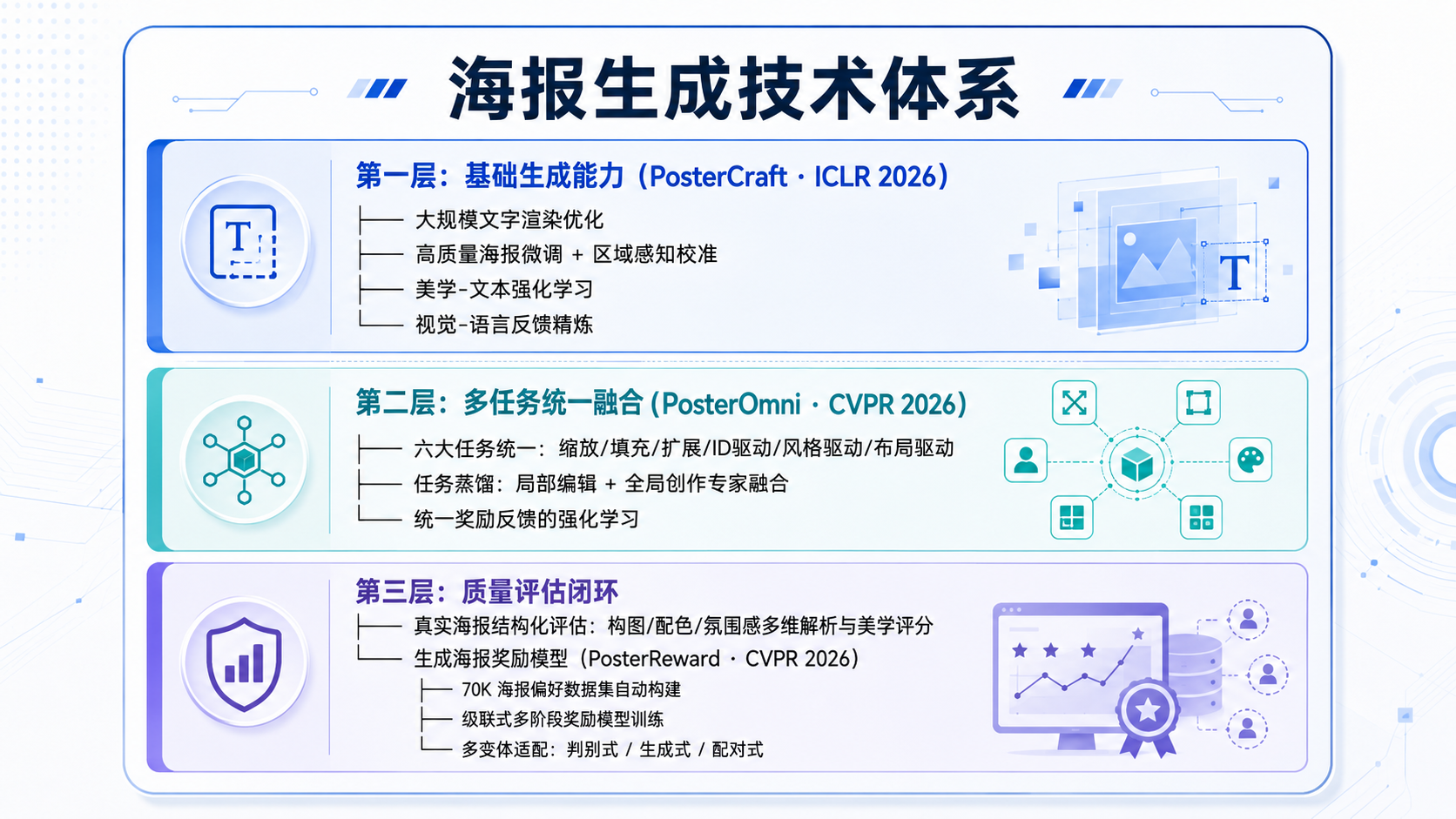
Meituan's intelligent creation team has officially unveiled a comprehensive technical framework for AIGC-driven poster generation. By establishing a sophisticated "Generation-Editing-Evaluation" closed-loop system, the team has successfully integrated advanced artificial intelligence capabilities into practical business scenarios, specifically within Meituan Waimai (food delivery) and various brand IP projects. This innovation streamlines the creative process from initial design to final quality assessment, ensuring high-quality visual outputs. In a significant move for the developer community, Meituan has announced that this entire technical system is now open-sourced, allowing for broader collaboration and adoption of their automated visual content creation technologies.
Key Takeaways
- Comprehensive Technical System: Meituan has built a full-stack AIGC framework specifically designed for the automated generation of posters.
- Closed-Loop Workflow: The architecture follows a "Generation-Editing-Evaluation" cycle, ensuring a seamless transition from creation to quality control.
- Real-World Implementation: The technology is already active in high-traffic scenarios, including Meituan Waimai and Brand IP development.
- Open Source Commitment: Meituan has fully open-sourced the technology to foster innovation within the AI and design communities.
In-Depth Analysis
The "Generation-Editing-Evaluation" Framework
Meituan's approach to AIGC poster creation is centered around a robust technical closed loop. This system is not merely about generating an image; it encompasses the entire lifecycle of a creative asset. The Generation phase focuses on the initial creation of visual content based on specific inputs. This is followed by the Editing phase, which likely provides the necessary tools to refine and customize the generated posters to meet specific brand guidelines or promotional needs. Finally, the Evaluation phase serves as a critical quality gate, assessing the effectiveness and aesthetic value of the output. By linking these three stages, Meituan ensures that the AI-generated content is not only creative but also functional and ready for commercial use.
Strategic Implementation in Meituan Waimai and Brand IP
The practical application of this AIGC technology within Meituan Waimai and Brand IP scenarios highlights its commercial viability. In the fast-paced environment of food delivery (Waimai), the demand for diverse and localized promotional materials is immense. Automating poster generation allows for rapid scaling of marketing efforts. Furthermore, the application in Brand IP scenarios suggests that the system is capable of maintaining high levels of visual consistency and brand integrity, which are essential for intellectual property management. The successful deployment in these areas demonstrates the system's ability to handle complex, real-world design requirements at scale.
Industry Impact
The decision by Meituan to open-source their AIGC poster generation system marks a significant contribution to the industry. By sharing a proven, closed-loop technical system, Meituan is lowering the barrier to entry for other companies and developers looking to implement automated design solutions. This move is expected to accelerate the adoption of AIGC in e-commerce and digital marketing, providing a blueprint for how large-scale platforms can integrate generative AI into their core operations. Furthermore, it reinforces the trend of major tech players contributing to the open-source ecosystem to drive collective progress in AI research and application.
Frequently Asked Questions
Question: What are the three core stages of Meituan's AIGC poster system?
The system is built on a "Generation-Editing-Evaluation" closed loop. This means it handles the initial creation, the subsequent refinement or editing, and the final quality assessment of the posters.
Question: Where is this technology currently being used?
Meituan has implemented this technology in its food delivery service (Meituan Waimai) and for various Brand IP scenarios to automate and enhance visual content creation.
Question: Is the Meituan AIGC poster generation technology available to the public?
Yes, Meituan has announced that the entire technical system has been open-sourced, making it available for developers and researchers to use and study.