LongCat Open Sources VitaBench 2.0: A New Benchmark for Long-Term Dynamic AI Agents
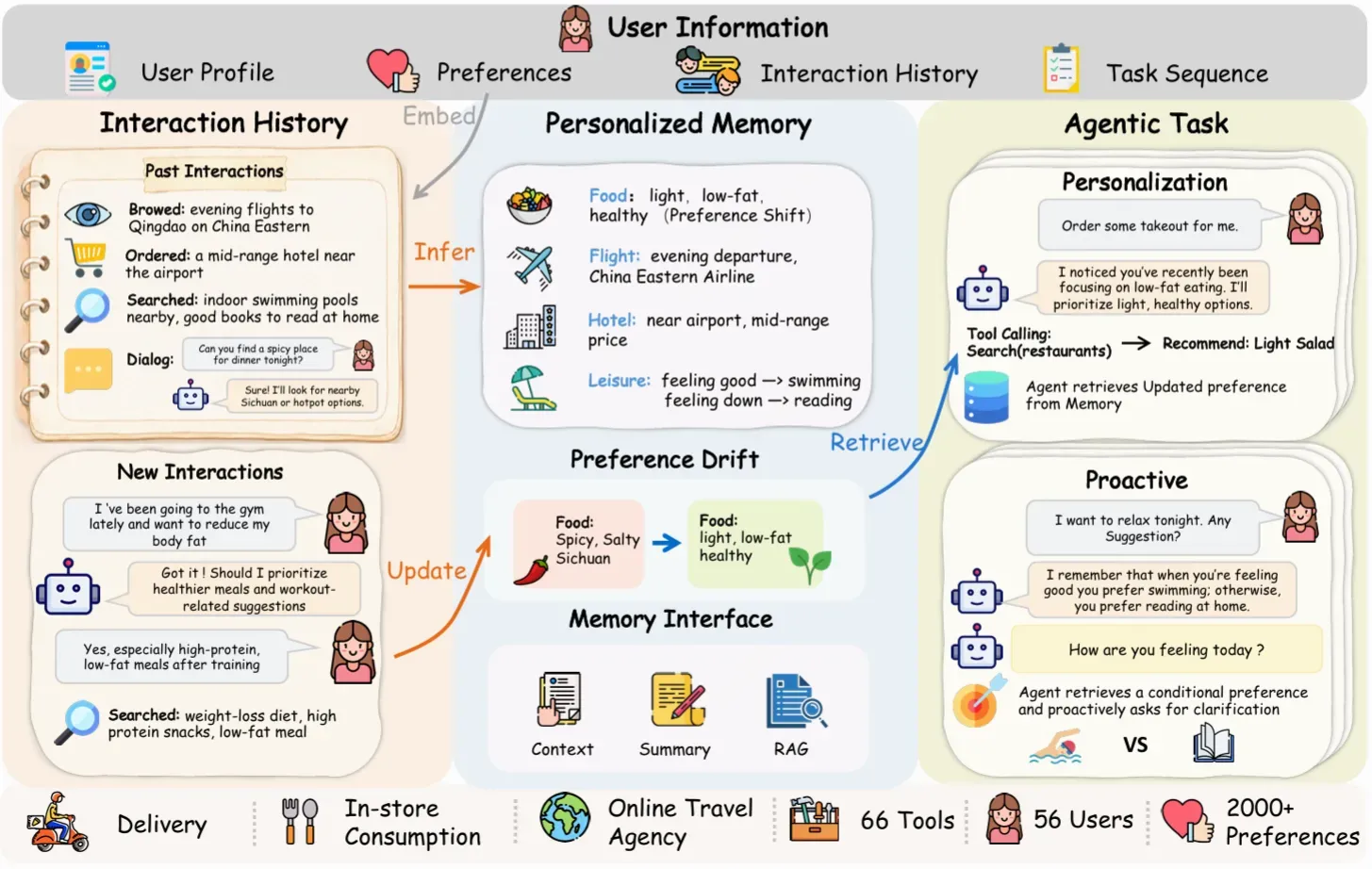
The LongCat project, led by the Meituan technical team, has officially open-sourced VitaBench 2.0, a pioneering benchmark designed for long-term dynamic user modeling. As the first evaluation framework of its kind, VitaBench 2.0 focuses on real-life scenarios to systematically assess the performance of Large Language Models (LLMs). The benchmark specifically targets two critical dimensions of AI agent behavior: personalization and proactivity. By simulating sustained and evolving user interactions, VitaBench 2.0 provides a rigorous standard for measuring how effectively AI agents can adapt to user needs over time, moving beyond static evaluations toward more realistic, dynamic modeling of human-AI engagement.
Key Takeaways
- Pioneering Framework: VitaBench 2.0 is the first benchmark specifically designed to evaluate AI agents within real-life, long-term dynamic user modeling contexts.
- Focus on Personalization: The benchmark systematically measures the ability of Large Language Models (LLMs) to tailor interactions based on long-term user history.
- Proactivity Assessment: A core component of the evaluation is the agent's capacity for proactivity during dynamic user interactions.
- Open Source Contribution: Developed and released by the Meituan technical team under the LongCat project to advance industry standards for AI agents.
In-Depth Analysis
Advancing Beyond Static Benchmarks with VitaBench 2.0
The introduction of VitaBench 2.0 by the LongCat project marks a significant evolution in the field of AI evaluation. Historically, many benchmarks for Large Language Models (LLMs) have focused on static, single-turn tasks or short-term context windows. VitaBench 2.0 breaks this mold by prioritizing "long-term dynamic user modeling." This approach is rooted in real-life scenarios, where user behavior, preferences, and contexts are not fixed but evolve over time. By creating a systematic way to evaluate these long-term interactions, the Meituan technical team is addressing a critical gap in the development of AI agents that are intended for sustained, daily use.
The Dual Pillars: Personalization and Proactivity
At the heart of VitaBench 2.0 are two essential metrics for modern AI agents: personalization and proactivity.
-
Personalization: In the context of long-term dynamic modeling, personalization goes beyond simple preference matching. It involves the model's ability to maintain a consistent understanding of a user across multiple sessions and changing circumstances. VitaBench 2.0 evaluates how well an LLM can integrate this long-term knowledge to provide relevant, context-aware responses that feel uniquely tailored to the individual user.
-
Proactivity: While many AI models are reactive—responding only when prompted—VitaBench 2.0 emphasizes the importance of proactivity. This involves the agent's ability to take initiative within a dynamic interaction, anticipating user needs or suggesting actions based on the evolving context of the long-term relationship. By measuring these capabilities, VitaBench 2.0 sets a higher bar for what constitutes a truly "intelligent" agent.
Systematic Evaluation of Real-World Dynamics
VitaBench 2.0 is designed to be a systematic evaluation tool. This means it does not just look at isolated successes but assesses the model's performance across a spectrum of real, dynamic interactions. The focus on "real-life scenarios" ensures that the benchmark remains relevant to the actual challenges developers face when deploying AI agents in the wild. By open-sourcing this tool, the LongCat project enables the broader AI research community to align on a standard for long-term user modeling, potentially accelerating the transition from simple chatbots to sophisticated digital companions.
Industry Impact
The release of VitaBench 2.0 is poised to have a substantial impact on the AI industry, particularly in the development of agentic AI. As companies shift their focus from general-purpose LLMs to specialized AI agents, the need for benchmarks that reflect real-world usage becomes paramount. VitaBench 2.0 provides the necessary infrastructure to test agents in complex, evolving environments. Furthermore, by focusing on personalization and proactivity, it encourages the industry to move toward AI that is more helpful, intuitive, and capable of building long-term value for users. This benchmark establishes a new standard for excellence in user-centric AI development.
Frequently Asked Questions
What makes VitaBench 2.0 different from other AI benchmarks?
VitaBench 2.0 is unique because it is the first benchmark to focus specifically on long-term dynamic user modeling in real-life scenarios. Unlike static benchmarks, it evaluates how AI agents handle evolving user interactions over time, rather than just single-turn tasks.
Who developed VitaBench 2.0?
VitaBench 2.0 was developed and open-sourced by the Meituan technical team as part of the LongCat project.
What are the primary metrics used in VitaBench 2.0?
The benchmark systematically evaluates Large Language Models (LLMs) based on their personalization capabilities and their proactivity during long-term, dynamic user interactions.