Meituan Open-Sources LongCat-2.0: A 1.6T Parameter Model Revolutionizing Agentic Coding with Sparse Attention
Meituan's technical team has officially open-sourced LongCat-2.0, a massive model featuring 1.6 trillion total parameters with approximately 48 billion active parameters. Specifically engineered for "Agentic Coding" tasks, the model introduces architectural breakthroughs such as LongCat Sparse Attention and N-gram Embedding. These innovations significantly enhance long-context processing efficiency and token-level representation. Furthermore, the model utilizes dynamic activation to bolster its capabilities in code understanding, generation, and execution. Notably, Meituan has also released inference code compatible with domestic Chinese GPU hardware, facilitating broader accessibility and deployment within the local ecosystem for high-performance AI coding applications.
Key Takeaways
- Massive Scale with Efficiency: LongCat-2.0 features 1.6 trillion total parameters, utilizing a sparse architecture where only approximately 48 billion parameters are active during computation.
- Specialized for Agentic Coding: The model is purpose-built for autonomous coding tasks, focusing on the full lifecycle of code understanding, generation, and execution.
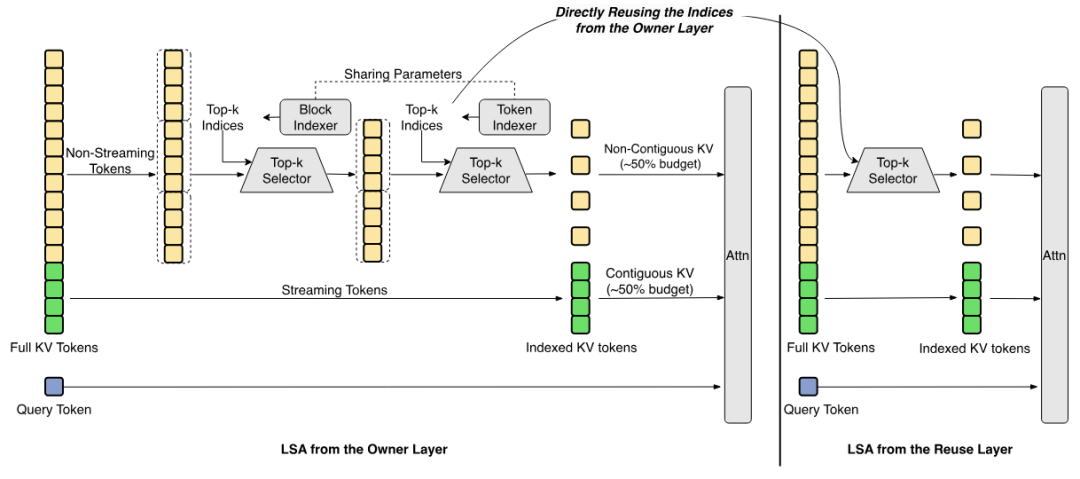
- Architectural Innovations: Introduces LongCat Sparse Attention and N-gram Embedding to solve long-context bottlenecks and improve token-level precision.
- Domestic Hardware Support: Meituan has synchronized the release of inference code specifically optimized for domestic (Chinese) GPU cards, promoting hardware diversity.
In-Depth Analysis
Architectural Innovations: LongCat Sparse Attention and N-gram Embedding
Meituan's LongCat-2.0 represents a significant leap in how large language models handle the complexities of programming languages. At the core of its architecture are two primary innovations: LongCat Sparse Attention and N-gram Embedding.
Standard attention mechanisms often struggle with the quadratic computational costs associated with long-context windows, which are common in large-scale software projects. LongCat Sparse Attention addresses this by optimizing how the model attends to relevant code segments, allowing for much higher efficiency when processing extensive codebases. This is complemented by N-gram Embedding, which enhances the model's token-level representation. By capturing local context more effectively through N-grams, the model can better understand the nuanced syntax and structural patterns inherent in complex programming languages, leading to more accurate code suggestions and logic reasoning.
Optimized for the Agentic Coding Lifecycle
Unlike general-purpose models, LongCat-2.0 is explicitly designed for Agentic Coding. This refers to a paradigm where the AI does not merely act as a completion tool but functions as an agent capable of understanding requirements, generating logic, and overseeing execution.
The model's 1.6T total parameter count provides a vast knowledge base, while the ~48B active parameters ensure that inference remains computationally viable. The integration of dynamic activation further strengthens this capability. By dynamically adjusting which parts of the model are engaged based on the task at hand, LongCat-2.0 achieves superior performance in code understanding and execution. This allows the model to maintain high fidelity across long-range dependencies in code, ensuring that generated snippets are not only syntactically correct but also contextually integrated into existing project structures.
Bridging the Gap with Domestic Hardware Inference
A critical component of this open-source release is the inclusion of inference code for domestic GPU cards. In the current global landscape, the ability to run massive models on localized hardware is a strategic necessity for many enterprises. By providing optimized inference paths for domestic silicon, Meituan is lowering the barrier to entry for organizations that require high-performance AI coding assistants but operate within specific hardware ecosystems. This move ensures that the 1.6T parameter model is not just a theoretical achievement but a practical tool that can be deployed in diverse production environments, leveraging the full potential of available local compute resources.
Industry Impact
The release of LongCat-2.0 is poised to influence the AI industry in several key ways:
- Standardizing Agentic Workflows: By focusing on "Agentic Coding," Meituan is pushing the industry toward more autonomous AI developers. This shift suggests that future coding assistants will move beyond simple autocomplete to become comprehensive partners in the software development life cycle (SDLC).
- Efficiency in Large-Scale Models: The successful implementation of a 1.6T/48B sparse architecture demonstrates how Mixture-of-Experts (MoE) or similar sparse techniques can be refined for specialized domains like programming, proving that massive scale does not always require massive real-time compute costs.
- Hardware Democratization: By open-sourcing code for domestic GPUs, Meituan is fostering a more resilient AI ecosystem. This encourages the development of software stacks that are hardware-agnostic, reducing reliance on a single provider and promoting innovation across different chip architectures.
Frequently Asked Questions
Question: What makes LongCat-2.0 different from a standard LLM used for coding?
LongCat-2.0 is specifically optimized for "Agentic Coding," meaning it is designed to handle the entire workflow of understanding, generating, and executing code. Its architecture, featuring LongCat Sparse Attention and N-gram Embedding, is tailored to handle the long-context requirements and token-level precision necessary for professional software engineering, which general models may lack.
Question: How does the model achieve 1.6T parameters while remaining efficient?
The model uses a sparse architecture where, despite having 1.6 trillion total parameters, only about 48 billion are active during any given inference task. This allows the model to store a massive amount of information while maintaining the processing speed and resource efficiency of a much smaller model.
Question: Is LongCat-2.0 compatible with non-international GPU hardware?
Yes. One of the key highlights of this release is that Meituan has specifically provided and open-sourced inference code for domestic (Chinese) GPU cards, ensuring the model can be deployed effectively on a variety of hardware platforms.