Meituan Open Sources AIGC Poster Generation System Featuring a Complete Generation-Editing-Evaluation Technical Closed Loop
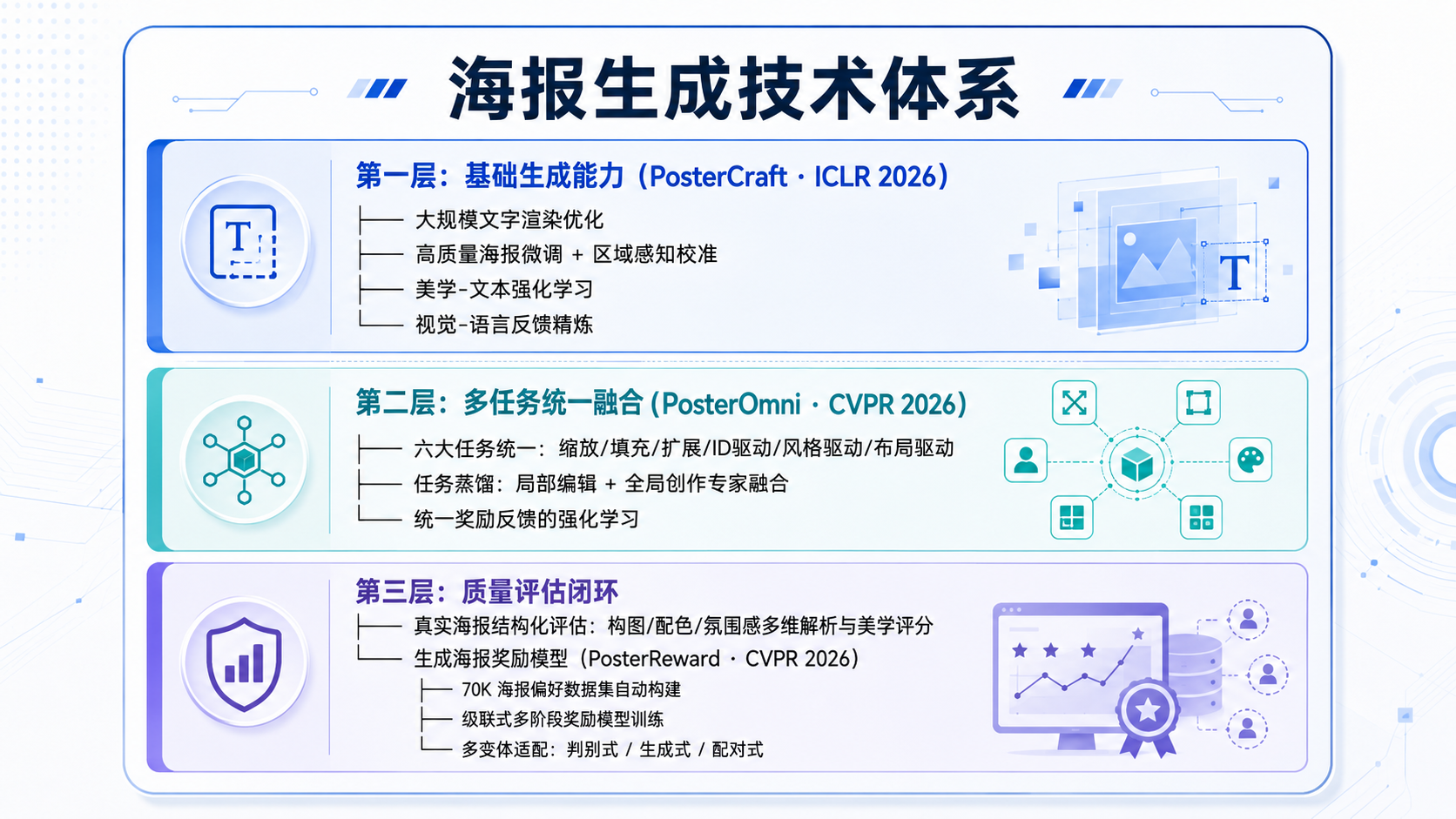
Meituan's Intelligent Creation Team has officially unveiled a comprehensive technical system for AIGC poster generation, marking a significant milestone in automated visual content creation. The system is built upon a sophisticated "Generation-Editing-Evaluation" closed-loop framework, designed to streamline the creative workflow from initial concept to final quality assurance. Currently implemented across Meituan Waimai (food delivery) and various brand IP scenarios, the technology demonstrates high practical utility in high-volume commercial environments. In a move to support the broader developer community, Meituan has fully open-sourced this technical architecture, providing a robust foundation for further innovation in the field of intelligent design and automated marketing materials.
Key Takeaways
- Integrated Technical Framework: Meituan has established a complete AIGC ecosystem specifically for poster generation, moving beyond simple image creation to a full-cycle system.
- Closed-Loop Methodology: The system utilizes a "Generation-Editing-Evaluation" (生成-编辑-评判) workflow, ensuring that AI-generated content is both customizable and quality-controlled.
- Proven Commercial Application: The technology is already operational within Meituan Waimai and Brand IP scenarios, proving its efficacy in large-scale, real-world business environments.
- Commitment to Open Source: The entire technical system has been made available to the public, encouraging community collaboration and transparency in AI development.
In-Depth Analysis
The "Generation-Editing-Evaluation" Technical Closed Loop
At the core of Meituan's AIGC innovation is the "Generation-Editing-Evaluation" closed loop. This structure addresses the common limitations of standalone AI generation tools, which often lack the precision required for professional branding.
The Generation phase focuses on the initial creation of visual assets based on specific inputs. However, recognizing that raw AI output rarely meets exact commercial standards, Meituan integrated an Editing component. This allows for the refinement and adjustment of generated posters, ensuring that brand elements, text placement, and visual aesthetics align with specific marketing requirements.
The final pillar, Evaluation, is perhaps the most critical for industrial-scale deployment. By building an automated or semi-automated evaluation mechanism, the system can judge the quality, relevance, and aesthetic appeal of the posters before they are deployed. This closed loop ensures a feedback mechanism where the results of the evaluation can theoretically inform better generation and editing in future iterations, creating a self-improving system for visual content.
Practical Implementation in Meituan Waimai and Brand IP
Meituan's decision to deploy this technology in the food delivery (Waimai) sector highlights the high demand for rapid, high-quality visual content in the e-commerce space. In the context of Meituan Waimai, thousands of merchants require promotional posters daily. Manually designing these assets is time-consuming and costly. By applying the AIGC poster generation system, Meituan enables the rapid production of localized and personalized marketing materials that maintain a high standard of quality.
Furthermore, the application in Brand IP scenarios suggests that the system is capable of handling complex brand guidelines and character-driven designs. This requires the AI to understand and replicate specific stylistic nuances associated with Meituan's intellectual property, ensuring brand consistency across various digital touchpoints. The successful implementation in these diverse scenarios demonstrates the system's versatility and its ability to handle both generic commercial needs and specific brand-sensitive tasks.
The Strategic Value of Open Sourcing
By open-sourcing the entire technical system, Meituan's Intelligent Creation Team is positioning itself as a leader in the collaborative AI landscape. Open-sourcing such a comprehensive framework allows external developers to scrutinize, improve, and adapt the "Generation-Editing-Evaluation" model for other industries.
This move not only fosters innovation but also helps establish industry standards for how AIGC should be integrated into professional workflows. For the AI industry, this provides a blueprint for moving from "experimental" AI generation to "production-ready" AI systems that prioritize control, editability, and quality assessment.
Industry Impact
- Efficiency in Digital Marketing: The automation of poster generation significantly reduces the time-to-market for promotional campaigns, allowing businesses to respond to market trends in real-time.
- Democratization of Design: By providing open-source tools that include editing and evaluation, Meituan lowers the barrier for smaller enterprises to access high-quality design capabilities.
- Shift Toward Controlled AIGC: The emphasis on a closed loop signals a shift in the AI industry from purely generative models toward systems that emphasize human-in-the-loop editing and rigorous quality evaluation.
Frequently Asked Questions
Question: What makes Meituan's AIGC system different from standard image generators?
Unlike standard generators that often produce a single static image, Meituan's system includes a "Generation-Editing-Evaluation" loop. This means it doesn't just create an image; it provides tools to edit that image and a framework to evaluate its quality and suitability for commercial use.
Question: In which specific areas has Meituan implemented this technology?
The technology is currently used in Meituan Waimai (food delivery) and for Brand IP scenarios. These areas require high volumes of visual content that must adhere to specific branding and marketing standards.
Question: Is this technology available for public use?
Yes, Meituan has announced that the complete technical system for AIGC poster generation has been open-sourced, allowing developers and researchers to access and build upon the framework.