
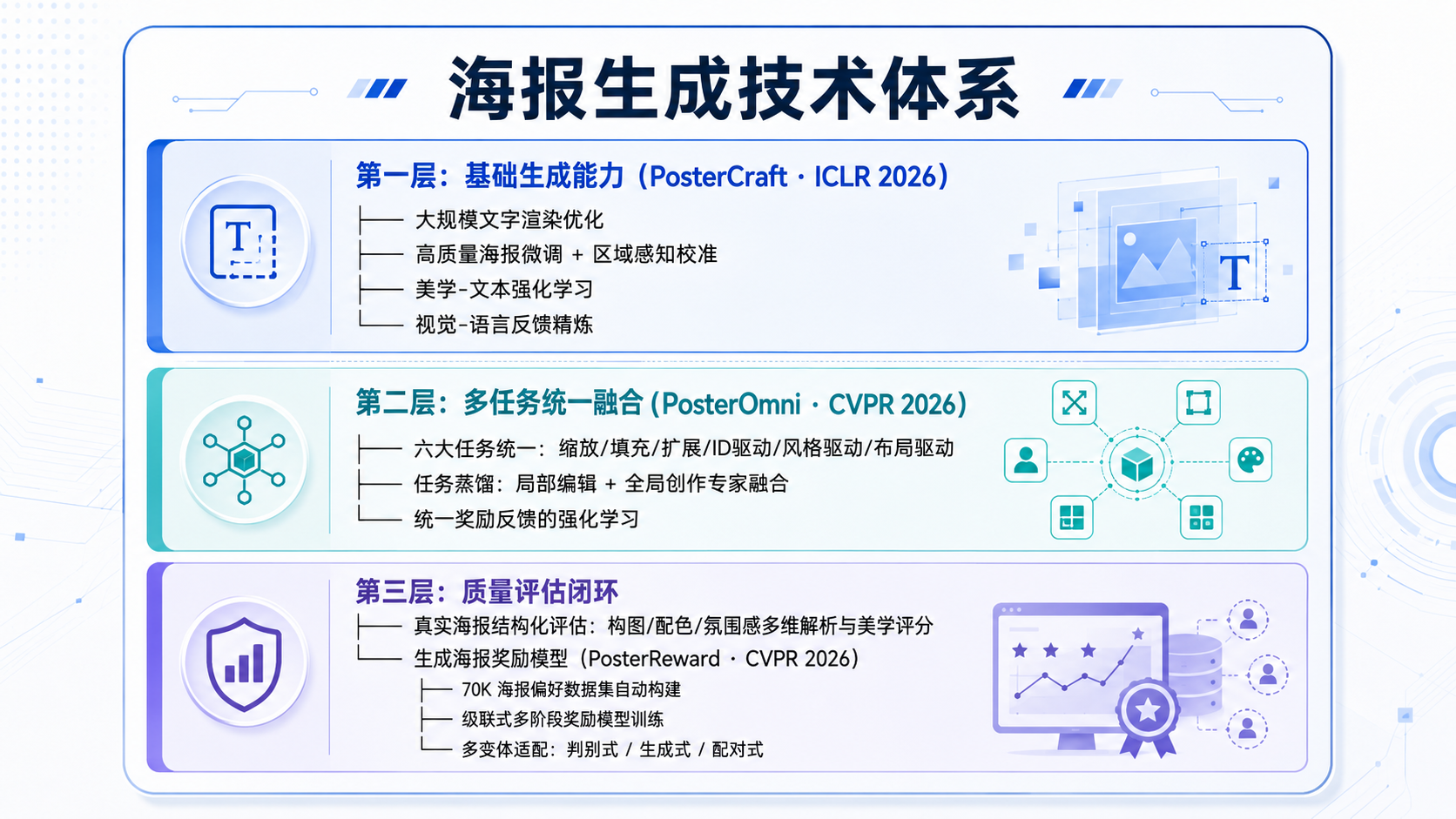
Meituan Open Sources AIGC Poster Generation Framework Featuring a Comprehensive Generation-Editing-Evaluation Technical Closed Loop
Meituan's Intelligent Creation Team has announced the development and open-sourcing of a comprehensive technical system for AIGC-driven poster generation. The framework is characterized by its unique "Generation-Editing-Evaluation" closed loop, which manages the entire lifecycle of visual content creation. This system has already seen successful implementation in high-volume business scenarios, specifically within Meituan Waimai (food delivery) and various Brand IP initiatives. By providing a structured approach that includes not only the creation of images but also their refinement and quality assessment, Meituan addresses the critical need for professional-grade automated design. The entire technical architecture is now open-source, offering the global developer community a robust blueprint for integrating AI into practical, large-scale marketing and branding workflows while maintaining high standards of output quality.
Key Takeaways
- Meituan's Intelligent Creation Team has established a full technical system for AIGC poster generation.
- The architecture is built on a "Generation-Editing-Evaluation" closed loop, ensuring a complete workflow from creation to quality control.
- The technology has been successfully deployed in real-world scenarios, including Meituan Waimai and Brand IP projects.
- Meituan has officially open-sourced the entire technical system to support the broader AI development community.
In-Depth Analysis
The "Generation-Editing-Evaluation" Technical Closed Loop
Meituan's approach to AIGC poster generation is defined by its integrated "Generation-Editing-Evaluation" technical closed loop. This system represents a significant evolution from fragmented AI tools to a cohesive, end-to-end pipeline. The "Generation" component focuses on the initial creation of visual assets using advanced AI models, capable of producing diverse layouts and styles. However, recognizing that raw AI output often requires fine-tuning to meet specific commercial requirements, the "Editing" phase provides the necessary tools to adjust and refine the generated content.
The final and perhaps most critical stage is "Evaluation." This stage establishes a feedback mechanism to judge the quality, aesthetic appeal, and brand alignment of the posters before they are deployed. By creating this closed loop, Meituan ensures that the output is not only automated but also meets the professional standards required for commercial use. This systematic approach addresses the common industry challenge where AI-generated content lacks the consistency or quality necessary for direct business application without significant manual oversight.
Strategic Implementation in Meituan Waimai and Brand IP
The practical application of this AIGC system in Meituan Waimai and Brand IP scenarios highlights its utility in high-demand, high-traffic business environments. In the context of Meituan Waimai, the need for diverse, localized, and timely visual content is constant, given the millions of merchants and various promotional cycles involved. By implementing an automated poster generation system, Meituan can scale its creative output to meet these needs efficiently, reducing the time and resources typically required for manual design.
Similarly, the use of this technology for Brand IP suggests that the system is capable of maintaining specific aesthetic and brand guidelines. Brand IP requires a high degree of visual consistency and emotional resonance, which the "Evaluation" part of the loop is likely designed to protect. The successful landing of these technologies in such critical business areas proves the robustness of the underlying architecture and its ability to handle real-world complexity at scale.
Industry Impact
The decision by Meituan to open-source this entire AIGC poster generation system is a significant contribution to the artificial intelligence and design industries. By sharing a "Generation-Editing-Evaluation" framework, Meituan provides other developers and organizations with a proven model for integrating AI into creative workflows. This move encourages transparency and collaborative improvement in AIGC technologies, allowing the community to build upon a system that has already been tested in one of the world's largest local services platforms.
Furthermore, this initiative sets a precedent for how large-scale platforms can leverage AI to solve complex design challenges. It shifts the industry focus from simple image generation to a managed, evaluative process that prioritizes output quality and business relevance. By lowering the barrier to entry for high-quality automated content creation, Meituan's open-source contribution could accelerate the adoption of intelligent design tools across various sectors, from e-commerce to digital marketing.
Frequently Asked Questions
What makes Meituan's AIGC poster system unique compared to other tools?
Meituan's system is unique because it does not just generate images; it incorporates a "Generation-Editing-Evaluation" closed loop. This ensures that the AI-generated posters can be refined and then automatically or systematically evaluated for quality and brand fit before use.
Where is Meituan currently using this AIGC technology?
The technology is currently implemented in Meituan Waimai (food delivery) and for Brand IP scenarios. These applications demonstrate the system's ability to handle high-volume, professional design tasks in a real-world commercial environment.
Is the source code for this poster generation system available to the public?
Yes, Meituan's Intelligent Creation Team has fully open-sourced the technical system. This allows developers and researchers to study, use, and improve upon the framework for their own AIGC projects.