
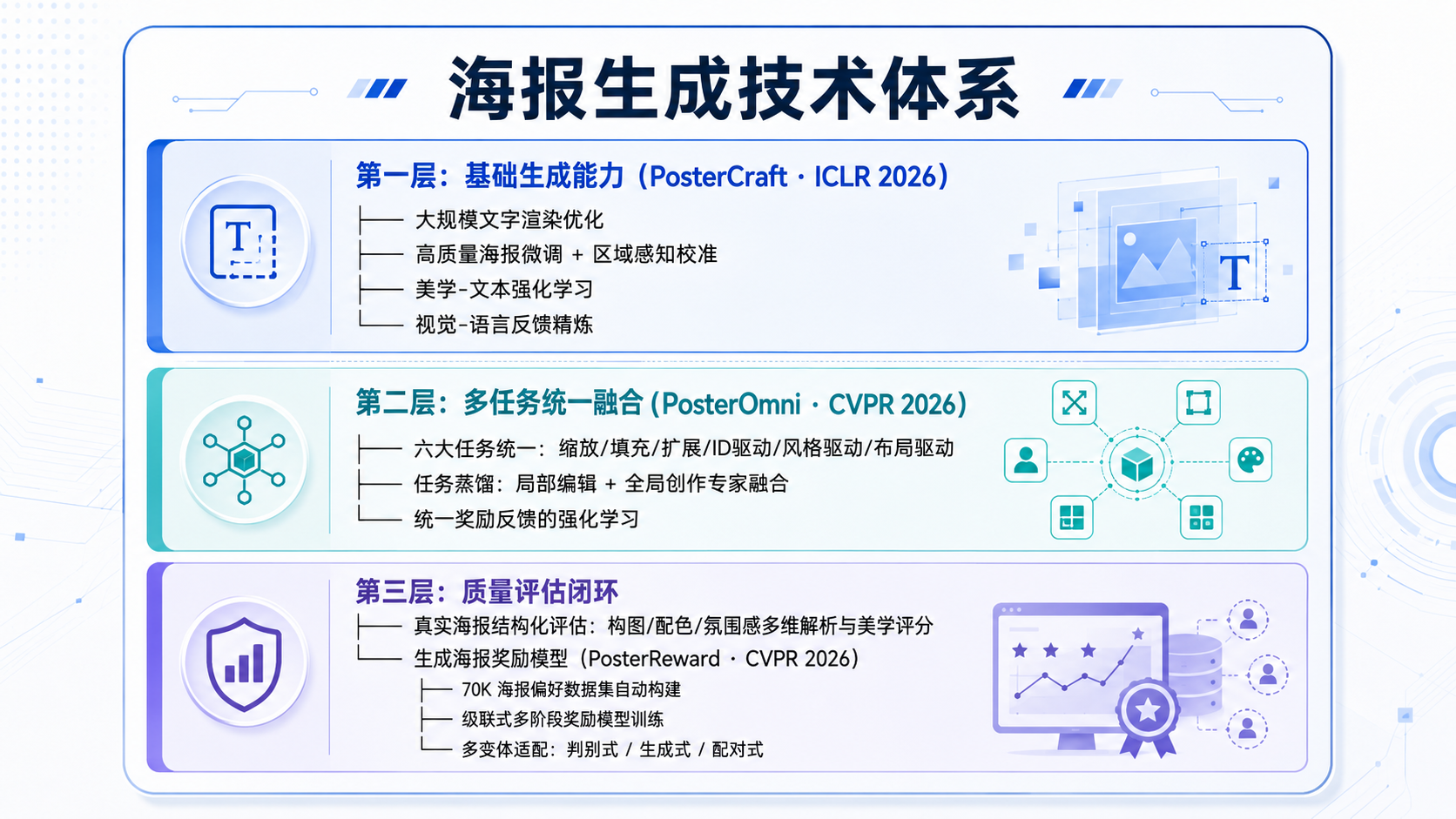
Meituan Open Sources AIGC Poster Generation Framework: A Deep Dive into the Generation-Editing-Evaluation Loop
Meituan's Intelligent Creation Team has announced the development and full open-sourcing of a comprehensive technical system for AIGC-driven poster generation. The framework is built upon a sophisticated "Generation-Editing-Evaluation" closed loop, designed to bridge the gap between automated creation and professional-grade quality control. Currently deployed in high-scale commercial environments such as Meituan Waimai and various Brand IP scenarios, this system demonstrates the practical application of generative AI in the e-commerce sector. By open-sourcing the technology, Meituan aims to provide the developer community with a proven architecture for visual content creation, emphasizing a systematic approach to AI design that includes both refinement and rigorous evaluation phases.
Key Takeaways
- Comprehensive AIGC Framework: Meituan's Intelligent Creation Team has established a complete technical system dedicated to automated poster generation.
- Technical Closed Loop: The system utilizes a unique "Generation-Editing-Evaluation" workflow to ensure high-quality visual outputs.
- Real-World Implementation: The technology is already operational within Meituan Waimai and various Brand IP scenarios, proving its commercial viability.
- Open-Source Contribution: Meituan has fully open-sourced the technical system, making its AIGC innovations accessible to the global technical community.
In-Depth Analysis
The Architecture of the Generation-Editing-Evaluation Loop
Meituan's approach to AIGC poster generation is defined by its "Generation-Editing-Evaluation" technical closed loop. This structure addresses the inherent unpredictability of generative models by introducing systematic checks and balances.
The Generation phase serves as the foundation, where the system produces initial poster designs based on specific parameters. However, the process does not end with a raw output. The Editing phase allows for the necessary adjustments and fine-tuning, ensuring that the visual elements align with specific marketing needs or aesthetic requirements. Finally, the Evaluation phase acts as a critical quality gate. By incorporating an evaluation mechanism into the loop, Meituan ensures that every generated poster meets the high standards required for public-facing commercial use. This closed-loop methodology transforms AIGC from a simple tool into a reliable production pipeline.
Practical Application in Meituan Waimai and Brand IP
The implementation of this technology in Meituan Waimai and Brand IP scenarios highlights its versatility and robustness. In the fast-paced environment of food delivery (Waimai), the demand for diverse and localized visual content is immense. Meituan's AIGC system allows for the rapid generation of posters that can cater to this high-volume demand without sacrificing quality.
In the context of Brand IP, the system demonstrates its ability to maintain brand consistency. Generating content for established intellectual properties requires strict adherence to visual guidelines. The "Generation-Editing-Evaluation" loop is particularly effective here, as the evaluation phase can be calibrated to ensure that all outputs are brand-compliant. The successful landing of this technology in these two distinct areas—one focused on scale and the other on brand integrity—showcases the maturity of Meituan's intelligent creation capabilities.
The Significance of the Open-Source Initiative
By fully open-sourcing this AIGC poster generation system, Meituan is contributing significant intellectual property to the broader AI industry. This move allows developers and organizations to study a system that has been battle-tested in one of the world's largest local life service platforms. Open-sourcing a complete "Generation-Editing-Evaluation" framework provides a valuable reference for building end-to-end AI creative tools, potentially accelerating the adoption of AIGC across various sectors beyond just e-commerce and food delivery.
Industry Impact
The release of Meituan's AIGC poster generation system marks a shift from experimental AI to integrated, systematic AI production. For the industry, this highlights the importance of the "Evaluation" component in generative workflows—a step often overlooked in simpler models. Furthermore, the open-source nature of this release lowers the barrier to entry for smaller firms looking to implement professional-grade AI design tools, fostering innovation and standardization in how visual content is created and managed at scale.
Frequently Asked Questions
Question: What is the core technical innovation in Meituan's AIGC poster system?
The core innovation is the "Generation-Editing-Evaluation" technical closed loop, which ensures that posters are not just generated, but also refined and assessed for quality before use.
Question: Where is this AIGC technology currently being used?
It is currently implemented in Meituan Waimai (food delivery) and for Brand IP scenarios, handling real-world commercial design tasks.
Question: Is the code for this system available to the public?
Yes, Meituan's Intelligent Creation Team has fully open-sourced the technical system, allowing the community to access and utilize the framework.