Meituan Technical Team Showcases Six Research Papers at ACL 2026 Highlighting LLM Evaluation and Reasoning Optimization
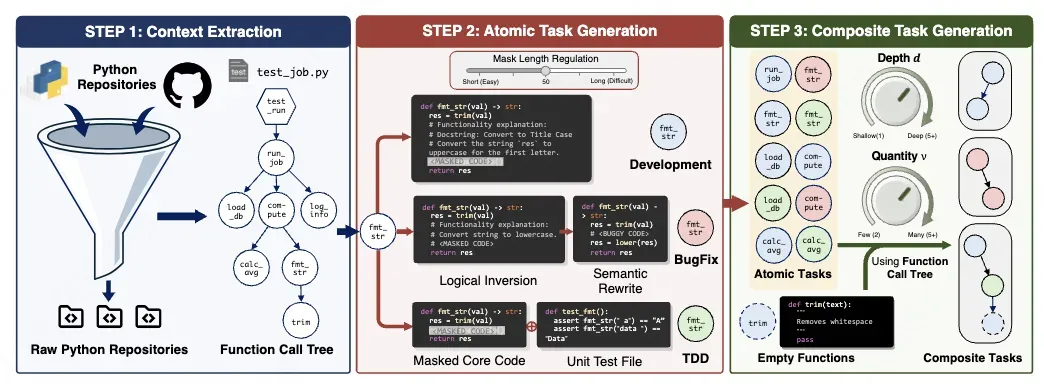
The Meituan technical team has announced the acceptance of six research papers at the ACL 2026 conference, a premier international event for computational linguistics and natural language processing. These papers cover a broad spectrum of cutting-edge AI domains, including large model evaluation, complex process reasoning, and the optimization of competition-level mathematical thinking. Additionally, the research explores advancements in reinforcement learning and the development of generative recommendation systems. By focusing on these critical areas, Meituan aims to establish a new paradigm for generative AI, addressing fundamental challenges in model performance, logical reasoning, and practical application. This contribution underscores Meituan's commitment to advancing the state of NLP and its integration into complex service ecosystems through rigorous academic research and technical optimization.
Key Takeaways
- Meituan's technical team contributed six high-impact papers to the prestigious ACL 2026 conference.
- The research focuses on critical AI frontiers, including large language model (LLM) evaluation and complex process reasoning.
- Specialized optimizations for competition-level mathematical thinking and reinforcement learning were a primary focus.
- The papers explore the integration of generative paradigms within recommendation systems to enhance user engagement.
- The collective work aims to build a "new paradigm of generation" for the AI industry.
In-Depth Analysis
Advancing Evaluation and Reasoning Frameworks in LLMs
The inclusion of Meituan's research on large model evaluation and complex process reasoning at ACL 2026 signifies a strategic shift toward more robust and transparent AI assessment. As generative models become increasingly integrated into daily services, the ability to accurately evaluate their capabilities is paramount. Meituan's focus on these areas suggests a move beyond simple performance metrics toward a deeper understanding of the underlying logic and reliability of generative models. By refining how models handle complex, multi-step workflows, the research aims to bridge the gap between theoretical model capability and practical, error-free application in real-world scenarios. This focus on reasoning is essential for tasks that require more than just pattern matching, ensuring that models can follow intricate instructions and maintain consistency across long-form outputs.
Optimization of Specialized Mathematical Thinking and Reinforcement Learning
Another core pillar of Meituan's recent research involves the optimization of competition-level mathematical thinking. This direction indicates a push for models that can handle high-level cognitive tasks and structured problem-solving, which are often benchmarks for true machine intelligence. By targeting competition-level math, the research pushes the boundaries of how LLMs process abstract concepts and logical proofs. Coupled with advancements in reinforcement learning (RL) optimization, these papers suggest a focus on making AI systems more efficient and capable of self-improvement. Reinforcement learning remains a critical component in aligning models with human preferences and optimizing them for specific performance goals. Meituan's contributions in this area likely address the stability and efficiency of RL algorithms, which is a common bottleneck in training state-of-the-art generative agents.
The Shift Toward Generative Recommendation Paradigms
The exploration of generative recommendation systems marks a significant evolution in how digital platforms interact with users. Traditional recommendation systems often rely on discriminative models to rank existing items; however, Meituan's research points toward a more creative and context-aware approach. By leveraging generative paradigms, these systems can potentially provide more personalized, conversational, and intuitive recommendations. This shift is part of a broader industry trend where the creative power of LLMs is used to synthesize information and present it in a way that is more engaging for the user. This "new paradigm of generation" aims to transform the recommendation process from a simple filtering task into a dynamic interaction, potentially increasing time-on-page and user satisfaction across Meituan's various service platforms.
Industry Impact
Meituan's research contributions to ACL 2026 have significant implications for the broader AI and NLP industry. By addressing the current bottlenecks in reasoning and evaluation, these papers provide a roadmap for developing more reliable and intelligent systems that can be trusted in professional and commercial environments. The focus on mathematical optimization and reinforcement learning also sets a high benchmark for specialized AI applications, potentially influencing how other technology companies approach model training and deployment. Furthermore, the move toward generative recommendation systems could redefine user experience standards in the e-commerce and service sectors, prompting a wave of innovation in how AI-driven platforms communicate with their audiences. As these technologies mature, the frameworks established by Meituan's technical team will likely serve as a foundation for the next generation of generative AI applications.
Frequently Asked Questions
What are the primary research areas covered by Meituan at ACL 2026?
The research interprets six papers covering large model evaluation, complex process reasoning, competition-level mathematical thinking optimization, reinforcement learning optimization, and generative recommendation systems.
How many papers did Meituan have accepted at the conference?
Meituan had a total of six papers accepted for the ACL 2026 conference, representing a significant contribution to the field of computational linguistics.
What is the significance of the "new paradigm of generation" mentioned in the research?
It refers to a comprehensive approach to building generative models that are not only capable of creating content but are also optimized for complex reasoning, accurate evaluation, and specialized tasks like mathematical problem-solving and personalized recommendations.