Meituan BI Evolution: Building a Metric-Centric Architecture with Automatic Semantics and Enhanced Calculation
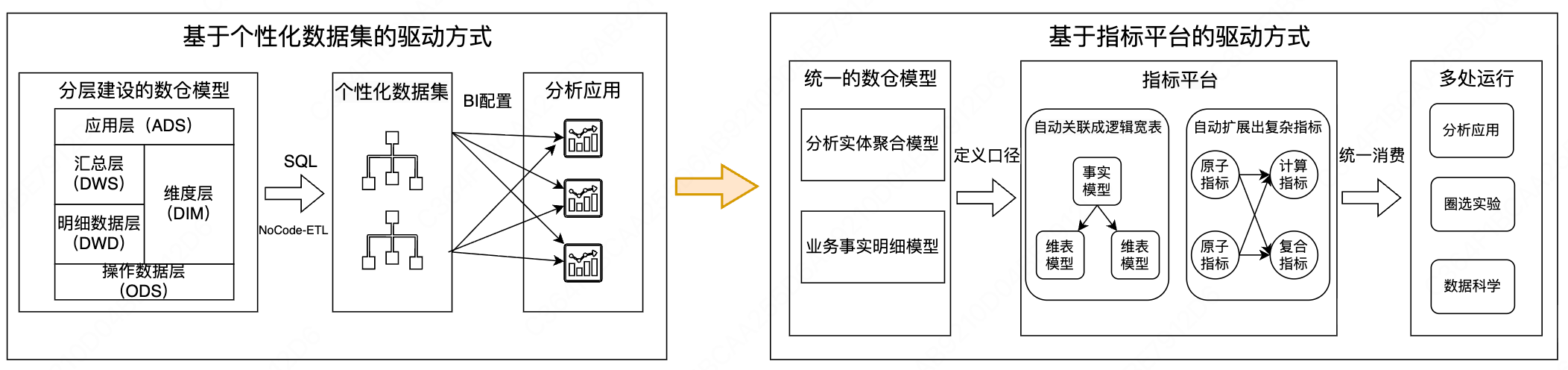
Meituan's Data Platform team has pioneered a next-generation Business Intelligence (BI) architecture that shifts the focus from traditional dataset-driven models to a centralized metric platform. This strategic transformation addresses critical pain points in data management, specifically the issues of inconsistent data definitions—often referred to as 'data caliber confusion'—and suboptimal query performance. By leveraging two core technical pillars, 'automatic semantics' and 'enhanced calculation,' Meituan has developed a system that streamlines data interpretation and accelerates analytical processing. This evolution represents a significant step in Meituan's efforts to provide a more reliable and efficient data environment for its complex business operations, ensuring that data-driven decisions are based on consistent, high-performance analytics.
Key Takeaways
- Metric-Centric Shift: Meituan has transitioned its BI architecture to be centered around a unified metric platform, moving away from fragmented, dataset-driven approaches.
- Solving Data Inconsistency: The new architecture specifically targets 'data caliber confusion,' ensuring that metrics are defined and calculated consistently across the organization.
- Performance Optimization: Through the implementation of 'enhanced calculation' capabilities, Meituan has addressed the poor query performance typical of traditional BI systems.
- Semantic Automation: The introduction of 'automatic semantics' allows for more streamlined data modeling and interpretation, reducing the manual overhead and errors associated with personalized datasets.
In-Depth Analysis
The Transition to a Metric-Centric BI Architecture
For years, the industry standard for Business Intelligence relied heavily on personalized datasets. In such environments, individual users or departments would create their own data subsets to drive specific reports. While this offered flexibility, it led to a significant technical debt: the fragmentation of data logic. Meituan’s Data Platform team identified this as a primary hurdle and responded by constructing a new generation of BI architecture.
At the heart of this new system is the Metric Platform. Unlike traditional models where logic is buried within individual reports or datasets, a metric-centric architecture centralizes the definition of business logic. This ensures that a single metric, such as 'Gross Merchandise Value' or 'Active Users,' is calculated using the exact same logic regardless of which department is accessing the data. By decoupling the metric definition from the visualization layer, Meituan has created a 'single source of truth' that serves as the foundation for all analytical activities.
Overcoming Data Caliber Confusion and Performance Bottlenecks
The original news highlights that traditional BI platforms often suffer from 'data caliber confusion.' This phenomenon occurs when different users apply slightly different filters or logic to the same underlying data, leading to conflicting results. Meituan’s exploration into automatic semantics is a direct solution to this problem. By automating the semantic layer, the system can intelligently map data relationships and ensure that the business meaning of the data remains intact and consistent across various use cases. This reduces the reliance on manual SQL writing or complex dataset preparation, which are often the root causes of logic divergence.
Furthermore, the challenge of query performance is a persistent issue in large-scale data environments. As datasets grow in complexity and volume, traditional BI engines often struggle to return results in a timely manner. Meituan’s implementation of enhanced calculation capabilities addresses this by optimizing how queries are processed and executed. While the specific underlying technologies—such as pre-aggregation, materialized views, or specialized OLAP engines—are part of the broader 'enhanced calculation' framework, the result is a significant reduction in latency. This allows business users to interact with data in real-time, facilitating faster decision-making processes without the frustration of slow-loading dashboards.
The Role of Personalized Datasets in Modern BI
The source notes that the problems of inconsistency and poor performance were often 'driven by personalized datasets.' In a traditional BI setup, the lack of a centralized governance layer meant that every new business requirement resulted in a new, siloed dataset. Meituan’s new architecture does not necessarily eliminate the need for specialized analysis but rather provides a structured environment where these analyses can occur without compromising data integrity. By moving the complexity into the metric platform and the analysis engine, Meituan has effectively shielded the end-user from the technical inconsistencies that previously plagued the BI experience.
Industry Impact
Meituan's practice reflects a broader trend in the global data industry toward the 'Headless BI' or 'Metric Layer' concept. As organizations grow, the cost of data inconsistency becomes prohibitive. By sharing their exploration of metric platforms and analysis engines, Meituan provides a blueprint for other large-scale enterprises facing similar challenges with data silos and performance bottlenecks.
The focus on automatic semantics is particularly relevant as the industry moves toward more AI-driven data analysis. Automated semantic mapping is a prerequisite for effective Natural Language Processing (NLP) in BI, where users can ask questions of their data in plain English. Meituan’s success in this area demonstrates that a robust, semantically-aware metric platform is essential for the next generation of automated data exploration.
Moreover, the emphasis on enhanced calculation highlights the ongoing need for high-performance analysis engines that can keep pace with the increasing velocity of big data. For the AI and data industry, Meituan’s practice underscores that the 'last mile' of data delivery—the BI layer—is just as critical as the data collection and storage layers. Ensuring that data is not only available but also consistent and fast is the key to unlocking true business value.
Frequently Asked Questions
Question: What are the primary problems Meituan's new BI architecture aims to solve?
Meituan's new architecture is designed to solve two main issues found in traditional BI platforms: 'data caliber confusion' (inconsistent data definitions and logic) and poor query performance. These problems typically arise when BI systems are driven by fragmented, personalized datasets without centralized governance.
Question: How does 'automatic semantics' contribute to Meituan's BI platform?
Automatic semantics helps in maintaining data consistency. It automates the mapping and interpretation of data relationships, ensuring that the business logic (the 'semantics') remains uniform across different reports and queries, thereby eliminating the discrepancies caused by manual data preparation.
Question: What is the significance of the 'Metric Platform' in this new architecture?
The Metric Platform serves as the core of the new architecture. It centralizes the definitions and calculation logic of business metrics, acting as a single source of truth. This ensures that all users across the organization are using the same definitions, which prevents the confusion caused by varying data interpretations.