Managing AI Coding at Scale: Lessons from Refactoring 310,000 Lines of Code Using Agent Evaluation Logic
As AI-generated code begins to account for over 90% of development output, the primary challenge for engineering teams shifts from production speed to systemic governance. This article details the Meituan Technical Team's experience in refactoring 310,000 lines of code by applying Agent evaluation principles to AI coding management. By focusing on technical debt sorting, rule construction, standardized operating procedures (SOPs), and a Pre-PR mechanism, the team successfully addressed the risk of AI-amplified chaos. The approach transforms large-scale refactoring from a high-cost, specialized project into a sustainable, daily iterative process. This framework ensures that AI remains a tool for improvement rather than a source of technical debt, providing a blueprint for enterprise-level AI integration in software development.
Key Takeaways
- Governance Over Speed: When AI generates the vast majority of code, the ability to constrain and guide the AI becomes more critical than the speed of code generation itself.
- Agent Evaluation Logic: Managing AI coding requires a shift toward Agent-based evaluation, focusing on systematic oversight rather than manual line-by-line reviews.
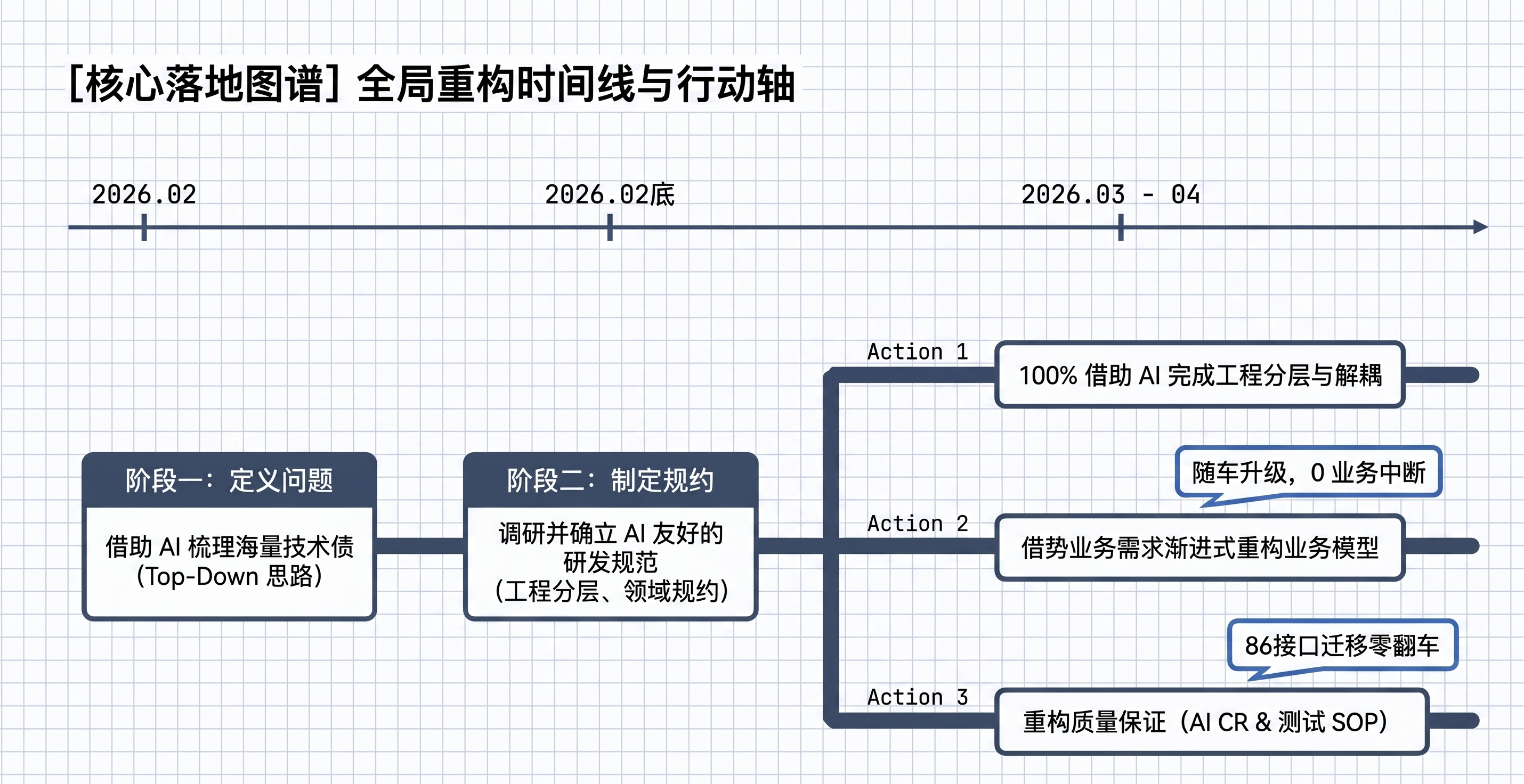
- Four-Pillar Strategy: Successful large-scale refactoring relies on technical debt sorting, rule construction, a Refactoring SOP, and a Pre-PR mechanism.
- Continuous Iteration: By standardizing the process, refactoring evolves from a high-cost one-time effort into a routine part of the development lifecycle.
In-Depth Analysis
The Challenge of AI-Generated Chaos
In the current landscape of software engineering, AI is capable of generating over 90% of a system's code. However, the Meituan Technical Team points out a significant paradox: the faster the AI writes, the faster a system can descend into chaos if there are no unified standards. Without strict constraints, AI does not just write code; it multiplies existing inconsistencies and technical debt. The core issue is no longer about who can write code faster, but who can effectively manage the output of the AI to ensure system integrity and maintainability.
Implementing the Agent Evaluation Framework
To manage the refactoring of 310,000 lines of code, the team adopted a strategy rooted in Agent evaluation logic. This involves treating the AI as an autonomous agent that must operate within a predefined sandbox of rules. The process begins with a comprehensive sorting of technical debt to identify areas of improvement. Following this, the team constructs specific "Rules"—the constraints that the AI must follow. By establishing a Refactoring Standard Operating Procedure (SOP), the team ensures that every AI-driven change follows a predictable and high-quality path.
The Pre-PR Mechanism and Sustainability
A critical component of this new workflow is the Pre-PR (Pull Request) mechanism. This stage acts as a quality gate, evaluating AI-generated code against established rules before it ever reaches the human review or integration stage. This systematic approach effectively lowers the barrier to refactoring. Instead of treating code cleanup as a massive, high-cost "special project" that happens once a year, these mechanisms allow refactoring to become a "daily action" that occurs alongside regular feature iterations. This ensures that the codebase remains healthy even as the volume of AI-generated content grows.
Industry Impact
The practice of managing 310,000 lines of AI-refactored code signals a major shift in the software industry. As enterprises move toward AI-first development, the role of the human developer is evolving into that of a "System Architect" and "AI Governor." The Meituan model demonstrates that the value of engineering teams will increasingly be measured by their ability to design the rules and evaluation frameworks that keep AI-generated systems stable. This approach provides a scalable solution for managing technical debt in the age of automated programming, potentially setting a new standard for DevOps and CI/CD pipelines globally.
Frequently Asked Questions
Question: Why is a unified rule set necessary for AI coding?
Without unified rules, AI tends to amplify existing architectural inconsistencies. Because AI generates code based on patterns, it can rapidly scale poor practices across a large codebase, leading to "amplified chaos" that is difficult to reverse manually.
Question: How does the Pre-PR mechanism improve the refactoring process?
The Pre-PR mechanism acts as an automated quality control layer. It checks AI-generated refactoring against predefined technical standards before the code is submitted for final integration. This allows for continuous, low-cost improvements to the codebase during every iteration, rather than waiting for a major refactoring cycle.
Question: What does it mean to manage AI coding with 'Agent evaluation logic'?
It means treating the AI as an autonomous agent that requires a structured environment to function correctly. Instead of just giving prompts, developers build a system of evaluation, constraints, and feedback loops (like SOPs and rules) to ensure the AI's output aligns with the long-term goals of the software architecture.