Meituan BI Evolution: Building a Metric-Centric Architecture for Enhanced Data Consistency and Performance
Meituan's Data Platform team has introduced a next-generation Business Intelligence (BI) architecture centered on a unified metric platform. This strategic shift addresses the inherent flaws of traditional BI systems, which often suffer from inconsistent data definitions and sluggish query performance due to their reliance on fragmented, personalized datasets. By implementing two core technical pillars—automatic semantics and enhanced calculation—Meituan has successfully streamlined its data analysis process. This new framework ensures that data "mouthpieces" (definitions) remain consistent across the organization while significantly boosting the efficiency of complex analytical queries, marking a significant milestone in the company's data engineering capabilities.
Key Takeaways
- Metric-Centric Transition: Meituan has moved away from traditional dataset-driven BI toward a centralized metric platform architecture.
- Core Capabilities: The new system is built upon two essential technical foundations: automatic semantics and enhanced calculation.
- Solving Data Inconsistency: The architecture directly addresses the problem of "conflicting data mouthpieces" where different users or departments define the same metrics differently.
- Performance Optimization: By utilizing enhanced calculation methods, the platform overcomes the performance bottlenecks common in traditional BI environments.
- Semantic Automation: The integration of automatic semantics allows for a more intuitive and standardized interpretation of raw data into business logic.
In-Depth Analysis
The Shift from Dataset-Driven to Metric-Centric BI
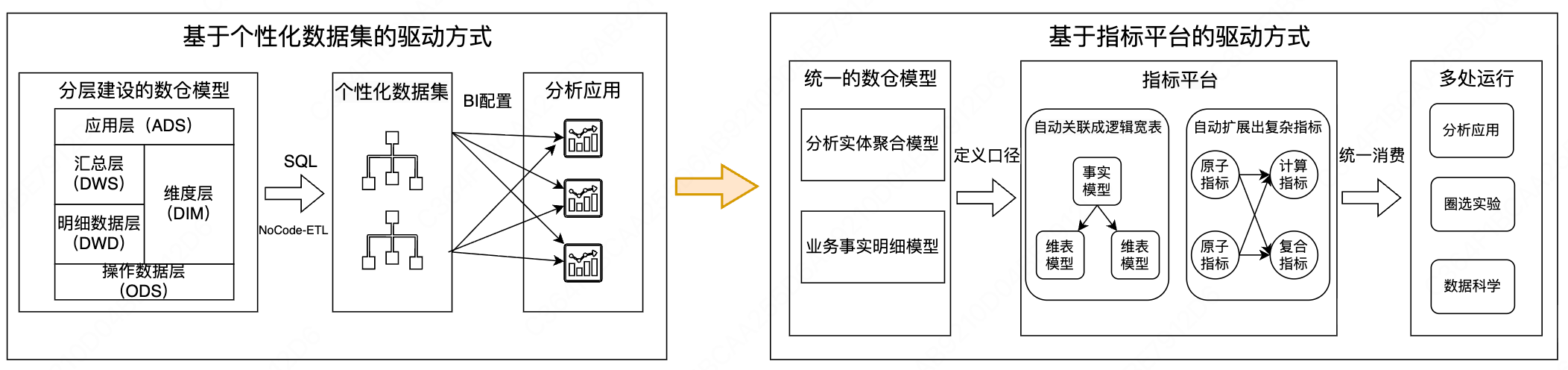
For years, the industry standard for Business Intelligence relied heavily on the creation of personalized datasets. While this offered flexibility to individual analysts, it created a fragmented ecosystem. Meituan identified that this decentralized approach led to a phenomenon often described as "data mouthpiece confusion." In this scenario, different teams might calculate a single KPI, such as "Daily Active Users," using slightly different logic, leading to conflicting reports and a lack of a "single source of truth."
Meituan’s new architecture places the Metric Platform at the heart of the BI stack. By decoupling the metric definition from the visualization layer, the platform ensures that every department consumes the same logic. This centralized governance model ensures that when a metric is updated, it reflects across all dashboards and reports simultaneously, eliminating the manual labor and errors associated with updating individual datasets.
Technical Pillars: Automatic Semantics and Enhanced Calculation
The success of Meituan's exploration is rooted in two specific technical advancements. First, Automatic Semantics serves as the bridge between raw data storage and business understanding. In traditional systems, mapping physical tables to business concepts is a manual, error-prone process. Meituan’s implementation automates this semantic mapping, allowing the system to understand the relationships between data entities without constant human intervention. This not only speeds up the development cycle but also reduces the technical barrier for business users seeking to perform self-service analysis.
Second, Enhanced Calculation addresses the technical limitations of querying massive volumes of data. As datasets grow in complexity, traditional query engines often struggle to maintain low latency. Meituan’s focus on enhanced calculation involves optimizing the underlying execution plans and leveraging advanced processing techniques to ensure that even the most complex, multi-dimensional queries return results in near real-time. This capability is crucial for a high-frequency business environment like Meituan, where timely data insights directly influence operational decisions.
Overcoming Traditional BI Limitations
Traditional BI platforms often struggle with a trade-off between flexibility and performance. When users are given the freedom to create their own datasets, the underlying infrastructure often becomes cluttered with redundant calculations, leading to severe performance degradation. Meituan’s practice demonstrates that a structured metric platform can provide the necessary flexibility without sacrificing speed. By standardizing the "calculation logic" within the metric platform, the system can more effectively cache results and optimize resource allocation, solving the dual problem of data chaos and poor system responsiveness.
Industry Impact
Meituan’s transition to a metric-centric BI architecture reflects a broader trend in the global data engineering landscape. As enterprises move toward "Data Mesh" or "Modern Data Stack" philosophies, the need for a unified semantic layer becomes paramount. Meituan’s success provides a blueprint for other large-scale technology companies facing similar challenges with data consistency.
Furthermore, the emphasis on automatic semantics suggests a future where BI tools are more intelligent and less dependent on manual metadata management. This shift is likely to accelerate the adoption of self-service BI, as business users can trust the underlying data definitions without needing to understand the complexities of the data warehouse. For the AI and data industry, Meituan’s practice underscores that the foundation of any advanced analytics or AI initiative is a clean, consistent, and high-performance data architecture.
Frequently Asked Questions
Question: What is the primary problem Meituan solved with its new BI architecture?
Meituan primarily addressed the issue of inconsistent data definitions (often called "data mouthpieces") and poor query performance that typically arise in traditional BI systems driven by personalized, fragmented datasets.
Question: How does "Automatic Semantics" benefit the BI process?
Automatic Semantics automates the mapping of raw data to business logic. This reduces the manual effort required to define data relationships, ensures consistency across different reports, and makes it easier for non-technical users to perform accurate data analysis.
Question: Why is the Metric Platform considered the core of the new architecture?
The Metric Platform acts as a centralized source of truth. By defining business metrics in one place rather than across multiple individual datasets, Meituan ensures that all users are looking at the same numbers calculated with the same logic, regardless of which tool or dashboard they use.