Meituan BI Evolution: Building a Next-Generation Architecture with Metrics Platforms and Enhanced Calculation Engines
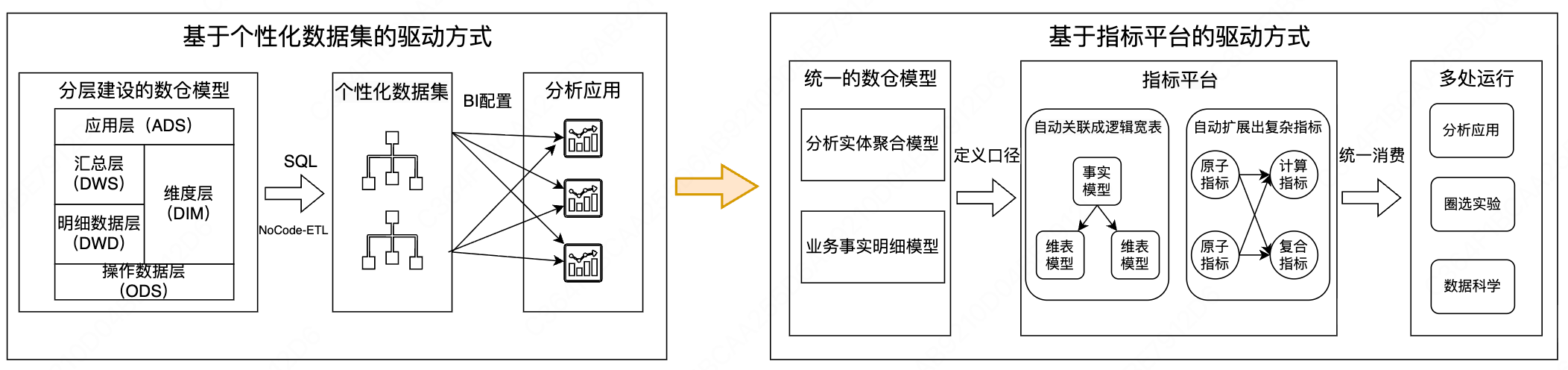
Meituan's data platform team has pioneered a new generation of Business Intelligence (BI) architecture, placing a centralized metrics platform at its core. This strategic shift addresses critical limitations found in traditional BI systems, which often suffer from inconsistent data definitions—commonly known as "data caliber confusion"—and sluggish query performance when handling personalized datasets. By developing and implementing two primary technical capabilities, automatic semantics and enhanced calculation, Meituan has successfully streamlined its data processing workflows. This evolution marks a significant transition from dataset-driven analytics to a more robust, metrics-centric model, ensuring higher data reliability and faster insights for the organization's diverse business operations. The practice underscores Meituan's commitment to solving complex data engineering challenges through architectural innovation.
Key Takeaways
- Meituan has transitioned to a next-generation BI architecture centered on a unified metrics platform.
- The new system utilizes automatic semantics to resolve the issue of "data caliber confusion" caused by fragmented datasets.
- Enhanced calculation capabilities have been integrated to significantly improve query performance across the platform.
- The architecture addresses the inherent weaknesses of traditional BI platforms that rely on highly personalized and isolated datasets.
In-Depth Analysis
The Shift to a Metrics-Centric BI Architecture
Meituan's data platform team has identified a fundamental bottleneck in traditional Business Intelligence (BI) workflows: the reliance on fragmented, personalized datasets. In conventional systems, different business units or individual analysts often create their own data subsets, leading to a decentralized environment where data logic is duplicated and siloed. To combat this, Meituan has constructed a new generation of BI architecture that elevates the "metrics platform" to a central role. By moving away from a dataset-driven model and toward a metrics-centric one, the organization ensures that every business metric is defined, calculated, and managed in a single, authoritative location. This structural change serves as the foundation for all subsequent data analysis, providing a "single source of truth" that was previously difficult to maintain in a large-scale enterprise environment.
Resolving Data Caliber Confusion via Automatic Semantics
One of the most persistent challenges in data engineering is "data caliber confusion"—a situation where different teams use the same term for metrics calculated using different logic. Meituan addresses this through the implementation of automatic semantics. This capability allows the BI platform to understand the underlying meaning and relationships of data automatically, rather than relying on manual, error-prone mapping by individual users. By embedding semantic intelligence into the metrics platform, Meituan ensures that when a user queries a specific metric, the system applies the standardized logic defined at the platform level. This eliminates the discrepancies that arise when personalized datasets are used to drive reports, thereby increasing the overall trust in the data provided by the BI tools.
Optimizing Performance with Enhanced Calculation
Beyond data consistency, query performance remains a critical factor for user engagement and operational efficiency. Traditional BI platforms often struggle with high-latency queries when dealing with complex, multi-dimensional analysis on large datasets. Meituan's solution involves the development of "enhanced calculation" capabilities within their analysis engine. This component is designed to optimize the execution of data queries by leveraging advanced computational techniques tailored for the metrics-centric architecture. By focusing on the efficiency of the calculation layer, Meituan has been able to mitigate the performance degradation typically associated with complex, personalized data requests. This ensures that business stakeholders can access deep insights in real-time, supporting faster and more accurate decision-making processes across the company.
Industry Impact
The evolution of Meituan's BI architecture reflects a broader trend in the tech industry toward "Headless BI" and centralized metrics layers. As organizations scale, the cost of data inconsistency and slow query performance becomes prohibitive. Meituan's successful integration of automatic semantics and enhanced calculation provides a blueprint for other large-scale enterprises looking to modernize their data stacks. By proving that a metrics-centric approach can solve the dual problems of data caliber confusion and performance bottlenecks, Meituan is setting a new standard for how data platforms should be engineered to support diverse and high-volume business requirements. This shift likely signals a move away from traditional, monolithic BI tools toward more modular, intelligence-driven architectures.
Frequently Asked Questions
Question: What is "data caliber confusion" in the context of Meituan's BI platform?
Data caliber confusion refers to the inconsistency in data definitions and calculation logic that occurs when different teams or individuals create their own personalized datasets. This leads to conflicting results for the same metrics across different reports.
Question: How does the metrics platform improve query performance?
Through the implementation of an "enhanced calculation" engine, the platform optimizes how data is processed and retrieved. This specifically addresses the performance issues that traditional BI systems face when handling complex, personalized data queries.
Question: What are the two core capabilities of Meituan's new BI architecture?
The two core capabilities are automatic semantics, which ensures consistent data definitions, and enhanced calculation, which focuses on improving the speed and efficiency of data analysis and queries.