
Meituan Open-Sources LongCat-Next: A Native Multimodal Model Designed for Physical World AI Interaction
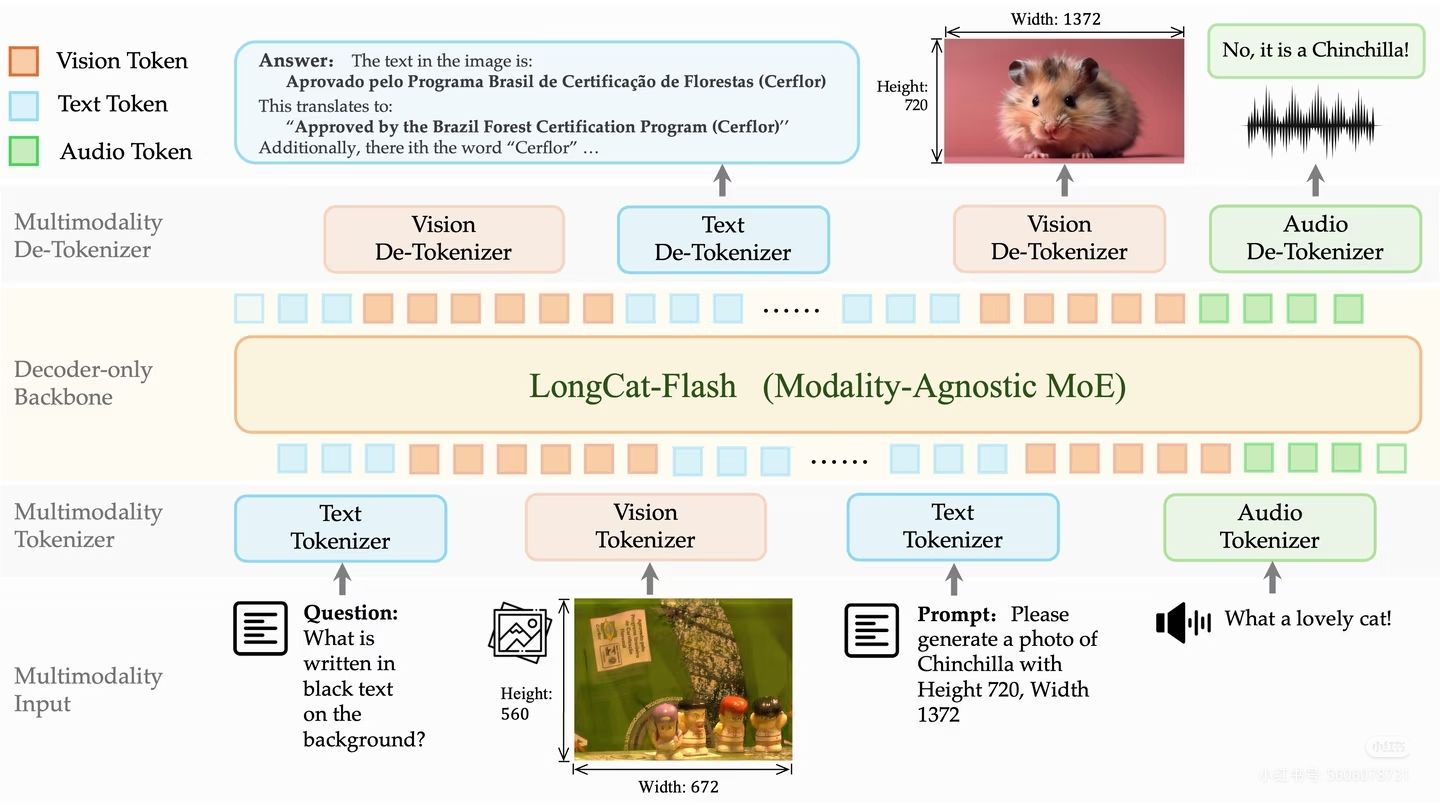
Meituan's technical team has officially released and open-sourced LongCat-Next, a native multimodal model aimed at advancing AI's capabilities in the physical world. By integrating vision and voice as fundamental components of the AI's architecture, the model seeks to move beyond traditional text-based limitations. Alongside the model, Meituan has open-sourced its discrete tokenizer, providing the developer community with the core tools used in their research. This initiative is designed to empower developers to build AI systems that can perceive, understand, and actively interact with the real world, marking a significant step in Meituan's exploration of embodied and multimodal artificial intelligence.
Key Takeaways
- Open-Source Release: Meituan has made the LongCat-Next model and its discrete tokenizer available to the public to foster developer innovation.
- Native Multimodality: The model treats vision and voice as "native languages," aiming for a more integrated approach to sensory data processing.
- Physical World Focus: The project is specifically designed as an exploration into AI that can function within and act upon the physical environment.
- Core Research Transparency: By releasing the discrete tokenizer, Meituan is sharing the fundamental building blocks of their multimodal research methodology.
In-Depth Analysis
Advancing Native Multimodality in AI
The release of LongCat-Next by the Meituan technical team represents a strategic shift toward native multimodality. In the current AI landscape, many models process different types of data—such as text, images, and audio—through separate, specialized modules that are later integrated. However, LongCat-Next is described as a system where vision and voice become the "native languages" of the AI. This approach suggests a more unified architecture where sensory inputs are processed with the same level of primacy as text. By open-sourcing this model, Meituan is providing a framework that prioritizes the seamless integration of visual and auditory information, which is essential for creating AI that perceives the world more like a human does.
Bridging the Gap to the Physical World
A primary objective of the LongCat-Next project is to facilitate the transition of AI from digital environments to the physical world. The Meituan technical team emphasizes that this model is an exploration into "physical world AI." The core goal is to move beyond simple data processing and toward a system that can perceive, understand, and ultimately act within a real-world context. This focus on action and perception suggests that LongCat-Next is intended to serve as a foundation for applications requiring real-time interaction with physical surroundings. By providing the model and its discrete tokenizer, Meituan is encouraging the development of AI that is not just a passive observer but an active participant in its environment.
The Significance of the Discrete Tokenizer Release
One of the most critical aspects of this announcement is the decision to open-source the discrete tokenizer alongside the LongCat-Next model. Tokenization is the process by which raw data is converted into a format that an AI model can understand. In the context of multimodality, a discrete tokenizer for vision and voice is a sophisticated tool that allows the model to handle complex, non-textual data efficiently. By sharing this core component of their research, Meituan is lowering the barrier to entry for other developers and researchers. This transparency allows the community to examine, refine, and build upon the specific methods Meituan uses to translate physical-world signals into actionable AI data, potentially accelerating the development of similar multimodal systems across the industry.
Industry Impact
The open-sourcing of LongCat-Next is likely to have a notable impact on the AI development community, particularly for those focused on robotics, autonomous systems, and advanced human-computer interaction. By providing a model that treats vision and voice as native inputs, Meituan is contributing to the shift toward "Embodied AI"—intelligence that is grounded in physical reality. This move encourages a collaborative ecosystem where developers can leverage Meituan's research to create more intuitive and capable AI applications. Furthermore, the focus on the physical world aligns with the growing industry demand for AI that can handle complex, real-time tasks in diverse environments, from logistics and delivery to personal assistance.
Frequently Asked Questions
Question: What exactly has Meituan open-sourced in this release?
Meituan has open-sourced the LongCat-Next model itself along with its discrete tokenizer, which represents the core research idea behind their approach to native multimodal AI.
Question: What is the primary goal of the LongCat-Next project?
The project aims to explore the path toward physical world AI, specifically creating systems that can perceive, understand, and act upon the real world by treating vision and voice as native components.
Question: Why is "native multimodality" important for this model?
Native multimodality allows the AI to process vision and voice as primary inputs rather than secondary additions, which is essential for building AI that can interact naturally and effectively with the physical environment.