Meituan BI Evolution: Implementing a Metric-Centric Architecture with Automatic Semantics and Enhanced Computing
Meituan's data platform team has introduced a next-generation Business Intelligence (BI) architecture centered on a unified metric platform. This innovation addresses critical issues found in traditional BI systems, specifically the confusion surrounding data definitions (logic) and poor query performance caused by fragmented, personalized datasets. By leveraging automatic semantics and enhanced computing, Meituan has created a more robust framework for data analysis. This shift ensures higher data consistency and efficiency across the organization, marking a significant advancement in how the company handles large-scale data operations and business insights. The new architecture represents a strategic move toward a more centralized and high-performance data environment, solving the inherent conflicts between personalized data needs and system-wide accuracy.
Key Takeaways
- Metric-Centric Architecture: Meituan has transitioned from traditional BI to a new generation architecture that prioritizes a centralized metric platform.
- Solving Data Inconsistency: The new system addresses the "mouth diameter" (data logic) confusion caused by fragmented, personalized datasets in older BI models.
- Performance Optimization: Through enhanced computing capabilities, Meituan has resolved the poor query performance issues typical of traditional BI platforms.
- Core Technical Pillars: The architecture is built upon two essential capabilities: automatic semantics and enhanced computing.
In-Depth Analysis
The Shift from Dataset-Driven to Metric-Centric BI
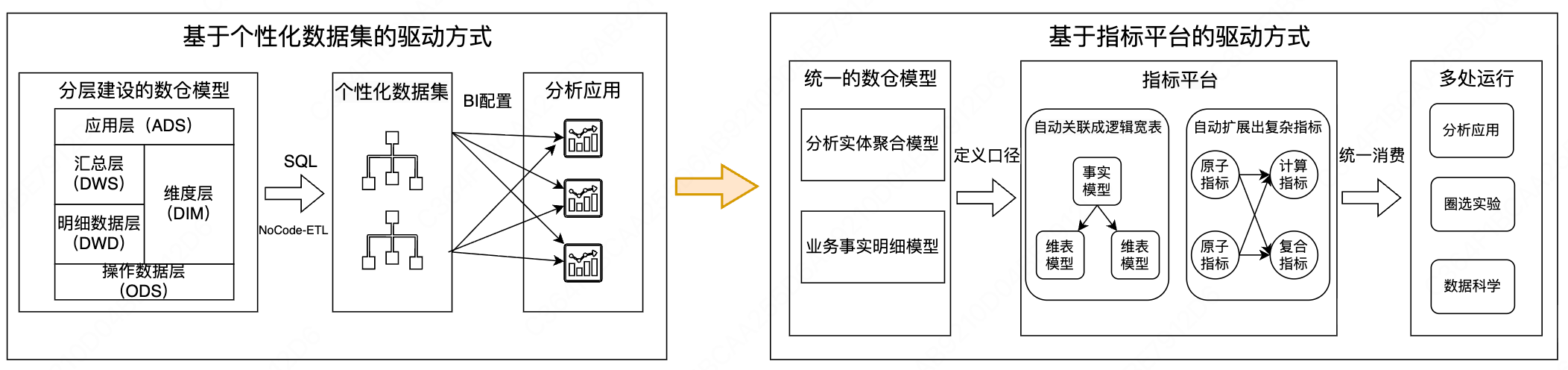
Meituan's data platform team has identified a fundamental flaw in traditional Business Intelligence (BI) structures: the reliance on personalized datasets. In conventional systems, different departments or users often create their own datasets to meet specific analytical needs. While this offers flexibility, it inevitably leads to a phenomenon described as "data logic confusion" or inconsistent "mouth diameters." When multiple versions of a single metric (such as "active users" or "gross merchandise value") exist across different datasets, the organization loses its "single source of truth."
To combat this, Meituan has constructed a new generation BI architecture that places the metric platform at its core. By centralizing the definition and calculation of metrics, the platform ensures that every user, regardless of their specific department, is pulling from the same logical foundation. This transition represents a move away from siloed data preparation toward a unified semantic layer where metrics are defined once and used everywhere.
Overcoming Technical Hurdles: Automatic Semantics and Enhanced Computing
The implementation of this metric-centric architecture relies on two core technical capabilities: automatic semantics and enhanced computing. These features are designed to bridge the gap between complex raw data and user-friendly business insights.
Automatic Semantics serves as the interpretive layer of the platform. In traditional BI, mapping raw data tables to business concepts often requires manual intervention, which is prone to error and inconsistency. Meituan's focus on automatic semantics allows the system to understand the relationships between data points and business logic more autonomously. This reduces the risk of human error in data interpretation and ensures that the "mouth diameter" of a metric remains consistent across all reports and dashboards.
Enhanced Computing addresses the physical limitations of data retrieval. As datasets grow in size and complexity, query performance often degrades in traditional BI environments, leading to long wait times for business users. Meituan's practice involves building out enhanced computing capabilities that optimize how queries are processed and executed. By improving the underlying analysis engine, the platform can handle complex calculations on large-scale datasets with significantly higher efficiency, ensuring that the centralized metric platform does not become a bottleneck for real-time business decision-making.
Industry Impact
Meituan's exploration into metric platforms reflects a broader trend in the data industry toward the "Metric Store" or "Headless BI" concept. By decoupling the metric logic from the visualization layer, Meituan is setting a standard for how large-scale technology companies can maintain data integrity while scaling their operations.
The significance of this practice lies in its ability to balance the trade-off between user autonomy and organizational consistency. For the AI and data industry, Meituan's success in solving query performance and logic confusion through automatic semantics provides a blueprint for building more resilient data infrastructures. This approach not only improves the reliability of business insights but also lays a cleaner data foundation for downstream AI and machine learning applications that require high-quality, consistent input data.
Frequently Asked Questions
Question: What were the primary problems Meituan sought to solve with its new BI architecture?
The primary issues were inconsistent data definitions (often referred to as "mouth diameter" confusion) and poor query performance. These problems were largely driven by the traditional BI approach of using fragmented, personalized datasets which led to conflicting results and slow data retrieval.
Question: How does the metric platform differ from traditional BI datasets?
Unlike traditional BI where datasets are often created in isolation for specific tasks, the metric platform acts as a centralized core. It uses automatic semantics to define business logic in a unified way, ensuring that all users access the same definitions and calculations, thereby maintaining data consistency across the entire organization.
Question: What role does enhanced computing play in Meituan's BI practice?
Enhanced computing is a core capability used to solve the performance bottlenecks of traditional analysis engines. It optimizes the processing of complex queries and large-scale data, ensuring that the centralized metric platform can deliver fast and reliable performance even as data volume and user demand increase.