Managing AI Coding at Scale: Meituan's Agent Evaluation Strategy for 310,000 Lines of Code Refactoring
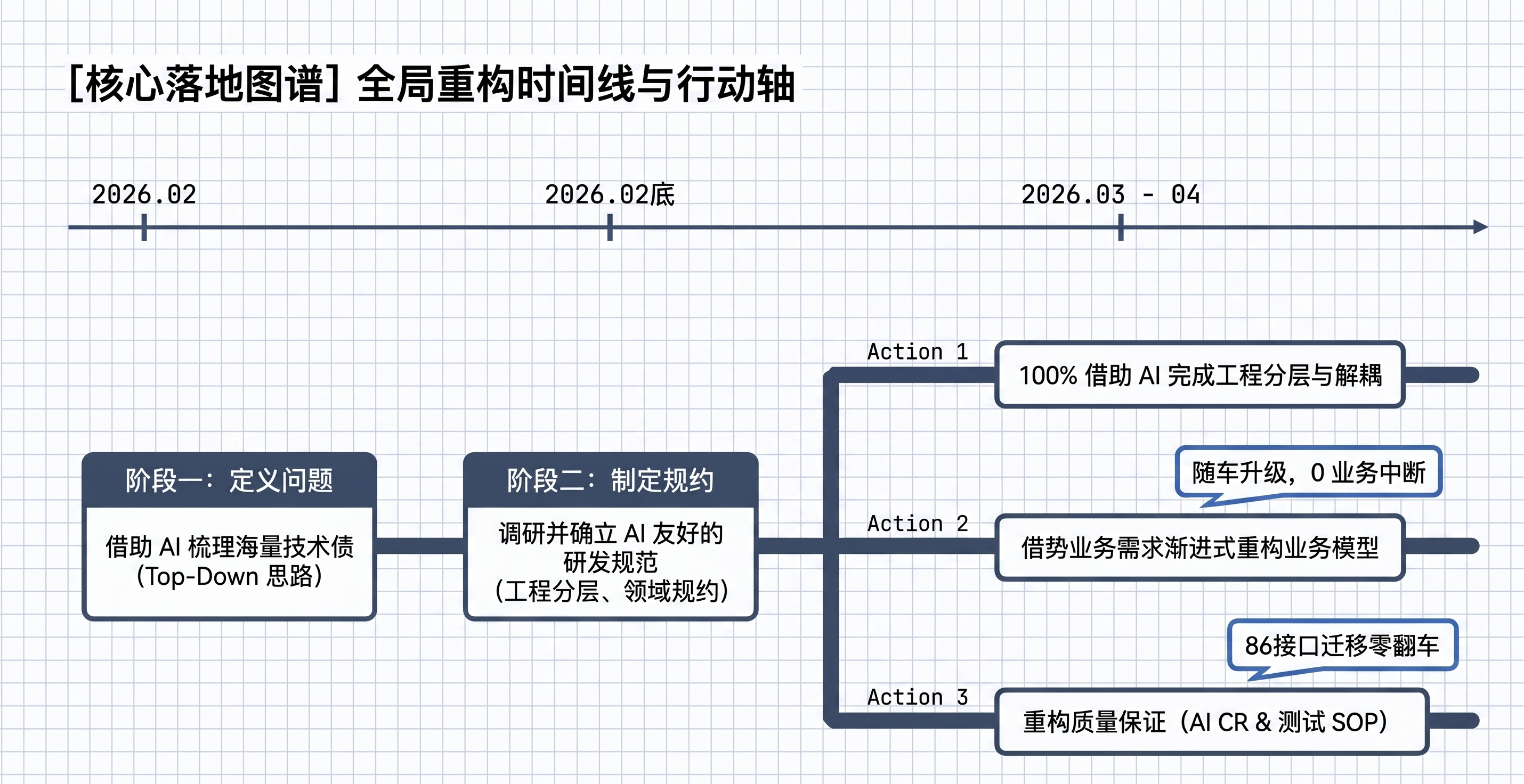
The Meituan technical team has unveiled a sophisticated framework for managing AI-driven development, centered on a massive 310,000-line code refactoring initiative. As AI now generates over 90% of code in certain workflows, the team argues that the primary challenge has shifted from increasing generation speed to implementing effective constraints. Without unified standards, AI risks amplifying technical chaos. By adopting an 'Agent evaluation' mindset, Meituan integrated technical debt sorting, rule construction, Standard Operating Procedures (SOPs), and a Pre-PR mechanism. This strategic shift transforms refactoring from a high-cost, periodic project into a continuous, iterative daily action, ensuring that AI-generated code remains maintainable and aligned with organizational standards.
Key Takeaways
- Constraint Over Speed: When AI generates more than 90% of code, the system's success depends on the ability to constrain and guide AI rather than the speed of generation.
- Large-Scale Practice: Meituan successfully applied these management principles to a project involving the refactoring of 310,000 lines of code.
- Agent Evaluation Logic: The core management strategy utilizes an Agent-based evaluation approach to oversee AI coding outputs.
- Sustainable Refactoring: By implementing Pre-PR mechanisms and standardized SOPs, refactoring has evolved from a specialized high-cost task into a routine daily development activity.
- Systemic Order: The framework prevents AI from 'multiplying chaos' by enforcing unified rules and technical debt management.
In-Depth Analysis
The Shift from Generation to Governance
In the current landscape of software engineering, the bottleneck is no longer how quickly code can be written, but how effectively it can be managed. Meituan's technical team highlights a critical turning point: when AI is responsible for the vast majority of code production (exceeding 90%), the traditional metrics of developer productivity become secondary to the necessity of architectural constraints. The primary risk identified is that AI, if left to operate without a unified specification, will not only produce technical debt but will amplify existing chaos at an exponential rate. Therefore, the focus of engineering management must transition from 'AI productivity' to 'AI governance.'
The Four Pillars of AI Coding Management
To address the challenges of large-scale AI-generated code, Meituan developed a structured approach based on four key components:
- Technical Debt Sorting: Identifying and categorizing existing issues to provide a clear roadmap for AI-driven improvements.
- Rule Construction: Establishing a robust set of rules that act as the 'guardrails' for AI agents, ensuring that the generated code adheres to specific architectural and stylistic requirements.
- Refactoring SOP (Standard Operating Procedure): Creating a standardized workflow that allows AI to handle complex refactoring tasks consistently.
- Pre-PR Mechanism: Implementing a preliminary Pull Request (PR) check that evaluates AI-generated changes before they enter the main codebase.
This framework was put to the test in a massive 310,000-line refactoring project. By using these mechanisms, the team was able to move away from 'one-off' refactoring marathons, which are typically high-cost and disruptive, toward a model where code quality is maintained continuously through every iteration.
Implementing the Agent Evaluation Mindset
The 'Agent evaluation' approach treats AI not just as a completion tool, but as an autonomous entity that must be audited. By applying evaluation logic to the coding process, the team can measure the quality of AI outputs against the established rules and SOPs. This ensures that the 310,000 lines of refactored code meet the necessary standards for stability and performance. The Pre-PR mechanism is particularly vital here, as it serves as the final gatekeeper, ensuring that the 'Agent's' work is validated against the system's constraints before integration.
Industry Impact
Meituan's practice sets a significant precedent for the AI-native software development lifecycle (SDLC). As more enterprises move toward AI-heavy coding environments, the 'Meituan Model' provides a blueprint for preventing the 'AI-generated debt' crisis. By proving that 310,000 lines of code can be refactored through automated, rule-bound processes, they demonstrate that AI can be a tool for systemic improvement rather than just a source of rapid, unverified output. This shift toward 'continuous refactoring' via AI agents could redefine how large-scale legacy systems are maintained across the tech industry, making software evolution more fluid and less resource-intensive.
Frequently Asked Questions
Question: Why is 'constraint' more important than 'speed' in AI coding?
When AI generates code at a volume and speed far exceeding human capacity, any lack of standardization is magnified. If the AI is not constrained by specific rules, it creates inconsistent patterns and technical debt that become impossible for human developers to manage manually. Constraints ensure that the speed of AI does not lead to a collapse in system maintainability.
Question: What is the benefit of the Pre-PR mechanism in this context?
The Pre-PR mechanism acts as an automated quality assurance layer specifically designed for AI outputs. It allows the system to catch errors or deviations from the 'Rules' before they reach the human review stage or the main code branch. This reduces the burden on human developers and ensures that refactoring becomes a seamless part of the daily development cycle.
Question: How does the Agent evaluation logic change the role of the developer?
In this framework, the developer's role shifts from writing every line of code to becoming an 'architect of constraints.' Developers focus on defining the rules, SOPs, and evaluation criteria that the AI agents must follow, moving into a high-level supervisory and strategic role within the development process.