Meituan Data Platform Evolves BI Architecture with Metrics Platforms and Enhanced Computing Engines
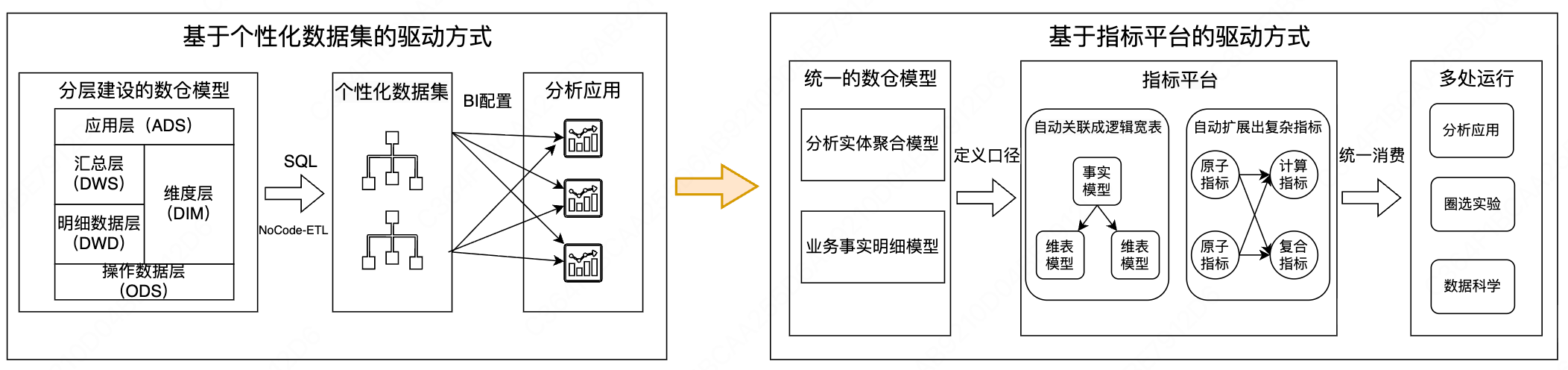
The Meituan technical team has announced a significant evolution in its Business Intelligence (BI) architecture, transitioning to a system centered on a dedicated metrics platform. This new generation of BI infrastructure is designed to overcome the limitations of traditional models that rely on fragmented, personalized datasets. By implementing two core technical capabilities—automatic semantics and enhanced computing—Meituan has successfully addressed the persistent issues of data caliber confusion and suboptimal query performance. This strategic shift ensures that data definitions remain consistent across the organization while providing the high-speed analytical power necessary for large-scale operations. The development marks a critical step in Meituan's efforts to streamline data governance and improve the efficiency of its data-driven decision-making processes.
Key Takeaways
- Meituan has launched a next-generation BI architecture that prioritizes a centralized metrics platform over traditional personalized datasets.
- The implementation of 'automatic semantics' serves as a primary solution for resolving inconsistent data definitions and caliber confusion.
- 'Enhanced computing' capabilities have been integrated into the analysis engine to solve performance bottlenecks and improve query speeds.
- The new architecture aims to provide a 'single source of truth' for business metrics across Meituan's diverse data ecosystem.
- This technical exploration addresses the core trade-offs between user flexibility in BI and the need for organizational data consistency.
In-Depth Analysis
The Shift from Personalized Datasets to a Centralized Metrics Platform
Meituan's transition to a metrics-centric BI architecture represents a fundamental change in how the organization handles large-scale data analysis. In many traditional BI environments, users often create their own 'personalized datasets' to meet specific reporting needs. While this approach offers high flexibility for individual teams, it frequently leads to a fragmented data landscape. Meituan identified that this fragmentation is the root cause of 'data caliber confusion,' where different departments might report different values for the same business metric due to slight variations in underlying logic or data sources. By establishing a metrics platform as the core of the BI stack, Meituan centralizes the definition and calculation of key performance indicators (KPIs). This ensures that every user, regardless of their department, accesses a unified version of the truth, thereby eliminating the discrepancies inherent in decentralized data management.
Solving Data Caliber Confusion via Automatic Semantics
A critical component of Meituan’s new architecture is the development of 'automatic semantics.' This capability addresses the semantic gap between raw data stored in databases and the business logic used by analysts. In traditional systems, maintaining this logic manually is error-prone and difficult to scale. Meituan’s automatic semantics layer automates the mapping of technical data structures to business-friendly metrics. By doing so, it ensures that the 'caliber'—the specific logic and rules used to calculate a metric—is applied consistently across all queries. This automation not only reduces the manual workload for data engineers but also provides a safeguard against the 'caliber confusion' that typically plagues large enterprises. When the semantic layer is automated and centralized, any update to a metric definition is instantly reflected across all reports and dashboards, maintaining total alignment across the organization.
Optimizing Performance with Enhanced Computing Engines
Beyond data consistency, Meituan has focused heavily on the technical efficiency of its analysis engines through 'enhanced computing.' As data volumes grow, the complexity of queries often leads to significant performance degradation in traditional BI tools. Meituan’s exploration into enhanced computing involves optimizing how the analysis engine processes these complex requests. By integrating these computing enhancements directly with the metrics platform, the system can leverage the semantic understanding of the data to optimize execution plans. This results in a significant reduction in query latency, allowing business users to interact with massive datasets in real-time. The synergy between a structured metrics platform and a high-performance computing engine allows Meituan to handle the high-concurrency and high-volume demands of its business operations without sacrificing the speed of insight.
Addressing the Limitations of Traditional BI
The exploration conducted by the Meituan technical team highlights a broader industry trend: the move away from 'black box' BI tools toward more transparent and governed data architectures. Traditional BI platforms often struggle when the scale of data and the number of users reach a certain threshold, leading to a choice between 'fast but inconsistent' or 'consistent but slow.' Meituan’s practice demonstrates that by investing in the underlying architecture—specifically the metrics platform and the analysis engine—it is possible to achieve both consistency and speed. This approach provides a robust framework for future data products, ensuring that as Meituan continues to grow, its data infrastructure can scale alongside it while maintaining the highest standards of data integrity.
Industry Impact
Meituan’s practice in building a metrics-centric BI architecture offers a blueprint for other large-scale technology companies facing similar data governance challenges. The integration of automatic semantics and enhanced computing addresses the two most common pain points in modern data engineering: consistency and performance. As the industry moves toward 'Headless BI' and 'Metrics Stores,' Meituan’s successful implementation proves the value of decoupling metric definitions from the visualization layer. This shift not only improves internal operational efficiency but also sets a high standard for data reliability in the AI and analytics sector. For the broader AI industry, such architectures are essential, as consistent and high-performance data pipelines are the prerequisite for training accurate machine learning models and deploying reliable AI-driven insights.
Frequently Asked Questions
Question: What is 'data caliber confusion' and how does Meituan solve it?
Data caliber confusion occurs when different parts of an organization use different logic or definitions to calculate the same metric, leading to inconsistent reports. Meituan solves this by using a centralized metrics platform and 'automatic semantics' to ensure a single, automated definition is used across the entire company.
Question: How does the 'enhanced computing' capability improve the user experience?
Enhanced computing optimizes the analysis engine's ability to process complex queries. This reduces the time users have to wait for data to load, enabling real-time analysis of large datasets and supporting faster, more agile business decision-making.
Question: Why did Meituan move away from personalized datasets?
While personalized datasets offer flexibility, they often lead to data silos and inconsistent results. Meituan moved to a metrics-centric architecture to provide a 'single source of truth,' ensuring that all business decisions are based on consistent and verified data.