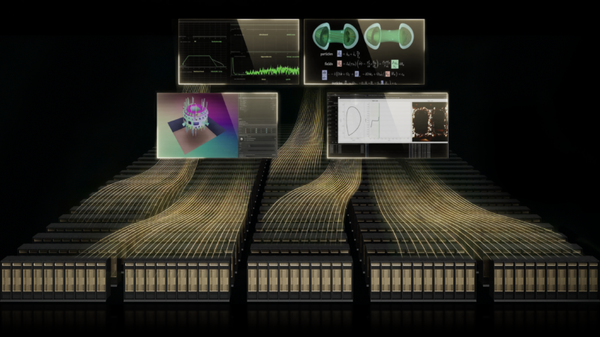
AI Factories: The New Infrastructure of Intelligence and the Economics of Real-Time Token Production
NVIDIA's latest insights define AI factories as the foundational infrastructure of the modern intelligence era. These facilities operate as 'token factories,' specialized in the real-time conversion of power into intelligence. As the industry moves toward the scaling of agentic AI, enterprises are increasingly deploying autonomous, always-on special agents to handle complex tasks. This technological shift is fundamentally altering the economic landscape of the sector. According to the report, the primary metrics for success and sustainability in this new era are performance per watt and cost per token. These factors represent the core economics that matter as intelligence becomes a scalable resource produced through high-efficiency infrastructure.
Key Takeaways
- AI Factories as Production Hubs: AI factories serve as the new infrastructure of intelligence, functioning specifically as 'token factories' that convert electrical power into intelligence in real time.
- Scaling Agentic AI: The industry is witnessing a significant scale-up of agentic AI, characterized by the deployment of autonomous, always-on special agents within enterprise environments.
- Shift in Economic Metrics: The fundamental economics of AI are now defined by two critical metrics: performance per watt and cost per token.
- Real-Time Intelligence Conversion: The core value proposition of these factories is the continuous, real-time transformation of energy into intelligent output.
In-Depth Analysis
The Concept of AI Factories as Token Factories
The emergence of AI factories marks a transition in how intelligence is conceptualized and produced. Rather than being a static software product, intelligence is now viewed as a continuous output generated by specialized infrastructure. These 'token factories' represent a shift toward an industrial model of intelligence production. The process is defined by the real-time conversion of power into intelligence, suggesting that the efficiency of this conversion is the primary driver of the intelligence economy. By framing AI infrastructure as a factory, the focus shifts to throughput, consistency, and the raw materials required—in this case, electrical power—to generate the desired output of digital tokens.
The Scaling of Agentic AI and Autonomous Agents
A critical component of this new infrastructure is the scaling of agentic AI. This involves the deployment of autonomous, always-on special agents designed for enterprise use. Unlike traditional AI models that may respond to specific prompts in a transactional manner, these agents are characterized by their continuous operation and specialized functions. The deployment of these agents within the enterprise indicates a move toward more integrated and autonomous AI systems that function as a constant presence in business operations. This 'always-on' nature necessitates a robust infrastructure capable of supporting continuous intelligence generation without interruption.
The New Economic Framework: Performance and Cost
As AI factories and agentic systems become the standard, the metrics used to evaluate their success are evolving. The original news highlights that 'performance per watt' and 'cost per token' have become the economics that matter. This shift reflects the maturing of the AI industry, where the focus is moving from pure capability to operational efficiency. Performance per watt measures the intelligence output relative to energy consumption, which is vital for the sustainability of real-time intelligence conversion. Simultaneously, cost per token provides a direct economic measure of the price of intelligence, allowing enterprises to calculate the ROI of deploying autonomous agents at scale. These metrics will likely dictate the design and implementation of future AI infrastructure.
Industry Impact
The transition to AI factories as the 'new infrastructure of intelligence' has profound implications for the AI industry. It establishes a clear roadmap for how intelligence will be produced and consumed at an enterprise level. By focusing on the conversion of power into tokens, the industry is standardizing the 'raw materials' and 'finished goods' of the AI era.
Furthermore, the emphasis on performance per watt and cost per token will likely drive innovation in hardware and software optimization. As enterprises deploy autonomous, always-on agents, the demand for high-efficiency, low-cost intelligence production will increase. This creates a competitive environment where the most efficient 'factories'—those that can produce the most intelligence for the least amount of power and cost—will lead the market. This economic shift prioritizes long-term operational sustainability over short-term performance gains.
Frequently Asked Questions
Question: What is the primary function of an AI factory?
An AI factory functions as a token factory that converts power into intelligence in real time. It serves as the foundational infrastructure for producing intelligent output at scale.
Question: Why are performance per watt and cost per token important?
These metrics represent the core economics of the AI industry. Performance per watt measures energy efficiency, while cost per token measures the financial efficiency of intelligence production, both of which are critical for scaling agentic AI in the enterprise.
Question: What are autonomous, always-on special agents?
These are specialized AI entities deployed within enterprises that operate continuously and autonomously to perform specific tasks, representing the next stage in the scaling of agentic AI.