Google Announces a New Era for AI Search: Integrating the Best of Search and Artificial Intelligence
Google has officially signaled the beginning of a transformative phase in information retrieval, described as a "new era" for AI Search. According to a recent announcement from the Google AI Blog, the company is taking the next significant step in its strategic journey to unify the core strengths of traditional search engines with the advanced capabilities of artificial intelligence. This integration aims to combine the reliability, speed, and vast indexing power of a search engine with the contextual understanding and generative potential of AI. By framing this as a continuous journey, Google emphasizes an iterative approach to evolving how users interact with information, ensuring that the future of search is built upon the established foundations of the web while embracing the innovative power of AI models.
Key Takeaways
- Google has announced a "next step" in its long-term journey to redefine the search experience through artificial intelligence.
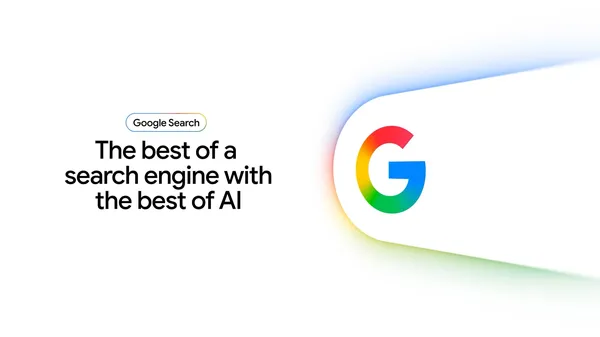
- The core objective is to merge the "best of a search engine" with the "best of AI" into a cohesive, unified system.
- This development marks the official start of what the company characterizes as a "new era" for AI-driven search technology.
- The strategy focuses on leveraging the reliability of traditional information retrieval alongside the intuitive processing of modern AI.
In-Depth Analysis
The Synergy of Search and Artificial Intelligence
The recent announcement from the Google AI Blog highlights a fundamental shift in the architecture of digital information retrieval. By explicitly stating the intent to "bring together the best of a search engine with the best of AI," the organization acknowledges that these two technological pillars, while distinct, are increasingly interdependent in the modern era. A search engine's "best" qualities typically involve its ability to crawl, index, and retrieve vast amounts of data with high speed, accuracy, and factual grounding. These systems are designed to navigate the massive scale of the open web to find specific, authoritative sources.
Conversely, the "best" of AI involves natural language understanding, context awareness, and the ability to synthesize complex information into coherent responses. By merging these two, Google is moving toward a system where the boundaries between a simple query-and-result interface and a generative AI interface are effectively blurred. This "new era" suggests that the future of search is not about choosing between a traditional list of links and an AI-generated answer, but rather experiencing a hybrid model where the strengths of one technology compensate for the inherent limitations of the other. This integration aims to provide users with the reliability of traditional search results alongside the intuitive, conversational understanding of modern artificial intelligence.
The Strategic Journey of Information Retrieval
Google describes this latest update as a "next step in our journey," a phrasing that is highly significant in a professional and technical context. It frames the current development not as a final destination or a standalone product, but as part of a continuous, iterative technological progression. This journey implies a long-term commitment to refining how artificial intelligence interacts with the web's existing information structure. It suggests that the transition to AI-integrated search is a complex process that requires balancing the legacy of search technology with the rapid advancements in machine learning.
The "next step" mentioned in the announcement serves as a bridge between the established history of search and the future potential of AI. By positioning this as a journey, the communication suggests that the integration process is carefully managed to maintain the core utility of search while exploring new frontiers. The goal is to refine the synergy between the structured data of search engines and the unstructured processing capabilities of AI models. This approach ensures that the transition into this "new era" is grounded in the established reliability of search, ensuring that the "best" parts of the search engine—its currency, authority, and factual basis—remain central to the user experience as AI becomes more prevalent.
Industry Impact
The move toward a unified AI-search model has profound implications for the broader technology and AI industries. As a primary gatekeeper of global information, Google's shift toward this "new era" sets a definitive benchmark for how other platforms and search providers may approach information retrieval in the coming years. The industry is likely to see an increased focus on hybrid systems that do not rely solely on generative models or traditional indexing, but rather a sophisticated blend of both to ensure accuracy and user engagement.
Furthermore, this integration signals to developers, content creators, and SEO professionals that the digital ecosystem is evolving. The emphasis on "the best of AI" suggests that the quality of information synthesis and the ability of a system to understand user intent will become just as important as the discoverability of the information itself. This shift will likely drive further innovation in how AI models are trained to interact with real-time web data, ensuring that the "best of a search engine"—its ability to provide up-to-date and verifiable information—remains a central pillar of the AI experience. This evolution will likely force a re-evaluation of how information is structured and delivered across the internet to meet the requirements of a more intelligent, integrated search environment.
Frequently Asked Questions
What is the primary goal of Google's latest announcement regarding AI Search?
The primary goal is to take the next step in a journey to integrate the most effective elements of traditional search engines with the most advanced capabilities of artificial intelligence. This aims to create a unified experience that leverages the strengths of both technologies.
What does Google mean by the "best of a search engine" and the "best of AI"?
While not explicitly detailed in the brief announcement, in a technical context, the "best of a search engine" refers to its ability to index, rank, and retrieve accurate, real-time information from the web. The "best of AI" refers to its ability to understand natural language, provide context, and synthesize information into helpful, human-like responses.
Why is this update described as a "journey" rather than a single product launch?
Describing the update as a "journey" indicates that the integration of AI into search is a continuous and evolving process. It suggests that Google is committed to an iterative approach, constantly refining the balance between traditional search technology and new AI capabilities as the field progresses.