AI News on November 14, 2026

Jensen Huang’s Departure Clouds AI Startup Funding Outlook as Founders and VCs Brace for Smaller Checks
Industry News

Jensen Huang’s Departure Clouds AI Startup Funding Outlook as Founders and VCs Brace for Smaller Checks

Nvidia poured tens of billions into AI startups under Jensen Huang, according to TechCrunch AI. With Huang no longer at the helm, founders and venture capitalists are bracing for smaller investment checks and lower valuations. Those are two distinct concerns: smaller checks would affect how much money startups receive from an investment, while lower valuations would affect what those companies are deemed worth in a funding round. The report describes what founders and investors expect, not changes that have already occurred. The available account does not say whether Nvidia has changed its investment plans, how much checks or valuations might fall, or which startups could be affected.

TechCrunch AI•
Google Research Highlights Antigravity’s /teamwork Feature for Science and Engineering
Industry News

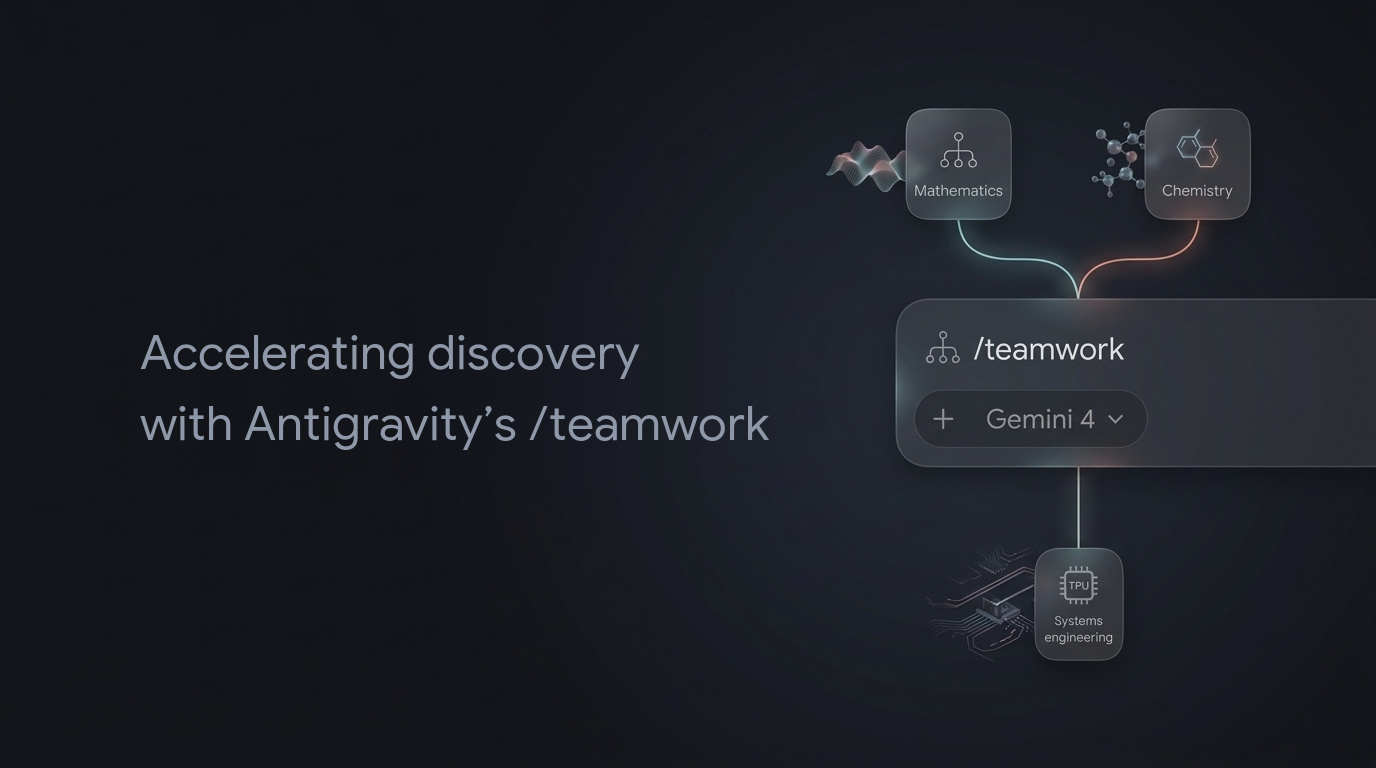
Google Research Highlights Antigravity’s /teamwork Feature for Science and Engineering

A supplied Google Research Blog entry dated November 13, 2026, links Antigravity’s /teamwork feature to advancing science and engineering in its headline. The only accompanying text is “Education Innovation,” which provides a thematic label but does not explain the feature or its connection to education. The headline describes the feature’s intended focus, but the supplied material does not show how /teamwork works, who it is for, or whether it has been used in a scientific or engineering project. It also provides no examples, results, or availability information. The most reliable reading is therefore that Google Research frames /teamwork in the context of science and engineering; the excerpt does not establish what the feature does or what impact it has had.

Google Research Blog•
OpenAI Rolls Out ChatGPT Wallet for Dots Agent Purchases to Eligible US Pro Subscribers
Product Launch

OpenAI Rolls Out ChatGPT Wallet for Dots Agent Purchases to Eligible US Pro Subscribers

OpenAI is rolling out ChatGPT Wallet, a wallet for its Dots AI agents that lets them make purchases on users’ behalf, The Verge reports. The rollout follows the launch of the Dots AI agents platform earlier in 2026. Starting November 13, the wallet is rolling out to ChatGPT Pro subscribers in the United States who are at least 18 years old, use a US billing address, and have an eligible US-issued American Express, Chase, Mastercard, or Visa card. The available excerpt ends as it begins to describe what happens after a user adds a card, leaving the subsequent purchase process unspecified.

The Verge•
AI Agent Startup LangChain Reaches $3 Billion Valuation and Claims 7,000 LangSmith Customers
Industry News

AI Agent Startup LangChain Reaches $3 Billion Valuation and Claims 7,000 LangSmith Customers

AI agent startup LangChain has reached a $3 billion valuation, TechCrunch reports. The company also says LangSmith, its agent management tool, has 7,000 customers. The report describes LangSmith as model- and platform-agnostic, but does not name the models or platforms it supports or explain how customers use it. The two figures measure different things: the valuation applies to LangChain, while the customer count is a company claim about LangSmith. The available report does not explain how the valuation was established, define what counts as a LangSmith customer, or say how many of those customers pay for the tool.

TechCrunch AI•
Industry News

FM-1 Workbench: Overview of Available Information

This article attempts to analyze the FM-1 Workbench. However, the source provided for this news item did not contain any descriptive content or details. Consequently, a comprehensive analysis cannot be performed based on the provided input.

Hacker News•
Building a Robot Pick-and-Place Simulation with SimReady Assets: What the Source Identifies
Technical Tutorial

Building a Robot Pick-and-Place Simulation with SimReady Assets: What the Source Identifies

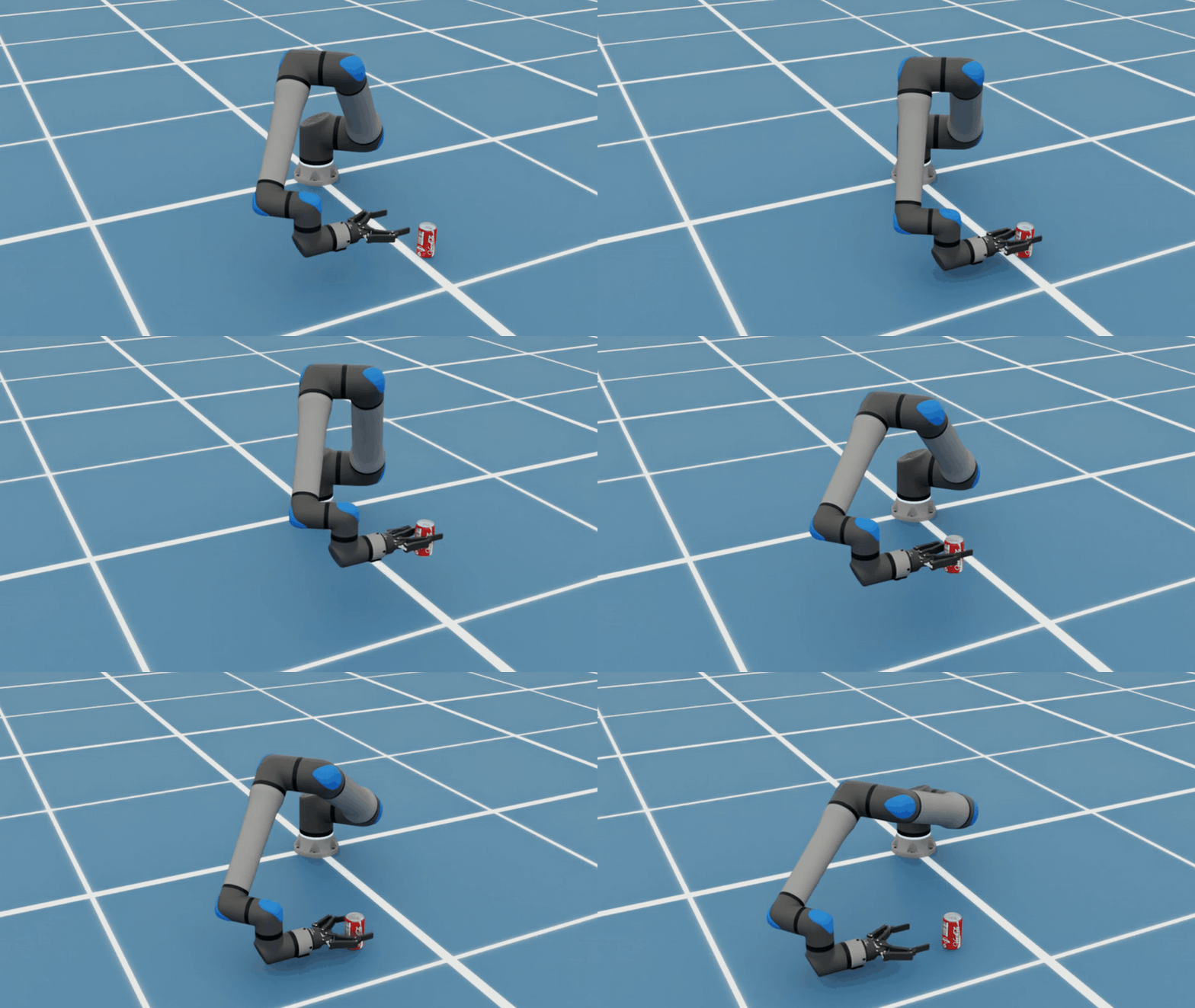
A Hugging Face Blog entry titled “Build a Robot Pick-and-Place Simulation with SimReady Assets” is listed with a publication date of November 13, 2026, at 18:00:39 UTC. The title identifies the subject as building a robot pick-and-place simulation with SimReady assets. The supplied source information includes a link and credits Hugging Face Blog as the author, but it does not include the article body. As a result, the available material establishes the topic but does not identify the robot, specify which assets are used, describe the simulation setup, or report any results. Readers looking for build instructions can consult the linked source; no instructions are included in the supplied material.

Hugging Face Blog•
Research News

JEPA World Models After 600 Experiments: What the Headline Tells Us

A Hacker News listing credited to halcdev links to a post whose headline says it shares discoveries about JEPA world models after 600 experiments. The listing is dated November 13, 2026, and points to haddyalchaer.com/jepa. No article text accompanies the supplied listing, so the headline is the only available description of the work. It gives a topic and an experiment count, but it does not say what the experiments tested, how they were conducted, or what they found. The listing therefore identifies a post for readers interested in JEPA world models, but it does not provide enough information to summarize the findings or assess their significance.

Hacker News•
How Nvidia’s AI Chip Boom Raises Concerns About Water, Power, and E-Waste
Industry News

How Nvidia’s AI Chip Boom Raises Concerns About Water, Power, and E-Waste

Writing in The Verge, Justine Calma argues that Nvidia, under cofounder Jensen Huang, has become both a driving force behind the AI boom and one of the tech industry’s biggest environmental liabilities. The excerpt links demand for Nvidia’s chips to a new wave of factories that use large amounts of water and chemicals. It also says the chips have drained power grids from inside massive data centers and set the stage for a looming electronic waste problem. The framing connects three parts of the chip lifecycle: manufacturing, operation, and eventual disposal. The available excerpt ends mid-sentence and provides no figures for resource use, grid strain, or projected waste.

The Verge•
Allen Institute for AI Introduces XYBench to Address Fundamental Challenges Behind User Questions
Research Breakthrough

Allen Institute for AI Introduces XYBench to Address Fundamental Challenges Behind User Questions

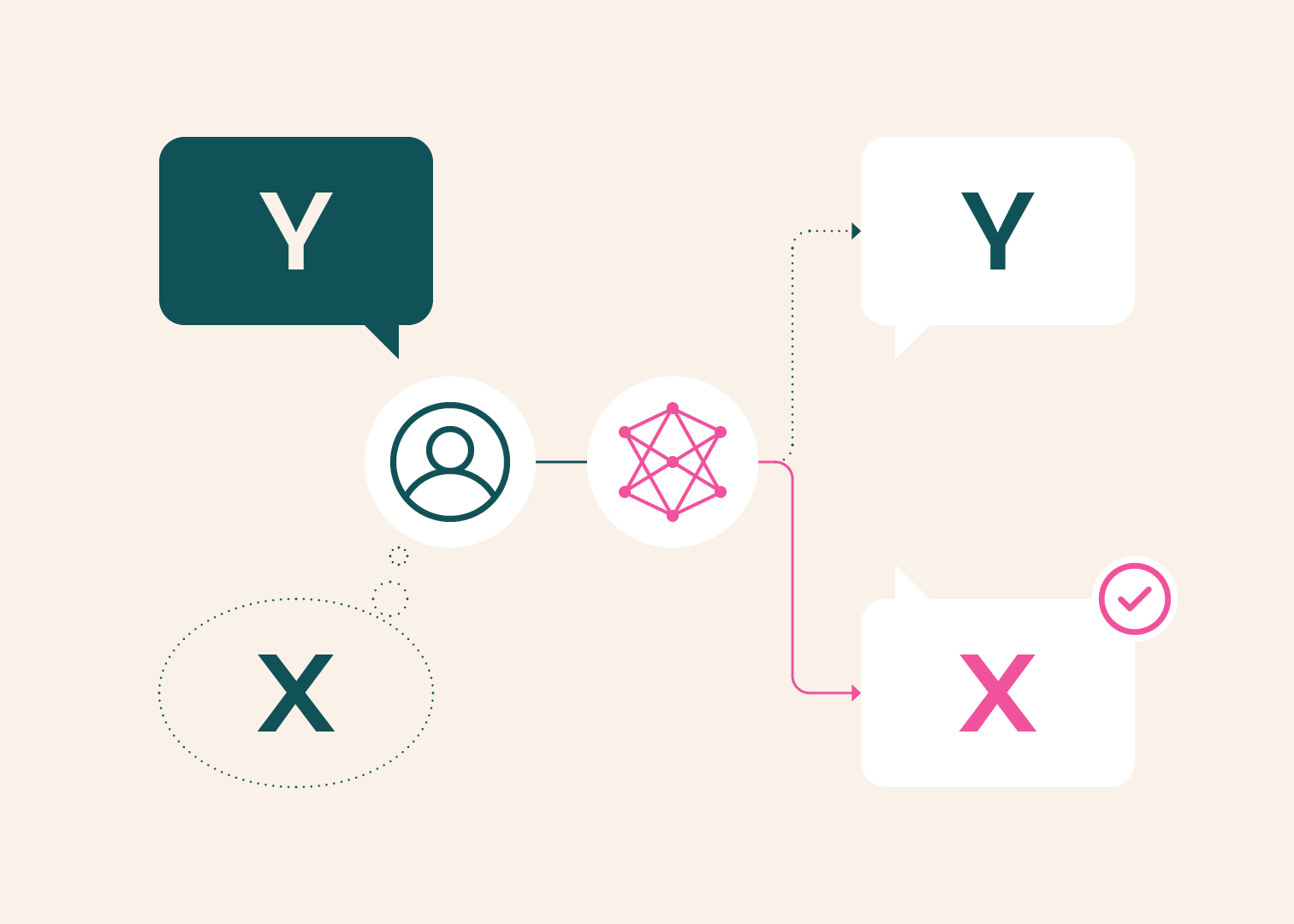
The Hugging Face Blog has announced a release titled 'XYBench: Helping with the problem behind the question,' authored in collaboration with the Allen Institute for AI. While detailed experimental benchmarks and implementation specifics are not provided in the announcement body, the title highlights a dedicated focus on identifying and addressing core underlying problems rather than just surface-level user prompts. This release points toward evolving standards in benchmark evaluations for artificial intelligence systems.

Hugging Face Blog•
LangChain Secures $300M Series C Funding at $3 Billion Valuation to Advance Agent Engineering
Funding

LangChain Secures $300M Series C Funding at $3 Billion Valuation to Advance Agent Engineering

LangChain has officially announced the successful closing of a $300 million Series C funding round, propelling the company to a $3 billion valuation. The investment round was led by CapitalG. This substantial capital influx is designated to further the development of LangSmith, the company's core agent engineering platform. With this latest financial milestone, LangChain continues to pursue its strategic mission of enabling companies to own their intelligence through advanced agentic workflows. This funding round underscores the significant investor confidence in the foundational infrastructure necessary for building and deploying production-grade AI agents, highlighting LangSmith's pivotal role in the current enterprise AI ecosystem.

LangChain•
Product Launch

OpenAI Introduces ChatGPT Wallet for Agent Purchases With User Approval and Existing Card Protections

OpenAI introduces ChatGPT Wallet as a secure way for agents in ChatGPT Work, Codex, and dots to complete purchases. The announcement identifies two features of the purchase process: users approve purchases, and existing card protections apply. The distinction is that agents can complete purchases, but the capability described by OpenAI still requires user approval. The announcement names all three environments together without describing differences in how ChatGPT Wallet works across them. It also does not explain how approval is requested or identify the specific card protections involved. The central news is the ability for agents to complete user-approved purchases with existing card protections, rather than a detailed description of the checkout experience.

OpenAI Blog•
Product Launch

Octen Expands Agent Search With Low-Latency Page Retrieval and Broader Image Lookup

VentureBeat reports that Octen launched a search model designed for AI agents and expanded its search and image lookup offerings. Octen reports median server-side retrieval of around 10 milliseconds in lite mode, a figure that applies to the retrieval step rather than to the full request. End-to-end request latency differs, and the supplied report does not give a corresponding figure. The report also distinguishes two aspects of access: the unlimited web-search price applies to a personal plan that uses queuing, while the published model weights carry noncommercial terms. These distinctions matter when reading the announcement: retrieval speed, plan pricing and permitted use of the weights describe different parts of Octen’s offering.

VentureBeat AI•
How AI Empowers Healthcare Teams: Accelerating Patient Care from Smart Hospitals to Home Support
Industry News

How AI Empowers Healthcare Teams: Accelerating Patient Care from Smart Hospitals to Home Support

According to a report from NVIDIA, artificial intelligence is increasingly being adopted across the healthcare ecosystem, ranging from pediatric research initiatives to smart hospital environments. Health systems and emerging startups are leveraging AI solutions to handle routine administrative and operational workloads, thereby enabling care teams to dedicate more focus to direct patient interaction. Key functional applications highlighted include matching eligible patients with clinical trials, providing targeted diagnostic support for radiologists, assisting in-hospital care teams, and extending monitoring to patients at home. Throughout these deployments, clinicians remain firmly at the center of the workflow to review AI outputs, ensuring human oversight and clinical judgment guide every patient decision.

NVIDIA Newsroom•
Naver Revenue Rises 10.7% as AI Spending Weighs on Profit and Npay Volume Hits 26.2 Trillion Won
Industry News

Naver Revenue Rises 10.7% as AI Spending Weighs on Profit and Npay Volume Hits 26.2 Trillion Won

Naver’s revenue rose 10.7%, while AI spending weighed on profit, according to a Tech in Asia report by Minh Le. The report also says Npay processed 26.2 trillion won (US$19.6 billion) in payments during the quarter. These figures describe different measures: the percentage refers to Naver’s revenue growth, while the won and dollar amounts refer to Npay’s payment volume, not revenue. The available information does not specify the period used to calculate revenue growth, the amount Naver spent on AI, or the size of the effect on profit. It also does not give a comparison figure for Npay, so its payment volume alone does not establish whether it grew during the quarter.

Tech in Asia•
Meituan Leads Pre-A+ Funding for Chinese Chip Startup Zhixin: What the Report Reveals
Funding

Meituan Leads Pre-A+ Funding for Chinese Chip Startup Zhixin: What the Report Reveals

Meituan led pre-A+ funding for Zhixin, a Chinese chip startup, according to a Tech in Asia report by Aiko Gao Ishida published on November 13, 2026. Zhixin said it develops its own high-end RISC-V CPU cores, agent CPUs, and domain-enhanced processors. The report identifies Meituan as the funding lead and names the three areas of processor development, but the available account does not disclose the amount raised, name other investors, or explain how Zhixin plans to use the funds. It also does not provide specifications, performance results, or release dates for the processors. The distinction matters: the report establishes who led the funding, while the description of Zhixin’s technology comes from the startup itself.

Tech in Asia•
Jensen Huang Resigns After 33 Years Leading NVIDIA, Colette Kress Takes Over as Interim CEO
Industry News

Jensen Huang Resigns After 33 Years Leading NVIDIA, Colette Kress Takes Over as Interim CEO

Latent Space reports that Jensen Huang resigned after 33 years leading NVIDIA and that Colette Kress took over as interim CEO. The news item is dated November 12, 2026, and the supplied publication timestamp is November 13, 2026, at 09:04:13 UTC. Beyond the leadership transition, the brief asks what happens to open source and American AI leadership. It does not answer that question or describe any change in NVIDIA’s approach to either topic. The report also does not give a reason for Huang’s resignation, say how long Kress will serve as interim CEO, or identify a permanent successor.

Latent Space•
Nvidia Staff Urge Jensen Huang to Return After Resignation in Internal Discussion
Industry News

Nvidia Staff Urge Jensen Huang to Return After Resignation in Internal Discussion

Nvidia staff urged Jensen Huang to return after his resignation, Tech in Asia reported. An internal suggestion box post drew more than 1,600 comments, most of which supported his return. The figure counts comments, not individual employees, so it does not establish how many staff members voiced support. The report also does not give an exact breakdown of the responses or indicate whether the views expressed in the discussion were representative of Nvidia’s staff as a whole. The clearest finding is that support for Huang’s return was the prevailing view among comments on the post. The report does not say whether Huang responded or whether a return was planned.

Tech in Asia•
TensorFold on GitHub Trending: An LLM Inference Engine for Metal, CUDA, and Vulkan
Industry News

TensorFold on GitHub Trending: An LLM Inference Engine for Metal, CUDA, and Vulkan

A GitHub Trending item dated November 13, 2026, describes TensorFold as an LLM inference engine for Metal, CUDA, and Vulkan. The item credits ashhart and links to the ashhart/TensorFold repository on GitHub. The three named technologies are the main technical detail in the supplied description. The excerpt does not explain how TensorFold works with each technology, which models it supports, or whether it offers the same features across all three. It also provides no benchmarks or release details. The listing identifies what the project is intended to do, but it does not provide enough information to assess performance, compatibility, or readiness for a specific deployment.

GitHub Trending•
Product Listing

Replicate on Product Hunt: What the Listing Says and What It Leaves Unanswered

The supplied Product Hunt entry is titled “Replicate,” lists Garry Tan as the author, and carries a publication timestamp of November 13, 2026, at 02:06:54 UTC. The source information includes a direct link to the listing, but the original news content is empty. As a result, the record identifies the entry without describing what Replicate is or what, if anything, was announced. It does not establish product features, availability, pricing, or a launch date. Garry Tan’s author credit and the publication timestamp can be reported as listing metadata, but neither establishes a role in the product itself or the timing of a product release.

Product Hunt•