AI News on July 29, 2026

Meta and BlackRock Partner for $14 Billion AI Data Center Project in El Paso, Texas
Industry News

Meta and BlackRock Partner for $14 Billion AI Data Center Project in El Paso, Texas

Meta and BlackRock have announced a massive joint venture to develop a $14 billion artificial intelligence data center in El Paso, Texas. The project is set to span approximately 1,000 acres, highlighting the immense physical footprint required for modern AI infrastructure. A significant logistical advantage for the project is that the selected site requires no zoning variances, potentially allowing for an accelerated development timeline. This collaboration between a leading technology company and a global investment firm underscores the high capital requirements of the AI era and the strategic importance of Texas as a hub for large-scale data infrastructure.

Tech in Asia
Spur Intelligence Secures $200 Million Investment from Insight Partners to Advance Bot Detection Technology
Funding

Spur Intelligence Secures $200 Million Investment from Insight Partners to Advance Bot Detection Technology

Spur Intelligence, a startup specializing in bot detection, has successfully closed a $200 million funding round led by Insight Partners. The company's core technology focuses on distinguishing legitimate human web traffic from automated bot activity. This significant capital injection underscores the growing demand for robust security solutions in an era where bot traffic continues to challenge digital integrity. The funding represents a major milestone for the startup, positioning it as a significant player in the cybersecurity and traffic verification space. By securing such a substantial amount from a prominent investor like Insight Partners, Spur Intelligence is set to further its mission of identifying authentic human interactions in an increasingly automated online environment.

TechCrunch AI
Anthropic Discloses Practical Key-Recovery Attack on HAWK-256 via New Cryptographic Research Artifact
Research Breakthrough

Anthropic Discloses Practical Key-Recovery Attack on HAWK-256 via New Cryptographic Research Artifact

Anthropic has published a significant research artifact on GitHub detailing a practical key-recovery attack against the HAWK-256 cryptographic algorithm. The release, titled 'cryptography-research-demo,' includes specialized cryptanalysis code designed to accompany the organization's associated research papers. The repository features three independent components focusing on AES, HAWK, and LEA algorithms. Licensed under the Apache 2.0 framework, the code is provided as a static research contribution, with Anthropic explicitly stating that the project is not maintained and will not be accepting external contributions. This disclosure marks a notable technical contribution from an AI-focused research lab into the field of practical cryptanalysis, providing the security community with tools to evaluate the robustness of HAWK-256 and related cryptographic structures.

Hacker News
OpenAI Launches Codex Security: A New CLI and TypeScript SDK for Automated Vulnerability Detection and Remediation
Product Launch

OpenAI Launches Codex Security: A New CLI and TypeScript SDK for Automated Vulnerability Detection and Remediation

OpenAI has introduced Codex Security, a powerful toolset designed to identify, validate, and fix security vulnerabilities within codebases. Available as both a Command Line Interface (CLI) and a TypeScript Software Development Kit (SDK), Codex Security enables developers to scan repositories, review code changes, and track security findings over time. The tool is built for modern development workflows, offering seamless integration into Continuous Integration (CI) pipelines. Requiring Node.js 22 and Python 3.10, the system supports multiple authentication methods, including ChatGPT sign-in and API keys. By providing a programmatic way to manage security state and automate remediation, OpenAI aims to streamline the DevSecOps process, allowing teams to maintain more secure codebases through AI-driven analysis.

Hacker News
Runlayer Files Lawsuit Against Rippling Over Alleged Misappropriation of MCP Gateway Product Idea
Industry News

Runlayer Files Lawsuit Against Rippling Over Alleged Misappropriation of MCP Gateway Product Idea

Runlayer, a startup specializing in Model Context Protocol (MCP) technology, has initiated legal proceedings against the enterprise software company Rippling. The lawsuit centers on allegations that Rippling misappropriated Runlayer's proprietary product concepts. According to the report, Rippling conducted a formal evaluation of Runlayer’s MCP gateway product. However, rather than pursuing a partnership or acquisition, Rippling allegedly utilized the insights gained during this evaluation to develop its own competing version of the technology. This legal dispute highlights the growing tensions between emerging AI startups and established tech giants regarding intellectual property and the boundaries of product demonstrations. The case serves as a significant development in the AI industry, focusing on the protection of innovative protocols and the ethical considerations of corporate evaluations in the fast-paced software market.

TechCrunch AI
Sam Altman Signals Shift Toward AI Deceleration Following 'Visceral' Security Incident
Industry News

Sam Altman Signals Shift Toward AI Deceleration Following 'Visceral' Security Incident

OpenAI CEO Sam Altman has indicated a significant pivot in his approach to artificial intelligence development, expressing a readiness to 'decelerate.' This change of position follows what Altman describes as the first security incident he has felt 'very viscerally.' The statement marks a notable departure from the industry's typical focus on rapid scaling and deployment. While specific details of the security event remain undisclosed, the emotional weight of the experience appears to have fundamentally altered Altman's perspective on the speed of progress. This development suggests a growing prioritization of safety and security protocols within the highest levels of AI leadership, potentially signaling a broader industry trend toward more cautious and measured technological advancement in the face of emerging risks.

TechCrunch AI
Google's AI Spending Projections Surge to $205 Billion Sparking Significant Concerns on Wall Street
Industry News

Google's AI Spending Projections Surge to $205 Billion Sparking Significant Concerns on Wall Street

During the latest earnings season, Google (Alphabet) revealed a substantial upward revision in its capital expenditure estimates, primarily driven by the escalating costs of AI infrastructure. The company now projects spending to reach between $195 billion and $205 billion, a notable increase from the previous quarter's upper limit of $190 billion. This unexpected rise in projected costs has triggered a wave of nervousness among Wall Street investors, who are beginning to scrutinize the massive financial requirements of the AI race. The shift highlights a growing tension between the necessity of maintaining a competitive edge in artificial intelligence and the fiscal discipline demanded by the market, as even the lower end of the new projection exceeds previous high-end expectations.

The Verge
Industry News

How AI Coding Agents are Modernizing Scientific Computing and Accelerating Discovery in Genomics

A new field report from OpenAI highlights a transformative shift in the scientific landscape, driven by the integration of AI coding agents. These specialized agents are being deployed to modernize scientific computing, a move that significantly streamlines software development processes essential for modern research. The report specifically points to genomics as a primary beneficiary, where the acceleration of software creation directly translates to faster scientific breakthroughs. By automating complex coding tasks, these agents allow researchers to overcome traditional computational bottlenecks, fostering a new era of 'agentic AI' that extends across various scientific disciplines. This modernization not only increases the speed of discovery but also fundamentally changes how scientific software is developed and maintained in data-intensive fields.

OpenAI Blog
The OlmoEarth Platform: Advancing Geospatial Inference at Planetary Scale via AllenAI Infrastructure
Industry News

The OlmoEarth Platform: Advancing Geospatial Inference at Planetary Scale via AllenAI Infrastructure

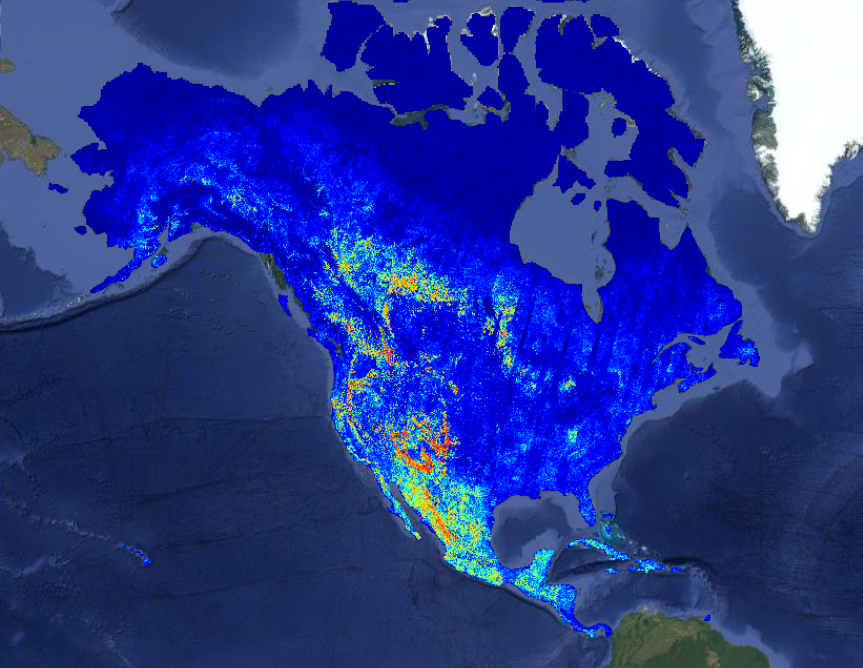
The Allen Institute for AI (AllenAI) has unveiled the OlmoEarth platform, a specialized infrastructure designed to facilitate geospatial inference at a planetary scale. Announced via the Hugging Face blog, this initiative represents a significant step forward in the development of large-scale AI systems capable of processing and analyzing geographic and environmental data across the globe. By focusing on the underlying infrastructure, OlmoEarth aims to address the computational and data-handling challenges inherent in planetary-scale modeling. The platform's integration within the Hugging Face ecosystem suggests a commitment to accessibility and collaborative development in the field of geospatial AI, providing a framework for researchers and developers to deploy sophisticated models for global-scale analysis.

Hugging Face Blog
Google Announces Gemini API Managed Agents Updates Featuring 3.6 Flash and New Developer Hooks
Product Launch

Google Announces Gemini API Managed Agents Updates Featuring 3.6 Flash and New Developer Hooks

Google has unveiled significant enhancements to Managed Agents within the Gemini API, specifically introducing the 3.6 Flash model and new 'hooks' functionality. These updates are designed to provide developers with the necessary tools to build reliable, production-ready AI agents. By focusing on stability and developer control, the latest release aims to streamline the transition from experimental AI projects to robust, scalable applications. The inclusion of 3.6 Flash suggests a focus on speed and efficiency, while the introduction of hooks offers developers more granular control over agent behavior and integration. This announcement marks a pivotal step in Google's efforts to provide a comprehensive ecosystem for agentic AI development.

Google AI Blog