AI News on May 17, 2026

Superpowers: A New Agentic Skill Framework and Software Development Methodology for Coding Agents
Open Source

Superpowers: A New Agentic Skill Framework and Software Development Methodology for Coding Agents

Superpowers is an innovative software development methodology and agentic skill framework designed specifically for coding agents. Developed by the user 'obra' and hosted on GitHub, the project introduces a structured approach to building AI-driven development tools. It relies on a foundation of composable skills and specific initial instructions to guide agents through the software creation process. By providing a comprehensive methodology rather than just a tool, Superpowers aims to streamline how developers interact with and utilize autonomous agents in their coding workflows. The framework focuses on modularity and effectiveness, offering a blueprint for the next generation of AI-assisted software engineering.

GitHub Trending
n8n-mcp: A New Model Context Protocol Server for Building Automated Workflows via Claude and Cursor
Open Source

n8n-mcp: A New Model Context Protocol Server for Building Automated Workflows via Claude and Cursor

n8n-mcp is an innovative Model Context Protocol (MCP) server designed to bridge the gap between AI assistants and the n8n automation platform. Developed by czlonkowski and released under the MIT license, this tool enables popular AI environments like Claude Desktop, Claude Code, Windsurf, and Cursor to directly assist users in constructing n8n workflows. By leveraging the MCP standard, it allows these AI models to understand and interact with n8n's architecture, streamlining the creation of complex automation sequences. This release marks a significant step in integrating LLM-driven development tools with low-code automation ecosystems, allowing developers to describe their automation needs in natural language while the AI handles the structural logic within the n8n environment.

GitHub Trending
Anthropic Launches Public Repository for Claude Agent Skills to Drive AI Standardization
Open Source

Anthropic Launches Public Repository for Claude Agent Skills to Drive AI Standardization

Anthropic has officially released a public repository titled "skills" on GitHub, specifically designed to house the implementation of Agent Skills for its Claude AI models. This repository serves as a practical application of the Agent Skills standard, a framework aimed at defining how AI agents interact with various tools and environments. By providing a public implementation, Anthropic is offering developers a direct look into how Claude utilizes specific functional capabilities. The repository also directs users to agentskills.io for more comprehensive information regarding the broader standards governing agentic behavior. This move highlights a significant step toward transparency and standardization in the development of AI agents, facilitating a more unified approach to building and deploying autonomous skills within the Anthropic ecosystem and the wider AI industry.

GitHub Trending
Supertonic: A High-Speed On-Device Multi-Language Text-to-Speech Engine Powered by ONNX
Open Source

Supertonic: A High-Speed On-Device Multi-Language Text-to-Speech Engine Powered by ONNX

Supertonic, a new Text-to-Speech (TTS) solution developed by Supertone Inc., has emerged as a high-performance tool on GitHub. Designed for speed and accuracy, Supertonic operates natively via ONNX, enabling efficient on-device processing. This multi-language engine focuses on delivering high-quality speech synthesis without the need for cloud-based infrastructure, ensuring privacy and low latency. By leveraging the ONNX runtime, it provides a versatile framework for developers looking to integrate advanced TTS capabilities into various applications. The project emphasizes its ultra-fast performance and accurate output, positioning itself as a significant contribution to the open-source AI audio landscape. With its native ONNX implementation, it offers a streamlined path for cross-platform deployment, catering to the growing demand for localized AI solutions.

GitHub Trending
OpenHuman Project Debuts on GitHub: A New Vision for Private and Simple Personal AI Superintelligence
Open Source

OpenHuman Project Debuts on GitHub: A New Vision for Private and Simple Personal AI Superintelligence

The OpenHuman project, developed by tinyhumansai, has emerged as a significant new entry in the open-source AI space. Positioned as a "personal AI superintelligence," the project emphasizes three core characteristics: privacy, simplicity, and extreme power. By focusing on a user-centric model of artificial intelligence, OpenHuman aims to provide high-level cognitive capabilities while ensuring that the user's experience remains straightforward and secure. As the project gains traction on GitHub Trending, it highlights a growing industry shift toward decentralized AI solutions that prioritize individual data sovereignty without sacrificing the performance associated with large-scale superintelligence systems. This analysis explores the positioning of OpenHuman and its potential impact on the future of personal computing.

GitHub Trending
RuView: Transforming Ordinary WiFi Signals into Real-Time Spatial Intelligence and Vital Signs Monitoring
Open Source

RuView: Transforming Ordinary WiFi Signals into Real-Time Spatial Intelligence and Vital Signs Monitoring

RuView, a pioneering project by ruvnet, introduces a transformative approach to environmental sensing by repurposing standard WiFi signals. The technology enables real-time spatial intelligence, presence detection, and vital signs monitoring without the use of traditional camera hardware or video pixels. By analyzing the fluctuations in ambient wireless signals, RuView provides a high-fidelity understanding of a physical space and the biological metrics of its occupants. This innovation addresses the growing demand for non-intrusive monitoring solutions in various sectors, prioritizing user privacy while maintaining sophisticated data collection capabilities. As an open-source contribution, RuView represents a significant step forward in the field of ambient sensing and privacy-preserving technology.

GitHub Trending
K-Dense-AI Unveils Scientific Agent Skills: A Multi-Domain Toolkit for Professional AI Development
Open Source

K-Dense-AI Unveils Scientific Agent Skills: A Multi-Domain Toolkit for Professional AI Development

K-Dense-AI has officially released 'Scientific Agent Skills,' a comprehensive suite of out-of-the-box capabilities designed to empower AI agents across various professional sectors. Formerly known as 'Claude Scientific Skills,' the rebranded project offers a standardized set of tools specifically tailored for research, science, engineering, analysis, finance, and writing. By providing ready-to-use skills, the repository aims to simplify the integration of complex, domain-specific logic into AI agent frameworks. This transition from a model-specific name to a broader identity suggests an expansion in compatibility and application, catering to a wide range of technical industries that require high-precision automated assistance. The release marks a significant step in making specialized AI agent development more accessible to the global research and engineering community.

GitHub Trending
Industry News

Solving the MCP Onboarding Friction: How a Simple 'Hello Page' Reduced Support Tickets for HybridLogic

Luke Lanchester of HybridLogic has identified a critical friction point in the adoption of the Model Context Protocol (MCP): the disconnect between developer-centric specifications and real-world user behavior. When HybridLogic launched an MCP server for their primary tool, they were met with a surge of support tickets from users who mistakenly believed the service was broken after encountering 401 errors or raw JSON in their browsers. To resolve this without the unsustainable task of building individual plugins for every emerging LLM client, Lanchester implemented a 'hacky' but effective solution. By serving a user-friendly HTML 'Hello Page' specifically to browser-based requests, the company successfully guided users on how to properly integrate the server into their AI clients, leading to a dramatic drop in support requests and a smoother onboarding experience.

Hacker News
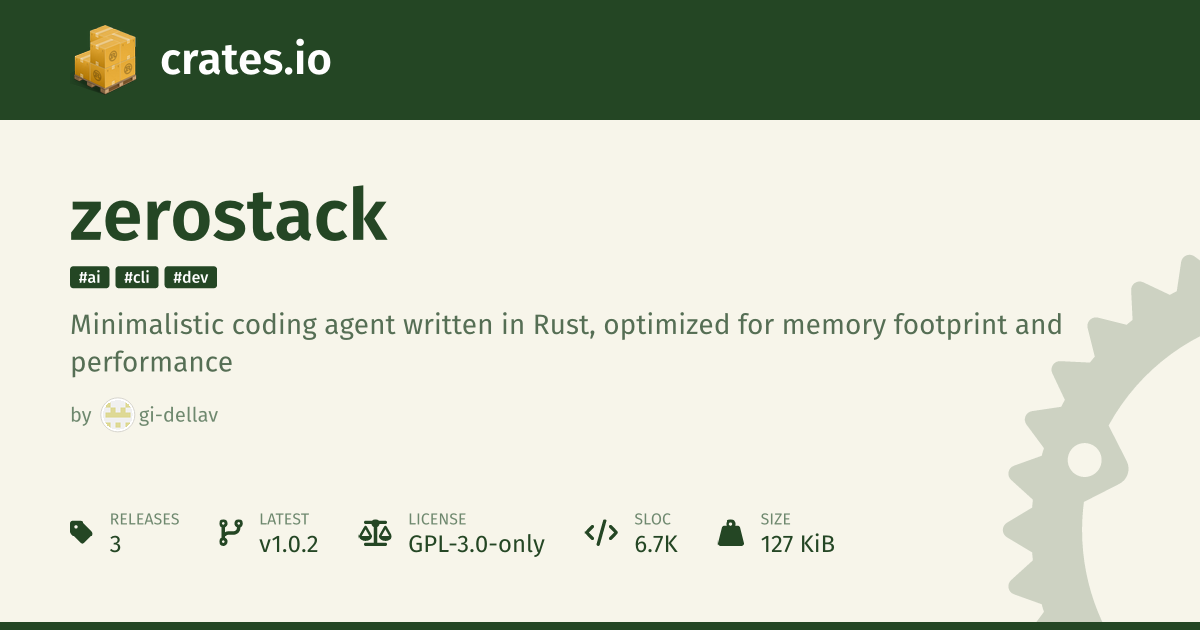
Zerostack: A Unix-Inspired Coding Agent Developed in Pure Rust
Product Launch

Zerostack: A Unix-Inspired Coding Agent Developed in Pure Rust

Zerostack is a newly released coding agent written entirely in the Rust programming language. Drawing inspiration from Unix principles, this tool has been published as a package on crates.io, the official Rust package registry. As of its version 1.0.0 release, Zerostack represents a specialized approach to AI-driven development, focusing on the performance and safety characteristics inherent to Rust. While detailed documentation within the registry listing is currently minimal, the project positions itself as a Unix-inspired solution for developers seeking a native Rust coding assistant. The release marks a significant milestone for the Rust ecosystem, providing a systems-level alternative to existing AI development tools.

Hacker News
Experimenting with Claude AI for Open-Source Bounties: A Case Study on Automated Coding Agents
Industry News

Experimenting with Claude AI for Open-Source Bounties: A Case Study on Automated Coding Agents

This article examines a real-world experiment where a developer attempted to use Claude, an AI coding agent, to earn money through open-source bounties on the Algora platform. Inspired by a viral success story of an AI agent earning $16.88, the author set out to replicate the results with a $20 token budget. The experiment involved analyzing 60 fresh GitHub issues and utilizing a suite of tools including the GitHub CLI and automated editing capabilities. Despite the structured approach and human-in-the-loop safety checks, the project resulted in $0 earnings after 48 hours. The findings highlight significant practical challenges in the bounty ecosystem, such as reserved issues for hiring and high competition, suggesting that the path to profitable autonomous AI coding is more complex than initial successes might indicate.

Hacker News
The Haves and Have Nots of the AI Gold Rush: Examining the Tech Industry's Shifting Sentiment
Industry News

The Haves and Have Nots of the AI Gold Rush: Examining the Tech Industry's Shifting Sentiment

This analysis explores the current atmosphere surrounding the artificial intelligence boom, focusing on the emerging divide within the technology sector. Despite the significant momentum of the AI 'gold rush,' internal sentiment is reportedly shifting, with industry 'vibes' turning negative. The report highlights a growing disparity between the 'haves'—those positioned to benefit from the current surge—and the 'have nots' who may be left behind. This internal skepticism suggests that even within the heart of the tech industry, the rapid expansion of AI is being met with unease rather than universal optimism. The following analysis breaks down the implications of these negative industry vibes and the structural inequality inherent in the current technological landscape as described in recent industry observations.

TechCrunch AI
ArXiv Implements One-Year Ban for Authors Using AI to Generate Entire Research Papers
Industry News

ArXiv Implements One-Year Ban for Authors Using AI to Generate Entire Research Papers

ArXiv, the leading open-access repository for scientific research, has announced a significant policy shift aimed at curbing the misuse of Large Language Models (LLMs) in academic submissions. According to recent reports, the platform will now impose a one-year ban on authors found to have allowed AI to perform the entirety of the work for their papers. This move is a direct response to the increasing prevalence of 'careless use' of generative AI tools within the scientific community. By establishing a strict one-year suspension, ArXiv aims to reinforce the necessity of human oversight and original contribution in research, signaling a major crackdown on automated content that lacks substantive human involvement.

TechCrunch AI
Dell and Kioxia Achieve 10 PB Storage Density in 2RU Server Using High-Capacity LC9 QLC SSDs
Industry News

Dell and Kioxia Achieve 10 PB Storage Density in 2RU Server Using High-Capacity LC9 QLC SSDs

Dell and Kioxia have announced a significant milestone in storage density, successfully integrating nearly 10 petabytes (PB) of data into a compact 2RU server. By utilizing Kioxia’s LC9 high-capacity QLC SSDs, Dell has populated its PowerEdge R7725xd server with 40 E3.L form factor drives, each offering 245.76 TB of capacity. This configuration results in a total system capacity of 9.8 PB. Powered by AMD EPYC 9005 processors and supporting high-speed connectivity via five 400 Gbps NICs, the system is designed to meet the scaling demands of AI infrastructure, data lakes, and massive ingestion streams. This advancement represents a major shift in data center efficiency, potentially allowing for 196 PB of storage within a single rack while significantly improving total cost of ownership (TCO).

Hacker News