AI News on April 6, 2026

Microsoft Unveils Agent-Framework: A New Tool for Building and Deploying Multi-Agent AI Workflows
Open Source

Microsoft Unveils Agent-Framework: A New Tool for Building and Deploying Multi-Agent AI Workflows

Microsoft has introduced 'agent-framework,' a specialized development framework designed to streamline the creation, orchestration, and deployment of AI agents. The framework is specifically built to support both single-agent systems and complex multi-agent workflows. By providing native support for Python and .NET, Microsoft aims to offer a versatile environment for developers working across different programming ecosystems. The project, hosted on GitHub, focuses on providing the necessary infrastructure to manage how AI agents interact and execute tasks within a structured workflow. This release marks a significant step in Microsoft's efforts to provide standardized tools for the burgeoning field of autonomous and collaborative AI systems.

GitHub Trending
Onyx: An Open-Source AI Platform Featuring Advanced Chat Capabilities and Multi-LLM Support
Open Source

Onyx: An Open-Source AI Platform Featuring Advanced Chat Capabilities and Multi-LLM Support

Onyx has emerged as a significant open-source AI platform designed to provide users with advanced AI chat functionalities. Developed by the onyx-dot-app team, the platform distinguishes itself by offering comprehensive support for all major Large Language Models (LLMs). This flexibility allows developers and enterprises to integrate and switch between various AI models within a single interface. As an open-source project hosted on GitHub, Onyx emphasizes accessibility and community-driven development, aiming to streamline the way users interact with diverse AI technologies. The platform's commitment to supporting a wide array of LLMs positions it as a versatile tool for those seeking a unified solution for advanced AI communication and model management.

GitHub Trending
Goose: An Open-Source and Extensible AI Agent Designed to Automate Complex Engineering Tasks
Open Source

Goose: An Open-Source and Extensible AI Agent Designed to Automate Complex Engineering Tasks

Goose is a newly introduced open-source AI agent designed to move beyond simple code suggestions. Developed by Block, this extensible tool allows users to install, execute, edit, and test software through any Large Language Model (LLM). Operating locally, Goose focuses on the automation of diverse engineering tasks, providing a robust framework for developers who require more than just autocomplete features. By offering a platform that is both open and adaptable, Goose enables a more integrated approach to software development, allowing the AI to interact directly with the environment to perform functional engineering operations across various stages of the development lifecycle.

GitHub Trending
MLX-VLM: A New Framework for Vision Language Model Inference and Fine-Tuning on Apple Silicon
Open Source

MLX-VLM: A New Framework for Vision Language Model Inference and Fine-Tuning on Apple Silicon

MLX-VLM has emerged as a specialized software package designed to facilitate the deployment and optimization of Vision Language Models (VLMs) specifically for Mac hardware. By leveraging the MLX framework, the project enables users to perform both inference and fine-tuning of complex multimodal models directly on Apple Silicon. This development addresses the growing demand for efficient, localized AI workflows, allowing developers and researchers to utilize the unified memory architecture of Mac devices for vision-integrated language tasks. The repository, hosted on GitHub by author Blaizzy, provides the necessary tools to bridge the gap between high-performance vision-language research and the accessibility of macOS environments.

GitHub Trending
Introducing oh-my-codex (OmX): Enhancing Codex with Hooks, Agent Teams, and HUD Features
Product Launch

Introducing oh-my-codex (OmX): Enhancing Codex with Hooks, Agent Teams, and HUD Features

The developer Yeachan-Heo has introduced oh-my-codex (OmX), a specialized tool designed to expand the capabilities of Codex. Positioned with the tagline "Your Codex is no longer alone," the project introduces several advanced features to the development environment, including the integration of hooks, the formation of agent teams, and a Heads-Up Display (HUD). These additions aim to provide a more interactive and collaborative experience for users working with Codex, moving beyond basic functionality to a more robust, feature-rich ecosystem. The project is currently gaining traction on GitHub, highlighting a growing interest in tools that enhance AI-driven coding workflows through modularity and real-time feedback mechanisms.

GitHub Trending
Japan Leverages Physical AI to Combat Labor Shortages and Secure Global Robotics Leadership
Industry News

Japan Leverages Physical AI to Combat Labor Shortages and Secure Global Robotics Leadership

Japan is positioning itself as a global leader in physical AI, driven by a critical need to fill labor gaps caused by a shrinking workforce. Unlike other regions where automation is seen as a threat to employment, Japan views AI-powered robots as essential tools for maintaining industrial continuity in factories, warehouses, and infrastructure. The Ministry of Economy, Trade and Industry (METI) has set an ambitious goal to capture 30% of the global physical AI market by 2040. Leveraging its existing dominance in industrial robotics—where it held a 70% market share in 2022—Japan is integrating AI with its deep expertise in mechatronics and hardware supply chains to ensure its economic stability and industrial productivity.

Hacker News
Rethinking Continual Learning for AI Agents: Beyond Model Weight Updates to a Three-Layer Architecture
Industry News

Rethinking Continual Learning for AI Agents: Beyond Model Weight Updates to a Three-Layer Architecture

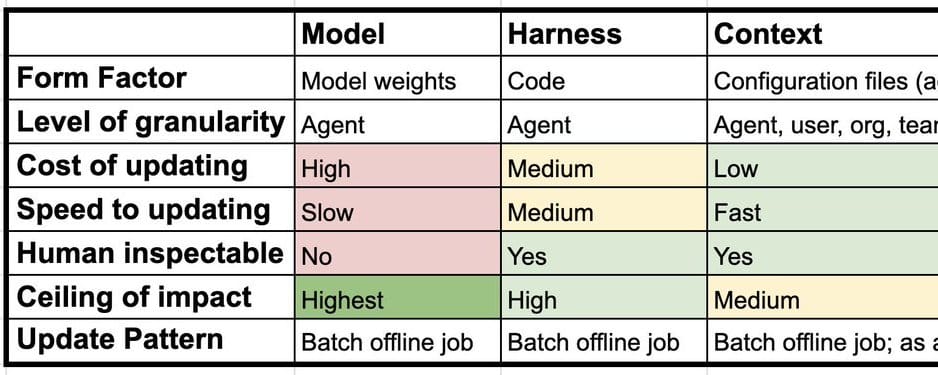
In a recent analysis by Harrison Chase of LangChain, the concept of continual learning for AI agents is redefined beyond the traditional focus on model weight updates. While most industry discussions center on fine-tuning models, Chase argues that for AI agents to truly improve over time, learning must occur across three distinct layers: the model, the harness, and the context. This framework shifts the perspective on how developers should build and optimize agentic systems. By understanding these layers, creators can implement more effective strategies for long-term system evolution. The insights provided suggest that the future of adaptive AI lies in a holistic approach to learning that integrates architectural components with environmental data and core model capabilities.

LangChain
Microsoft Copilot Terms of Use State AI Assistant is Intended for Entertainment Purposes Only
Industry News

Microsoft Copilot Terms of Use State AI Assistant is Intended for Entertainment Purposes Only

Recent updates to Microsoft's terms of service for its AI assistant, Copilot, have revealed a significant disclaimer regarding the tool's intended use. According to the official documentation, Microsoft explicitly states that Copilot is designed 'for entertainment purposes only.' This move aligns the tech giant with AI skeptics who have long cautioned against the uncritical acceptance of model outputs. By embedding this language into their legal terms, Microsoft is joining other AI developers in formally advising users not to place absolute trust in the information or content generated by their models. This development highlights the ongoing legal and functional boundaries being set by major tech companies as they navigate the reliability challenges inherent in current generative AI technologies.

TechCrunch AI
Google Gemma 4 Arrives on iPhone: High-Performance Offline AI with Thinking Mode and Agent Skills
Product Launch

Google Gemma 4 Arrives on iPhone: High-Performance Offline AI with Thinking Mode and Agent Skills

Google has officially launched Gemma 4 on iOS, marking a significant milestone for mobile AI capabilities. Available through the Google AI Edge Gallery app, this update allows iPhone users to run high-performance models entirely offline. The release introduces two major features: 'Thinking Mode' and 'Agent Skills,' designed to enhance the model's reasoning and functional capabilities directly on-device. By prioritizing local execution, Gemma 4 ensures user privacy and reduces latency, providing a robust alternative to cloud-based AI services. This update represents a major step forward in bringing sophisticated, agentic AI models to the mobile ecosystem without requiring an active internet connection.

Hacker News
Running Google Gemma 4 Locally Using LM Studio Headless CLI and Claude Code Integration
Product Launch

Running Google Gemma 4 Locally Using LM Studio Headless CLI and Claude Code Integration

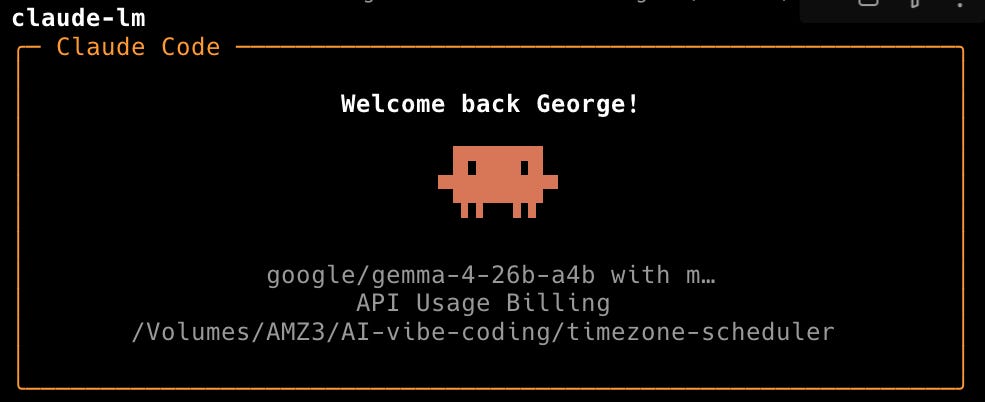
The release of LM Studio 0.4.0 has introduced the 'lms' CLI and 'llmster', enabling users to run Google’s Gemma 4 26B model locally on macOS. This setup offers a privacy-focused, cost-effective alternative to cloud APIs, particularly for tasks like code reviews and prompt testing. The Gemma 4 26B model utilizes a Mixture-of-Experts (MoE) architecture, activating only 4B parameters per forward pass, which allows it to run efficiently on consumer hardware like the MacBook Pro M4 Pro. While the model achieves high performance, reaching 51 tokens per second on specific hardware, users have noted performance slowdowns when integrating the local model with Claude Code. This development highlights the growing feasibility of high-parameter local inference for developers.

Hacker News
Suno AI Faces Music Copyright Challenges Despite Policies Prohibiting Use of Protected Material
Industry News

Suno AI Faces Music Copyright Challenges Despite Policies Prohibiting Use of Protected Material

The AI music platform Suno is currently under scrutiny regarding its copyright enforcement capabilities. While Suno's official policy strictly prohibits the use of copyrighted material—allowing users only to upload original tracks for remixing or to pair original lyrics with AI-generated melodies—the system's effectiveness is being questioned. The platform is designed to automatically recognize and block the unauthorized use of third-party songs and lyrics. However, recent observations suggest that the system may not be foolproof, raising significant concerns about the potential for copyright infringement within the AI music generation space. This development highlights the ongoing tension between generative AI innovation and the protection of intellectual property rights in the digital music industry.

The Verge