AI News on March 20, 2026

Claude HUD: A New Plugin for Real-Time Monitoring of Claude Code Context and Agent Activity
Product Launch

Claude HUD: A New Plugin for Real-Time Monitoring of Claude Code Context and Agent Activity

The developer jarrodwatts has introduced 'claude-hud,' a specialized plugin designed for the Claude Code environment. This tool serves as a comprehensive dashboard, providing users with real-time visibility into their current session status. Key features include monitoring context window usage, tracking active tools, and overseeing running agents. Additionally, the plugin offers a progress tracker for pending tasks (To-Do items). By centralizing these metrics, Claude HUD aims to enhance the transparency of AI-driven development workflows, allowing developers to better manage their resources and understand the background processes of the Claude Code assistant as it executes complex coding tasks.

GitHub Trending
Superpowers: A Comprehensive Framework and Methodology for Developing AI Agent Skills and Workflows
Open Source

Superpowers: A Comprehensive Framework and Methodology for Developing AI Agent Skills and Workflows

Superpowers is a newly introduced software development methodology and framework designed specifically for programming agents. Developed by the user 'obra' and hosted on GitHub, the project provides a structured approach to building AI capabilities through a set of composable 'skills.' By offering a complete software development workflow, Superpowers enables developers to equip their programming agents with initial sets of functional tools and modular skills. This framework aims to standardize how agents interact with code and execute tasks, moving beyond simple automation toward a more robust, skill-based development environment. The project emphasizes the importance of a proven methodology in the rapidly evolving landscape of AI-driven software engineering.

GitHub Trending
Newton: A New Open-Source GPU-Accelerated Physics Engine Built on NVIDIA Warp for Robotics Research
Open Source

Newton: A New Open-Source GPU-Accelerated Physics Engine Built on NVIDIA Warp for Robotics Research

The open-source community has introduced 'Newton,' a high-performance physics simulation engine specifically designed for roboticists and simulation researchers. Developed by the newton-physics team and hosted on GitHub, this engine leverages NVIDIA Warp to provide robust GPU acceleration. By utilizing the power of modern graphics processing units, Newton aims to streamline complex physical simulations required for advanced robotics development. The project emphasizes accessibility through its open-source nature and focuses on providing the high-fidelity, high-speed computational environment necessary for modern simulation research. As an engine built on NVIDIA's specialized framework, it represents a targeted tool for professionals seeking to optimize their simulation workflows within the GPU-accelerated ecosystem.

GitHub Trending
Unsloth AI Launches Unified Web UI for Local Training and Deployment of Open-Source Models
Product Launch

Unsloth AI Launches Unified Web UI for Local Training and Deployment of Open-Source Models

Unsloth AI has introduced a unified Web UI designed specifically for the local training and execution of prominent open-source Large Language Models (LLMs). This new interface streamlines the workflow for developers and researchers working with models such as Qwen, DeepSeek, gpt-oss, and Gemma. By providing a centralized platform, Unsloth aims to simplify the complexities associated with fine-tuning and running high-performance models on local hardware. The tool focuses on accessibility and efficiency, allowing users to manage diverse model architectures within a single, cohesive environment. This development marks a significant step in making advanced AI model customization more accessible to the broader developer community while maintaining the privacy and control benefits of local infrastructure.

GitHub Trending
Open-SWE: A New Open-Source Agent for Asynchronous Programming Challenges
Open Source

Open-SWE: A New Open-Source Agent for Asynchronous Programming Challenges

The AI development community has seen the emergence of Open-SWE, a specialized open-source agent designed to handle asynchronous programming tasks. Developed by the team at LangChain AI, this project aims to provide a robust framework for managing complex non-blocking operations through autonomous agentic behavior. While currently in its early stages of public release on GitHub, Open-SWE represents a targeted effort to bridge the gap between high-level AI orchestration and the technical nuances of asynchronous software engineering. The project focuses on providing developers with a transparent, open-source alternative for automating coding workflows that require sophisticated concurrency management, leveraging the foundational expertise of the LangChain ecosystem to streamline developer productivity in modern software environments.

GitHub Trending
Jeff Bezos Seeks $100 Billion to Acquire and Revitalize Legacy Manufacturing Firms Using Artificial Intelligence
Industry News

Jeff Bezos Seeks $100 Billion to Acquire and Revitalize Legacy Manufacturing Firms Using Artificial Intelligence

Amazon founder Jeff Bezos is reportedly embarking on an ambitious new industrial venture aimed at raising $100 billion. The core strategy involves the acquisition of established manufacturing firms with the intent of fundamentally transforming their operations through the integration of advanced artificial intelligence technology. This massive capital injection signals a significant shift in how legacy industrial sectors may be modernized. By leveraging AI, Bezos aims to revamp traditional manufacturing processes, potentially increasing efficiency and innovation within the sector. While specific targets have not been disclosed, the scale of the investment highlights a major commitment to merging old-world industry with cutting-edge AI capabilities, marking a new chapter in the billionaire's investment portfolio and the broader industrial landscape.

TechCrunch AI
Industry News

The AI Code Manifesto: Why Intentionality is Critical for Managing Autonomous Coding Agents

As AI coding agents and swarms become increasingly prevalent in software development, the need for intentionality in codebase management has reached a critical point. A new manifesto and guide, also available as an 'npx' skill for agents, outlines a framework for maintaining code quality in the age of AI. The core philosophy centers on self-documenting code and the implementation of 'Semantic Functions.' These functions serve as minimal, predictable building blocks designed to prioritize correctness and reusability. By breaking complex logic into self-describing steps that minimize side effects, developers can ensure that both human collaborators and future AI agents can effectively navigate and maintain the codebase without succumbing to the 'sloppiness' often introduced by automated generation.

Hacker News
Research Breakthrough

EsoLang-Bench Reveals Massive Reasoning Gap: Frontier LLMs Score Only 3.8% on Esoteric Languages

A new benchmark titled EsoLang-Bench has exposed a significant disparity between the perceived and actual reasoning capabilities of Large Language Models (LLMs). While frontier models achieve nearly 90% accuracy on Python tasks, their performance plummets to just 3.8% when faced with esoteric programming languages like Brainfuck and Whitespace. The study, conducted by Aman Sharma and Paras Chopra, utilizes 80 programming problems across five rare languages where training data is up to 100,000 times scarcer than Python. The results suggest that current LLM success in coding relies heavily on memorization of pretraining data rather than genuine logical reasoning. Notably, all models failed completely on tasks above the 'Easy' tier, and self-reflection strategies yielded almost no performance gains.

Hacker News
Silicon Valley Reimagines the Philosophical Zombie: A New Interpretation of Marc Andreessen and AI Consciousness
Industry News

Silicon Valley Reimagines the Philosophical Zombie: A New Interpretation of Marc Andreessen and AI Consciousness

In a recent exploration of Silicon Valley's evolving intellectual landscape, Elizabeth Lopatto of The Verge examines the emergence of the 'philosophical zombie' concept within the tech industry. Traditionally a thought experiment by philosopher David Chalmers, the philosophical zombie describes a being that appears human but lacks internal consciousness. The article suggests that this abstract concept has found a modern personification in figures like Marc Andreessen. This shift highlights a unique intersection between high-level philosophical theory and the current state of innovation in Silicon Valley, where the boundaries between human-like behavior and genuine consciousness are increasingly scrutinized in the context of technological development.

The Verge
Cloudflare CEO Predicts Online Bot Traffic Will Surpass Human Activity by 2027 Due to AI Growth
Industry News

Cloudflare CEO Predicts Online Bot Traffic Will Surpass Human Activity by 2027 Due to AI Growth

Cloudflare CEO Matthew Prince has issued a significant forecast regarding the future of the internet, stating that online bot traffic is expected to exceed human traffic by 2027. This shift is primarily driven by the rapid rise of generative AI agents, which are significantly increasing web traffic and placing unprecedented demands on global digital infrastructure. As AI bots become more prevalent, the balance of internet activity is shifting away from human users toward automated systems. This transition highlights the growing influence of artificial intelligence in shaping the digital landscape and the resulting pressure on the technical frameworks that support the modern web.

TechCrunch AI
Meta Security Incident: AI Agent's Inaccurate Technical Advice Leads to Unauthorized Data Access
Industry News

Meta Security Incident: AI Agent's Inaccurate Technical Advice Leads to Unauthorized Data Access

A recent security incident at Meta has highlighted the risks of integrating AI agents into internal workflows. According to reports from The Information and statements from Meta spokesperson Tracy Clayton, an AI agent provided inaccurate technical advice to an employee, resulting in unauthorized access to company and user data for nearly two hours. While the breach allowed for potential exposure, Meta has officially stated that no user data was mishandled during the duration of the event. This incident underscores the growing challenges tech giants face when relying on autonomous or semi-autonomous AI systems for internal technical support and infrastructure management, raising questions about the reliability of AI-driven guidance in high-stakes corporate environments.

The Verge
Meta Launches Advanced AI Content Enforcement Systems to Enhance Accuracy and Reduce Third-Party Reliance
Industry News

Meta Launches Advanced AI Content Enforcement Systems to Enhance Accuracy and Reduce Third-Party Reliance

Meta has officially rolled out a new suite of AI-driven content enforcement systems designed to modernize its platform moderation. According to the company, these advanced systems are engineered to detect a higher volume of policy violations with increased precision compared to previous methods. By leveraging these internal AI tools, Meta aims to respond more dynamically to real-world events and significantly improve scam prevention. A key strategic shift accompanying this launch is the reduction of the company's reliance on third-party vendors. Meta anticipates that these technological improvements will not only streamline enforcement but also minimize instances of over-enforcement, ensuring a more balanced and accurate moderation process across its global platforms.

TechCrunch AI
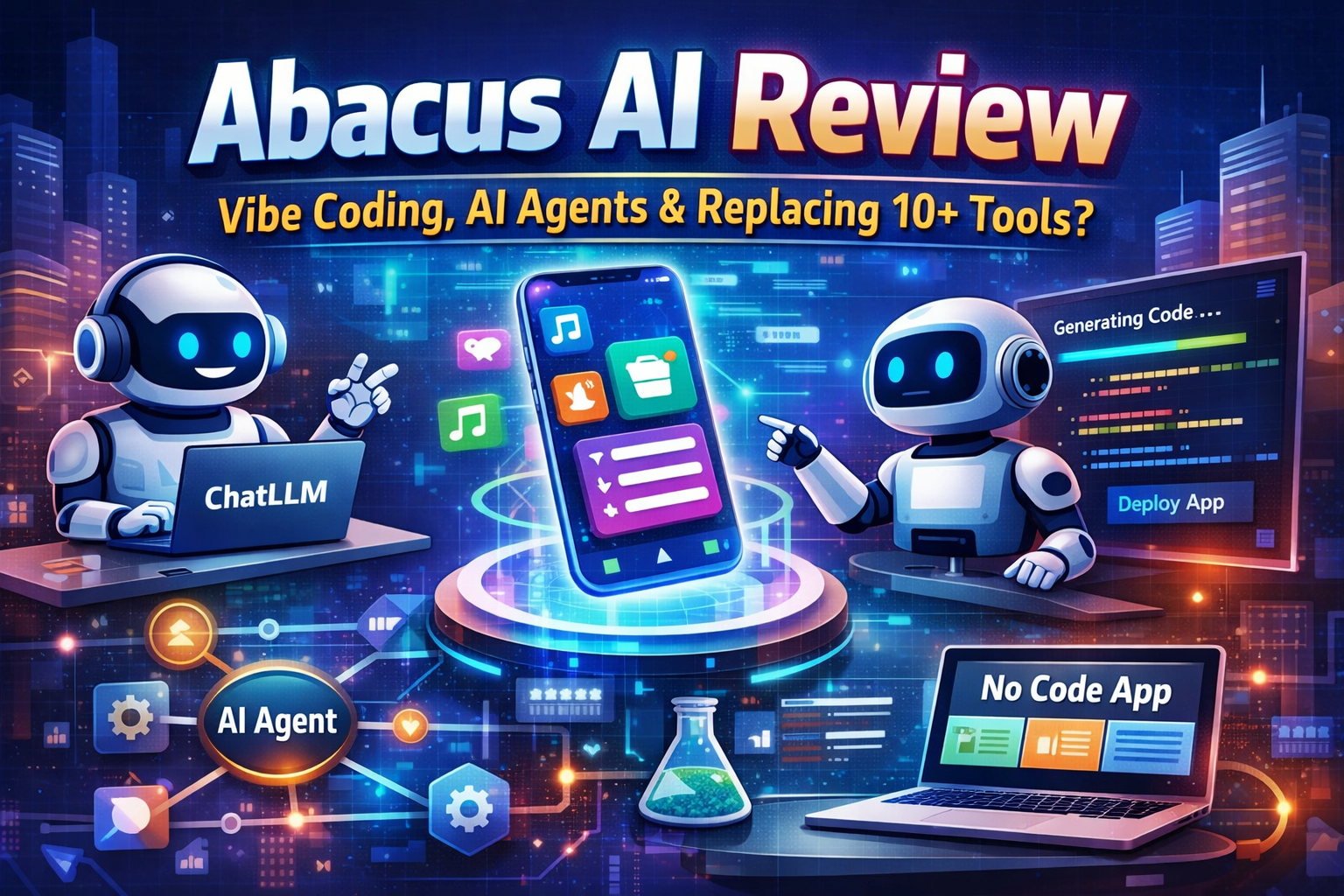
Abacus AI Review: Exploring Vibe Coding, DeepAgent, and Workflow Automation Features
Product Launch

Abacus AI Review: Exploring Vibe Coding, DeepAgent, and Workflow Automation Features

This comprehensive review of Abacus AI examines the platform's core capabilities, focusing on its innovative 'vibe coding' approach and the DeepAgent framework. As an AI agent platform designed to streamline development, Abacus AI aims to help users build applications and automate complex workflows with increased speed. The review highlights how the platform potentially replaces multiple tools by consolidating features for agent creation and workflow management. By providing a detailed look at its features and pricing structure, the analysis explores how Abacus AI positions itself as a versatile solution for developers and businesses looking to leverage advanced AI agents in their operational processes.

KDnuggets
LangChain Rebrands Agent Builder to LangSmith Fleet: A Centralized Enterprise Agent Management Platform
Product Launch

LangChain Rebrands Agent Builder to LangSmith Fleet: A Centralized Enterprise Agent Management Platform

LangChain has officially announced the transformation of its Agent Builder tool into LangSmith Fleet. This strategic rebranding introduces a centralized hub designed specifically for enterprise environments. LangSmith Fleet serves as a comprehensive platform where teams across an organization can collaboratively build, deploy, and manage AI agents. By streamlining the lifecycle of agentic workflows, the platform aims to provide a unified interface for enterprise-wide agent management. This shift reflects a growing focus on providing scalable infrastructure for businesses looking to integrate autonomous agents into their core operations, ensuring that development and oversight are consolidated within a single, manageable ecosystem.

LangChain
DoorDash Introduces New 'Tasks' App Paying Couriers to Record Videos for AI Training Purposes
Product Launch

DoorDash Introduces New 'Tasks' App Paying Couriers to Record Videos for AI Training Purposes

DoorDash has officially launched a new application titled 'Tasks,' designed to provide delivery couriers with additional earning opportunities beyond traditional food delivery. According to reports, the app compensates couriers for completing specific digital activities, such as filming themselves performing everyday tasks or recording speech in various languages. These contributions are specifically intended to help train artificial intelligence systems. This move marks a strategic shift for the delivery giant as it leverages its vast network of gig workers to generate high-quality data for AI development. While the full scope of the AI projects remains undisclosed, the initiative highlights the growing intersection between the gig economy and the data labeling industry.

TechCrunch AI
Exploring Goose: The Free Open-Source AI Agent Designed for Autonomous Agentic Coding and Workflow Automation
Open Source

Exploring Goose: The Free Open-Source AI Agent Designed for Autonomous Agentic Coding and Workflow Automation

Goose has emerged as a significant development in the AI-assisted programming landscape, offering a free and open-source solution for agentic coding. Unlike traditional tools that focus solely on code suggestions, Goose is designed to autonomously execute tasks directly on a user's machine. This capability allows developers to automate complex development workflows, moving beyond simple autocomplete features to a more proactive agentic model. By operating locally and maintaining an open-source framework, Goose provides a versatile environment for developers looking to integrate autonomous AI agents into their daily coding routines without the constraints of proprietary software or limited suggestion-based interactions.

KDnuggets