
Google Research Introduces Generative AI Tool for Prioritizing Candidate Biomarkers from Wearable Sensor Data
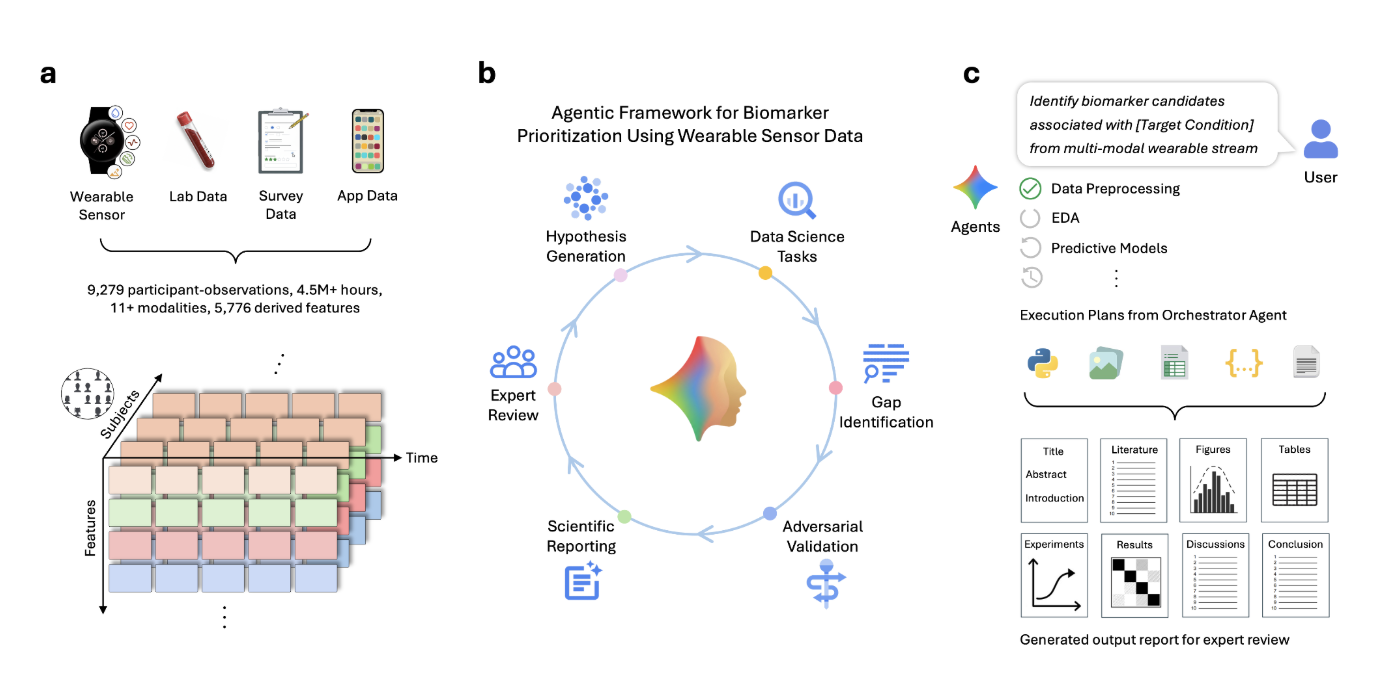
Google Research has announced the development of a specialized AI tool designed to prioritize candidate biomarkers extracted from wearable sensor data. By leveraging the capabilities of Generative AI, this tool aims to streamline the process of identifying significant health indicators from the continuous streams of data generated by wearable devices. The initiative focuses on the challenge of data interpretation, seeking to distinguish actionable biological signals from the high volume of noise inherent in consumer-grade sensors. This development represents a significant step in utilizing artificial intelligence to enhance the utility of wearable technology in health monitoring and clinical research, potentially accelerating the discovery of digital biomarkers for various physiological conditions.
Key Takeaways
- Focus on Wearable Data: The tool is specifically designed to process and analyze data collected from wearable sensors, such as those found in smartwatches and fitness trackers.
- Generative AI Integration: The system utilizes Generative AI to assist in the identification and prioritization of candidate biomarkers.
- Streamlining Discovery: The primary goal is to prioritize which biological signals (biomarkers) are most relevant for further clinical investigation.
- Data-Driven Insights: By analyzing continuous sensor streams, the AI tool helps bridge the gap between raw data collection and actionable health insights.
In-Depth Analysis
The Role of Generative AI in Biomarker Prioritization
The core of this new development from Google Research is the application of Generative AI to the complex field of biomarker discovery. Wearable sensors generate vast amounts of high-frequency, longitudinal data, including heart rate variability, sleep patterns, and physical activity levels. However, the sheer volume of this data often makes it difficult for researchers to identify which specific patterns or signals—known as candidate biomarkers—are truly indicative of health changes or disease states.
By employing Generative AI, the tool can model complex data distributions and identify anomalies or specific features that stand out across large populations or individual timelines. Unlike traditional analytical methods that may require pre-defined parameters, Generative AI can assist in uncovering latent relationships within the sensor data. This capability is crucial for prioritizing which biomarkers should be prioritized for clinical validation, effectively acting as a filter that highlights the most promising leads for medical researchers.
Transforming Wearable Sensor Data into Actionable Health Indicators
Wearable sensor data presents unique challenges, including signal noise, missing data points, and variability between different hardware devices. The AI tool developed by Google Research is designed to navigate these complexities to extract meaningful candidate biomarkers. The process of "prioritization" mentioned in the research is a critical step in the digital health pipeline. It involves assessing the strength, reliability, and potential clinical relevance of various signals detected by the sensors.
When the tool identifies a candidate biomarker, it evaluates its potential based on the patterns recognized by the Generative AI models. This allows researchers to focus their resources on the most significant indicators rather than manually sifting through raw sensor outputs. The integration of Generative AI suggests a shift toward more sophisticated, self-learning systems that can adapt to the nuances of human physiology as captured by wearable technology. This approach not only enhances the precision of health monitoring but also supports the development of personalized medicine by identifying biomarkers that may be unique to specific individuals or demographic groups.
Industry Impact
The introduction of an AI tool for prioritizing biomarkers from wearable data has profound implications for the healthcare and technology industries. First, it validates the role of consumer wearables as serious tools for clinical research. By providing a structured way to identify biomarkers, Google Research is helping to transition these devices from simple fitness trackers to sophisticated medical screening tools.
Furthermore, the use of Generative AI in this context sets a new standard for health data analytics. As the industry moves toward continuous, remote patient monitoring, the ability to automatically prioritize health signals will be essential for reducing the burden on healthcare providers. This technology could lead to earlier detection of chronic conditions, more accurate remote diagnostics, and a more efficient drug development process by identifying digital endpoints in clinical trials. Ultimately, this innovation strengthens the ecosystem of digital therapeutics and reinforces the importance of AI in managing the future of global health data.
Frequently Asked Questions
Question: What are candidate biomarkers in the context of wearable sensors?
Candidate biomarkers are specific physiological signals or patterns—such as heart rate changes, skin temperature fluctuations, or movement signatures—captured by wearable devices that may indicate a specific health condition or biological state. They are considered "candidates" until they are clinically validated.
Question: How does Generative AI help in prioritizing these biomarkers?
Generative AI helps by modeling the complex, continuous data from sensors to identify which signals are most significant or deviate from the norm. It can process vast datasets to highlight the most promising candidate biomarkers, allowing researchers to focus on the signals with the highest potential for clinical relevance.
Question: Why is prioritization necessary for wearable data?
Wearable devices collect data 24/7, creating an overwhelming amount of information. Not all of this data is useful for medical diagnosis. Prioritization is necessary to filter out noise and identify the most important health indicators, making the data manageable and useful for doctors and researchers.
