
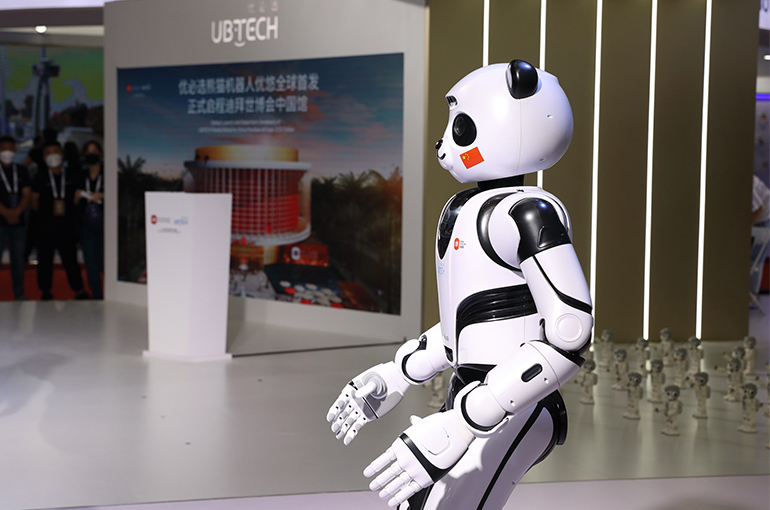
UBTech Robotics Announces $18 Million Compensation Package to Recruit Leading AI Scientist for Embodied Intelligence
UBTech, a prominent player in the robotics sector, has made headlines by offering a substantial $18 million compensation package to secure a top-tier AI scientist. This strategic move is designed to bolster the company's 'embodied intelligence' initiatives and accelerate the development of advanced humanoid robots. The investment underscores UBTech's commitment to leading the research direction in AI models that integrate seamlessly with physical robotic hardware. By attracting high-level talent, the firm aims to refine its technical strategy and maintain a competitive edge in the rapidly evolving global robotics market. This recruitment drive highlights the increasing financial stakes and intense competition for specialized expertise at the intersection of artificial intelligence and physical automation.
Key Takeaways
- Record-Breaking Compensation: UBTech is offering an $18 million salary package to attract a premier AI scientist.
- Strategic Focus: The recruitment is centered on advancing the company's "embodied intelligence" strategy.
- Humanoid Development: A primary goal of this hire is to lead the development of AI models specifically for humanoid robots.
- Research Leadership: The position involves setting the long-term research direction for UBTech’s integrated AI and hardware systems.
In-Depth Analysis
The Shift Toward Embodied Intelligence
UBTech’s decision to offer a multi-million dollar package reflects a significant pivot toward "embodied intelligence." Unlike traditional AI, which operates in digital environments, embodied intelligence requires AI models to interact with and learn from the physical world. By recruiting a high-level scientist, UBTech aims to bridge the gap between complex neural networks and the mechanical execution of humanoid robots. This strategy suggests that the company views the integration of sophisticated AI models directly into robotic frames as the next frontier for the industry.
Strategic Research and Model Development
The scope of this $18 million role extends beyond simple programming; it encompasses the foundational research direction of the company. The selected scientist will be responsible for overseeing the development of AI models that allow humanoid robots to navigate, perceive, and perform tasks with human-like precision. This move indicates that UBTech is prioritizing internal research and development to create proprietary intelligence systems that can define the future of their humanoid product line.
Industry Impact
The offer of $18 million for a single scientific role signals a massive escalation in the global war for AI talent. As robotics companies transition from simple automation to intelligent, autonomous humanoids, the demand for experts who understand both AI architecture and physical dynamics has skyrocketed. UBTech’s aggressive financial strategy may set a new benchmark for compensation in the robotics sector, potentially forcing other tech giants to increase their investment in human capital to remain competitive in the embodied intelligence space.
Frequently Asked Questions
Question: What is the primary goal of UBTech's $18 million offer?
The goal is to recruit a top AI scientist to lead the company's embodied intelligence strategy and oversee the development of AI models for humanoid robots.
Question: What does "embodied intelligence" mean in the context of UBTech?
It refers to the development of AI that is integrated into physical bodies (robots), allowing the machine to perceive and interact with its physical environment through advanced AI models.
Question: Why is UBTech investing such a large sum in one individual?
UBTech is looking for a leader to define their research direction and ensure their humanoid robots are equipped with market-leading AI capabilities, which requires rare and highly specialized expertise.
