
From Voice to Text: A Faster Way to Capture Ideas
2026年4月7日 • Author: AIToolly
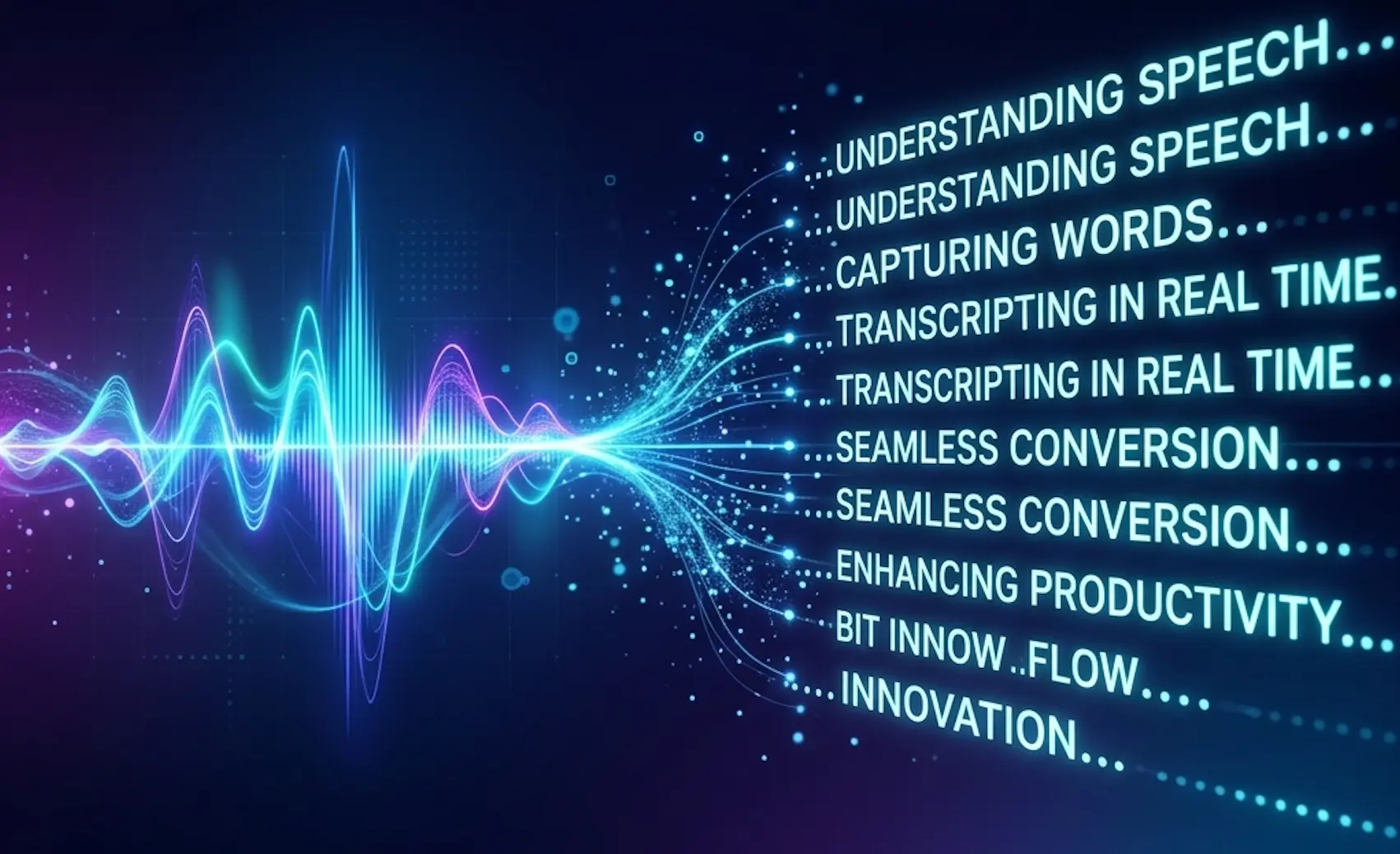
Audio doesn’t really let you “scan” ideas. It forces linear listening. This article explores how turning voice into text makes ideas easier to capture, reuse, and retrieve.
Introduction
Ideas don’t usually come in a neat or organized form. More often, they appear during completely unrelated moments, when attention is already occupied elsewhere. A single thought might feel sharp and important at first, but without something to hold onto it, the clarity starts to weaken surprisingly fast, as if it was never fully stable to begin with.
And that’s the real tension around ideas. Not creating them, but holding onto them long enough to actually use them. Writing them down helps, but it changes the pace. Speaking them into a device feels more natural, but it leaves everything in a format that isn’t always easy to revisit later.
That space between thinking and storing has always existed. It just used to be something people worked around rather than solved.
A small shift is changing that now, and it starts with how voice gets turned into text.
The Problem With Keeping Ideas in Audio
Voice recordings are easy to make. That’s the main reason they’re used so often. Just press record and speak. No structure needed, no formatting, no effort to make things neat.
But that ease comes with a trade-off.
Audio doesn’t really let you “scan” ideas. It forces linear listening. If something useful is buried in the middle of a long recording, finding it again takes time. Sometimes too much time. So a lot of useful material ends up unused simply because it’s inconvenient to retrieve.
It’s not about quality. It’s about access.
Why Speed Matters More Than Ever
The way ideas are used has changed. They don’t stay in one place anymore. A single thought can become part of a document, a message, a post, or a project outline within hours.
That kind of reuse requires speed at the capture stage.
If an idea is recorded but takes too long to process later, it loses momentum. Not because it stops being useful, but because newer input replaces it.
That’s where the shift toward faster conversion becomes important.
How Voice Turns Into Usable Text
The key change is simple in concept but powerful in practice: spoken content becoming readable almost instantly.
Instead of listening back to audio repeatedly, the material can be turned into structured text. That changes how it can be handled. Sentences become visible. Ideas can be moved around. Sections can be pulled out and reused without replaying anything.
And the process doesn’t need to be complicated to be useful.
Even imperfect speech—pauses, corrections, unfinished thoughts—can still become something workable once it’s in text form.
Where AI Fits Into the Process
AI tools have taken over a lot of the repetitive part of transcription. Not perfectly, but efficiently enough that it changes how people approach voice capture altogether.
They can take spoken input and turn it into text quickly, even when the audio isn’t clean. Background noise, uneven pacing, overlapping speech—it still gets processed into something readable.
That’s the important part. Not perfection, but usability.
A Small Shift in Workflow That Changes Everything
The interesting part is how little needs to change for the workflow to improve.
Voice recording stays the same. People still talk naturally. No need to adjust how ideas are spoken or structured in the moment.
What changes is what happens right after.
With tools like voice to text transcriptor, spoken ideas can move into written form quickly enough that they don’t lose context or momentum. That small shift removes the delay between thinking and organizing.
And that delay used to be where most ideas faded out.
Ideas Become Easier to Reuse
Once voice becomes text, something subtle happens. Ideas stop being locked in time.
A short sentence from a recording can be extracted and used elsewhere. A longer explanation can be split into multiple parts. Even rough, unstructured speech can become material for notes, drafts, or summaries.
Nothing new is being invented here. It’s just rearranging what already exists.
But that rearrangement makes ideas far more flexible.
Searching Through Thoughts Instead of Replaying Them
Audio has one major limitation: it can’t really be searched.
Finding a specific idea inside a recording usually means listening again, sometimes multiple times. That slows everything down and makes older recordings harder to use.
Text removes that barrier completely.
Once speech is converted, it becomes searchable. A single keyword can bring back a moment from hours of audio. That changes how information is stored and retrieved over time.
Instead of remembering where something was said, it becomes easy to find it directly.
The Quiet Pressure for Faster Output
There’s a constant pressure in digital work to produce more, reuse more, and move faster without losing clarity.
Voice capture already speeds up the input side. Transcription speeds up everything that comes after it.
Together, they reduce the gap between idea and output. Less waiting, fewer manual steps, less friction in moving from thought to usable content.
It doesn’t change the nature of ideas. It just changes how quickly they can be used.
Editing Still Shapes the Final Form
Even with automation handling transcription, raw text rarely feels finished right away.
Speech is not structured writing. It drifts, repeats, and shifts direction naturally. That works in conversation but feels loose on the page.
So light editing is still part of the process.
Not to reshape everything, but to tighten structure and make meaning easier to follow while keeping the original tone intact. Too much cleanup flattens the voice. Too little leaves it unclear. The balance sits somewhere in between.
A Different Way Ideas Travel
Once voice becomes text quickly, ideas start to travel differently.
They don’t stay trapped in recordings. They move into documents, notes, systems, and workflows without much delay. A spoken thought becomes something that can be stored, searched, and reused almost immediately.
That changes how ideas are treated overall.
Less like temporary thoughts. More like reusable material.
A Shift That Feels Small but Adds Up
On its own, turning voice into text feels like a simple utility. Nothing dramatic. Just a faster way to get words onto a page.
But over time, the effect compounds.
More ideas get captured. Fewer are lost in audio. More can be revisited later without effort. And the space between thinking something and actually using it becomes smaller than it used to be.
Author

AIToolly
Finding the Best AI Tools
AIToolly is a directory of AI tools and applications covering various fields. Use AIToolly to discover the best AI tools for your needs!