LongCat Open Sources VitaBench 2.0: A New Standard for Long-term Dynamic AI Agent Evaluation
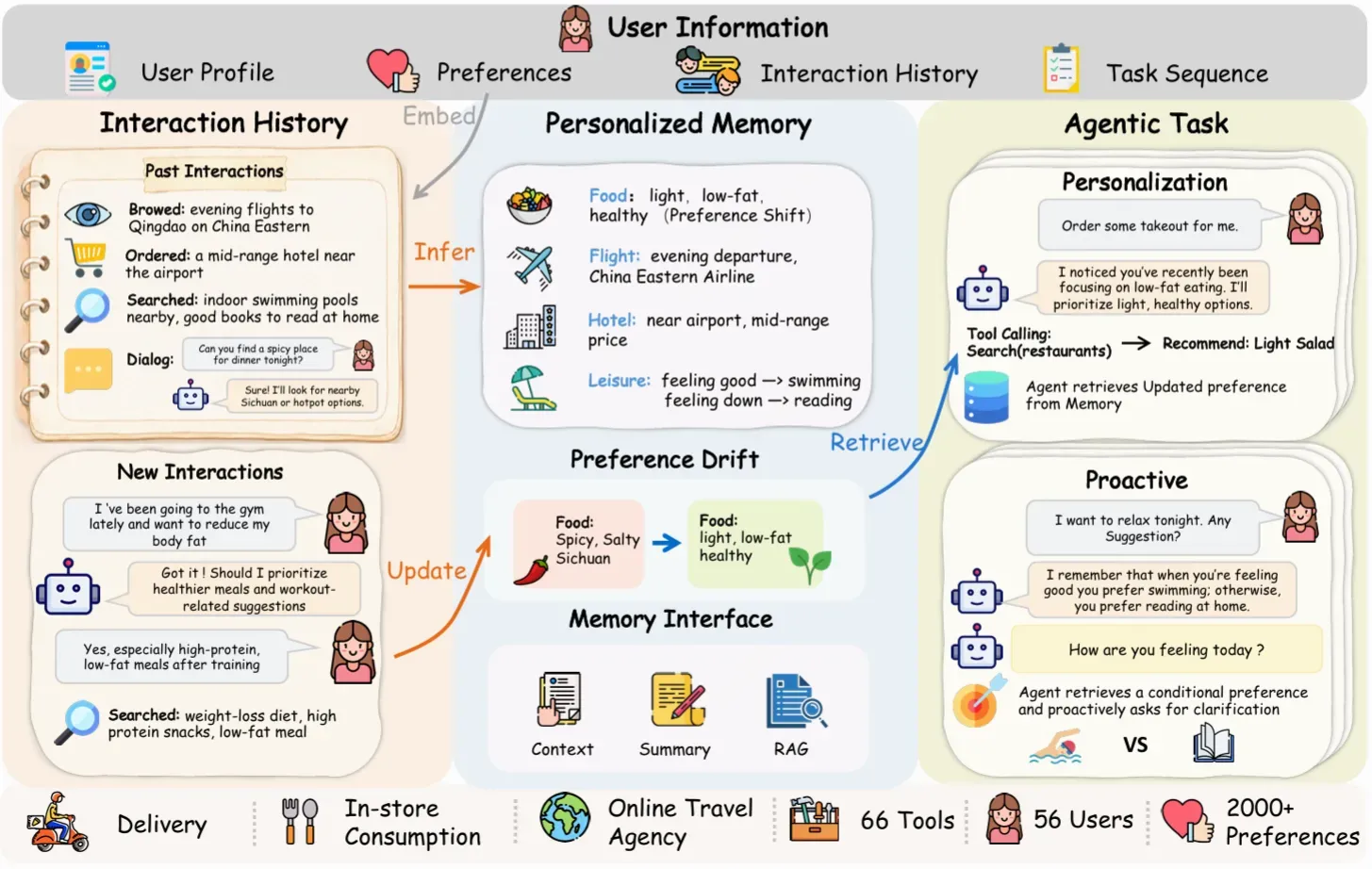
The Meituan technical team has officially open-sourced VitaBench 2.0, marking a significant milestone in the evaluation of artificial intelligence. As the first benchmark specifically designed for long-term dynamic user modeling in real-life scenarios, VitaBench 2.0 provides a systematic framework to assess Large Language Models (LLMs). Its primary focus is on measuring an agent's ability to maintain personalization and demonstrate proactivity during sustained, authentic user interactions. By addressing the complexities of evolving user needs over time, this benchmark fills a critical gap in current AI testing methodologies, offering a more realistic measure of how intelligent agents perform in non-static, real-world environments.
Key Takeaways
- First-of-its-kind Benchmark: VitaBench 2.0 is the inaugural evaluation tool dedicated to long-term dynamic user modeling within authentic, real-life contexts.
- Focus on Personalization: The framework specifically measures how well Large Language Models can tailor their behavior based on long-term user history and evolving preferences.
- Assessment of Proactivity: Beyond simple response accuracy, the benchmark evaluates the ability of AI agents to take initiative and anticipate user needs.
- Real-world Dynamics: Unlike static benchmarks, VitaBench 2.0 focuses on the fluid nature of human-AI interaction over extended periods.
- Open Source Contribution: Developed and released by the Meituan technical team under the LongCat project to advance industry standards.
In-Depth Analysis
The Shift Toward Long-term Dynamic User Modeling
In the rapidly evolving landscape of artificial intelligence, the transition from simple chatbots to sophisticated autonomous agents requires a fundamental shift in evaluation metrics. VitaBench 2.0, introduced by the Meituan technical team, represents this shift by prioritizing "long-term dynamic user modeling." Traditional benchmarks often evaluate models based on single-turn tasks or short-term context windows, which fail to capture the complexity of real-world human behavior.
Real-life scenarios are inherently dynamic; a user's preferences, schedules, and requirements change over time. VitaBench 2.0 addresses this by creating a testing environment where the AI must maintain a consistent understanding of the user across multiple interactions. This "long-term" aspect is crucial for developing agents that can serve as true digital assistants, capable of remembering past interactions and adapting to the user's changing life circumstances without needing constant re-instruction. By focusing on these dynamic elements, the benchmark ensures that LLMs are tested against the actual unpredictability of human life rather than curated, static datasets.
Systematically Evaluating Personalization and Proactivity
Two of the most critical pillars of VitaBench 2.0 are personalization and proactivity. In the context of this benchmark, personalization is not merely about using a user's name; it involves a deep, systematic integration of user-specific data into the model's decision-making process over time. The benchmark evaluates whether the model can refine its output to align with the specific nuances of an individual's long-term behavior patterns.
Proactivity, the second pillar, represents a higher tier of intelligence. Most current AI models are reactive, waiting for a specific prompt before taking action. VitaBench 2.0 measures the "proactive" capabilities of an agent—its ability to identify when a user might need assistance or when an action should be initiated based on the dynamic context of the interaction. This systematic evaluation of proactivity is essential for moving the industry toward agents that can manage tasks autonomously. By providing a standardized way to measure these traits, VitaBench 2.0 allows developers to identify exactly where a model succeeds or fails in becoming a truly helpful, personalized companion.
Industry Impact
The release of VitaBench 2.0 is poised to have a significant impact on the AI industry by providing a much-needed "yardstick" for agentic intelligence. As more companies strive to build "AI Agents" rather than just "AI Models," the lack of standardized testing for long-term interaction has been a major hurdle. VitaBench 2.0 fills this void, offering a clear path for researchers to validate their progress in user modeling.
Furthermore, by open-sourcing this benchmark, the Meituan technical team is fostering a more transparent and collaborative environment for AI development. It encourages other developers to move beyond the pursuit of general knowledge scores and focus on the practical, long-term utility of AI in daily life. This focus on real-life scenarios and dynamic modeling will likely influence the next generation of LLM training, pushing the boundaries of memory management and contextual reasoning in AI systems.
Frequently Asked Questions
What is the primary purpose of VitaBench 2.0?
VitaBench 2.0 is designed to systematically evaluate how Large Language Models (LLMs) handle long-term, dynamic user modeling in real-life scenarios. It specifically focuses on assessing the personalization and proactivity of AI agents during authentic interactions over time.
Why is "dynamic" modeling important for AI agents?
Dynamic modeling is important because real-world user needs and contexts are constantly changing. A static model cannot effectively assist a user over a long period if it cannot adapt to new information or evolving preferences. VitaBench 2.0 tests the model's ability to stay relevant in these changing conditions.
Who can use the VitaBench 2.0 benchmark?
As an open-source project released by the Meituan technical team, VitaBench 2.0 is available to the broader AI research community and developers who are looking to test and improve the long-term interaction capabilities of their intelligent agents.